


India has made the Sanchar Saathi app mandatory on all new mobile phones sold in the country, as it moves toward a significant telecom security step. The body had asked brands to include the app in the phones, according to a directive issued by Department of Telecom (DoT) on November 28, 2025 as part of the New Generation Network initiative by Indian government for manufacturers and importers.
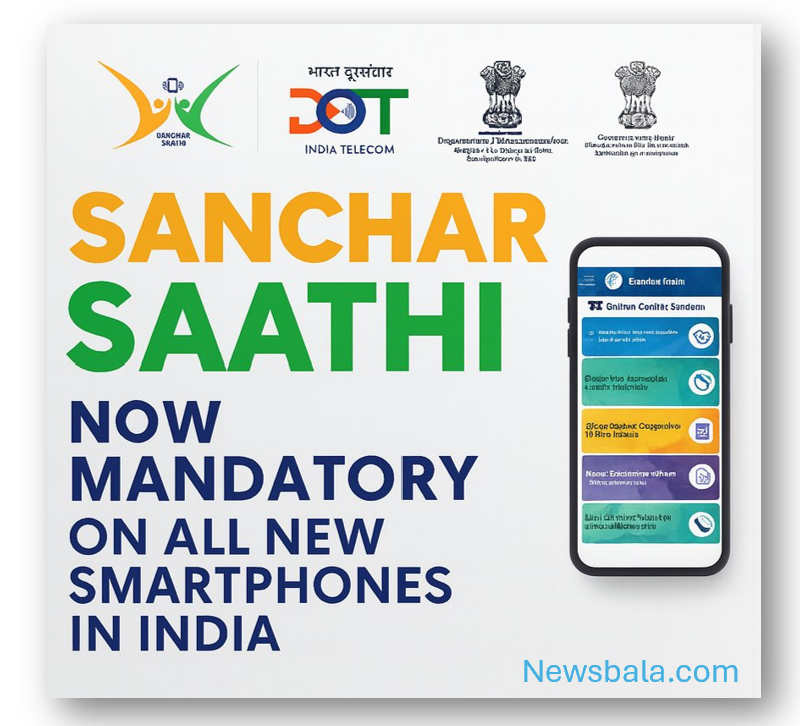
The goal is elemental: to shield citizens from cyber forgery, control misappropriation of mobile connections and assist buyers in determining whether a handset is authentic. But while the government feels this as a need for security, the move has fueled an intense political backlash around privacy.
Another Govt update to know: How to Download Your Ration Card Online with
What the New Order Requires
The DoT has specified that Sanchar Saathi app should be visible, and easily accessible at the time of setting-up the phone. Manufacturers are not allowed to hide the app, disable it or restrict its capabilities.

Key deadlines include:
- 90-days to implement pre-installation in companies
- 120 days to file a compliance report
- Phones that are currently in stores will need to have the app delivered via software update
The order applies to all of the big smartphone makers — Apple, Samsung, Xiaomi, Vivo, Oppo and Google among them — most of which already produce phones in India.
New What’s app rule: No WhatsApp or Messaging App Access Without Your SIM in India
What Sanchar Saathi Aids Users in Achieving
Sanchar Saathi is designed to counter the menace of mobile fraud as well as promote transparency in Telecom services. The app and portal allow users to:
- Check whether a cellphone is authentic based on its IMEI
- Report lost or stolen phones
- Verify all the mobile number counts which are already made under their name.
- File a complaint about Suspicious_call or Phony message
Find verified contact details for banks and financial advisory services
Telecom Cyber Security (TCS) Rules support the move, which gives the government power to impose more IMEI-related checks on makers.
Why This Move Matters
According to DoT, duplicate, cloned or fake IMEI numbers very serious threat. Often there are more than one devices using the same IMEI number – which makes it difficult to track, and easy for people to use in crime.” The expanding second-hand market for mobiles is also a risk, with stolen phones frequently sold on to unsuspecting customers.
Own a phone allows the users to verify if a phone is blocked/blacklisted or involved in any criminal activity before purchasing it through sanchar saathi.
The order also notifies users that changing IMEI numbers is a non-bailable offence as per the Telecommunications Act 2023. Violations can lead to:
- Up to 3 years of imprisonment
- Fines up to ₹50 lakh
- Or both
Opposition Calls the Move Unconstitutional
Though the government insists that the directive is to protect citizens, it has been met with sharp dissent from the Congress party.
The order is “unconstitutional,” Congress leader KC Venugopal maintained, claiming that mandating a government app on personal devices which can’t be uninstalled is against the fundamental right to privacy under Article 21.
He stated:
“Big Brother cannot watch us. A pre-installed government app that can’t be removed is a dystopian equipment to track every Indian.”
Venugopal also charged the government with ‘repeatedly’ diluting constitutional rights and demanded withdrawal of “forthwith” the directive.
A Trade-Off Between Security and Privacy
The Sanchar Saathi mandate has drawn attention to a mounting tension in India’s increasingly digital ecosystem — that of ensuring citizen safety vis-à-vis individual privacy.
Its defenders say the app gives users power and protects them from fraud. Opponents worry that it could establish a dangerous precedent of government overreach.
And as phone makers gear up to comply with the new rules, the broader national conversation over surveillance, transparency and user rights is likely to escalate in coming months.
