


Since February 1, when the new tax duty system went into force, cigarette prices in India have gone up a lot. The price hike, which was announced as part of Budget 2026, has already started to affect stores. Smokers are now paying a lot more for both normal and expensive types of cigarettes. Distributors and stores say the price increase is one of the biggest in recent years and will probably change the way people buy things.
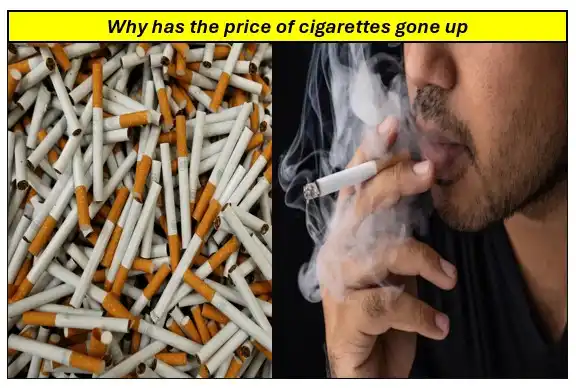
Why has the price of cigarettes gone up
The price increase is because the government decided to bring back the central excise fee on tobacco goods and cigarettes, along with an extra health-related tax. This new scheme takes the place of the old system, which was 28% GST plus a settlement cess. That system had been in place since the start of GST.
With the new system, cigarettes are charged based on how long and what kind they are. A tax of just over ₹2 is added to short non-filter cigarettes, and a slightly higher charge is made for short filter cigarettes. An extra tax of about ₹3.6 to ₹4 per stick is put on medium-length cigarettes. An extra tax of about ₹5.4 per stick is put on long and luxury cigarettes. Only styles that aren’t standard are subject to the largest slab, which charges ₹8.50 per stick in duty.
The new import duty is on top of the highest GST rate of 40%. This makes the total tax load on cigarette makers and, eventually, customers much higher.
How Much a Pack Costs Right Now
It’s easy to see how the income tax increase has affected people at the store level. Prices for a pack of 10 cigarettes have gone up by at least ₹22 to ₹25, according to distributors. The price rise is even bigger for luxury cigarettes that are about 76 mm long. Each pack now costs between ₹50 and ₹55 more.
Before, a pack of 10 sticks from a popular mid-sized brand cost about ₹95. Now, they cost close to ₹120. Bigger 84 mm cigarettes used to cost around ₹170 per pack, but now they’re likely to cost around ₹220 to ₹225. It costs more to buy slim cigarettes now; a pack of 20 sticks costs about ₹350 instead of ₹300.
Manufacturers haven’t officially changed the highest prices that packages can be sold for yet, but middlemen have already started paying stores at the new prices. In the next few days, new stock with updated MRPs will likely hit the market.
Tight Supply and How the Market Reacted
At the same time that prices went up, there were tales of brief supply problems in a number of areas. Some companies and wholesalers have held back stock because of the new tax system, according to retailers. This has caused pan shops and neighborhood stores to run out of goods. A lot of places sell cigarettes mostly as free sticks, and they usually cost more.
Distributors’ groups have said that quick and sharp price hikes could make people more likely to smuggle goods and sell fake ones. They say that if legal smokes get more expensive, people might switch to illegal ones instead, which is bad for small stores that rely on tobacco sales for daily income.
Effects on Businesses and Government Goals
The market has already responded to the higher tax. Shares of big tobacco companies are falling as buyers think about how higher prices will affect sales and profits. Analysts say that businesses might not be able to fully pass on the higher tax load without making people buy less.
According to government policy, this move is in line with its stated goal of reducing tobacco use while also bringing in more money. For a long time, health experts have said that higher taxes on cigarettes are an effective way to get people to stop smoking, especially young people.
What’s in store for smokers
The message is clear for smokers: it will cost more to light up. Since costs are going up quickly and could go up even more once the new MRPs are fully implemented, people may change how they smoke in the coming months.
As the measures in Budget 2026 go into full action, everyone will be watching to see if higher prices lower demand or just make more people buy illegal goods. In any case, the increase in tax duty has put cigarettes fully in the category of costlier comforts for Indian customers.
