


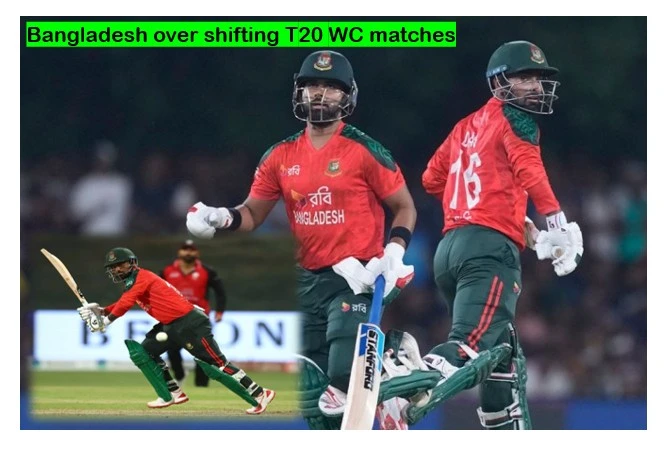
International cricket is locked in a high-stakes stand-off that has nothing to do with the play on the field. Amid the countdown to the 2026 ICC Men’s T20 World Cup, which takes place in just a matter of weeks. The dispute arises from Bangladesh’s refusal to travel to India for their group game, claiming a lack of security.
In this charged atmosphere, former Test player Atul Wassan has provided a blunt but also uniquely humane voice to the escalating acrimony, arguing in no uncertain terms that BCB should stop looking for a way out and instead find an opportunity for bridge-building. His words, “Your captain is a Hindu,” has reverberated around the cricketing world to remind us all that sometimes sport unlocks regional animosity in ways politics can’t.
The Crux of the Dispute: An Imperiled Tournament
The 2026 T20 World Cup will be co-hosted by India and Sri Lanka, beginning February 7, 2026. But the BCB has asked for its matches to be shifted out of India to Sri Lanka. The application comes after a period of intense political instability and instances of violence in Bangladesh that had encroached on the country’s sport.
And the condition further deteriorated when then BCCI had advised the IPL franchises such as Kolkata Knight Riders to let go off Bangladeshi star Mustafizur Rahman citing the ongoing regional occurrences. In a tit-for-tat move, the BCB and the Bangladesh government indicated that if their players were not welcomed in India’s domestic leagues without conditions, they did not feel “safe” to play World Cup matches on Indian soil.
The I.C.C. has held its ground, however. In a recent board meeting, the governing body turned down the BCB’s plea with an overwhelming 14-2 vote by stating that independent security assessments have not come up with any “credible threat” to the Bangladesh team in India.
Atul Wassan’s “Olive Branch” Strategy
Straight-talking Atul Wassan minced no words while talking to ANI. He has referred to the BCB insistence on a change of venue as a “logistical nightmare” that is not practical with just days remanining before the tournament. But most importantly, he highlighted the human factor – namely, the selection of Litton Das as captain of the Bangladesh T20 team.
Liton Das, an experienced wicketkeeper-batter and a member of Bangladesh’s minority Hindu community, was appointed as captain earlier this year. Wassan argued that instead of using security as an excuse to boycott India, Bangladesh should regard Litton’s appointment as a symbolic “olive branch.”
I do not anticipate that there will be any safety issues in India. We have all of the best security in place. And your captain is a Hindu, so that way I think Bangladesh can use the torunament to reduce all those clashes,” Wassan said.
Wassan’s point is nuanced but powerful: by playing in India under a Hindu captain, Bangladesh can send out the message of secularism and resilience, and brotherhood. The spirit of cricket is an opportunity to show that this divisiveness can be overcome.
Big BCCI Move After Shah Rukh Khan Faces Fury Over KKR’s Bangladeshi Pacer
The Logistical and Commercial Reality
Outside of the emotional and political considerations, there is also the cold calculus of sports administration. Hosting a World Cup takes years of forethought, ticket sales, broadcast contracts and visa arrangements.
Wassan said the ICC cannot afford to “bow down to anyone’s whims and fancies”. The event has 20 teams; shifting the games of one team would set off a cascade of hotel cancellations, flight rescheduling and security reassignments.
Former cricketers such as Madan Lal have expressed similar views. India is a “powerhouse” of the sport and one of the safest countries for international athletes, Lal added. Tell me what can we do his wife left at the door or he went to the neighbours, otherwise Bangladesh if they continues this polemics their loss both commercially and also competitive will be entirely with them.
India’s T20 World Cup 2026 Squad: The End of the Road for Shubman
The ‘Get in Line or Get Out’ Ultimatum
The ICC has apparently given the BCB a final warning – “Play in India or face replacement.” But if their refusal to travel to Kolkata and Mumbai (the grounds they were supposed to play at) continues, the ICC have said they are ready to substitute Scotland. For a country like Bangladesh, where cricket is the national obsession and key part of the national identity, to miss a World Cup would be catastrophic for the careers of the players involved and morale of its fans.
The incumbent captain Litton Das in a rare statement added his thoughts to the conversation, but cautiously. He conceded the thoughts were “unsafe” for open discussion, highlighting how much pressure the players are under from both their government and international cricket’s parent body.
Cricket for Peace
The backstory of the Indian subcontinent cautions us that cricket is never just a game. For decades, it has been a platform for “Cricket Diplomacy” between India and Pakistan. Wassan’s warning to the BCB is a call to go back to that tradition.
Sending Litton Das and his team to India would be a great way for the Bangladesh government to deflate the “we against them” narrative that has been ruling roost in recent times. It would have put the spotlight back on the roar at the Eden Gardens and brilliance of players in action.
IND vs BAN rivalry has drama, not dread: India vs Pakistan stays way ahead
What Happens Next?
There is a deadline on the final decision. The BCB is in consultation with Asif Nazrul, the sports advisor to the Bangladesh government. They have two options – stay put at home and potentially get banned from the ICC for a lengthy period of time, or travel to India and allow Litton Das to captain his team in what is essentially a career-defining tournament for him.
The path to peace may as well be a 22-yard pitch, perhaps as Atul Wassan suggested. That the BCB has the farsightedness to accept it as such, is still the greatest question in world cricket today.
