


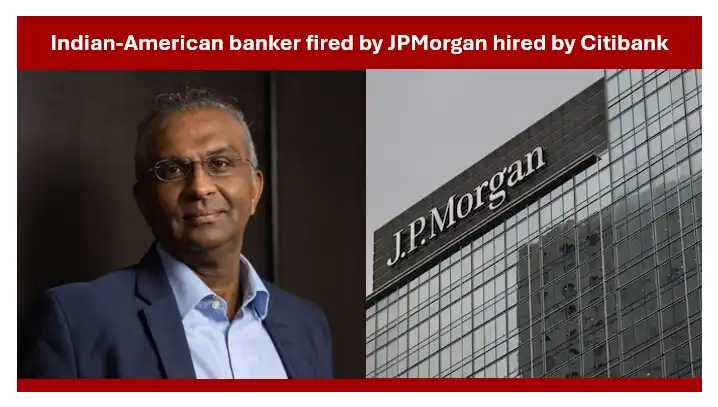
Recently, the story of an Indian-American banker, Vis Raghavan who was sacked from JPMorgan and had also apparently already obtained a new job at Citigroup in less than 24 hours goes to show just how rapidly fortunes can change on Wall Street. This rapid change has generated significant interest globally, as this example also illustrates the high demand for experienced talent and the fluid nature of career advancement at the top end of the banking world.
Job loss at a major bank generally involves potential reputational risk and uncertainty, but this example would appear to be an exception. Additionally, this example demonstrates how utilization of strong professional networks, a proven track record, and industry demand can significantly reduce the time required for someone to transition between jobs.
Reasons for Leaving JPMorgan: A Swift Turnaround in Finance
While we don’t have any specific details surrounding the banker in this instance, we suspect that the banker was terminated but that the termination was not due to any serious legal or ethically questionable conduct. Generally, at the very top banks (i.e., JPMorgan), exits arise due to internal reorganizations, changes in strategy, or performance evaluations rather than misconduct.
One of the world’s largest banking institutions, JPMorgan has been continually re-evaluating its leadership and operational structures to reflect changes in the global economy. Those changes may lead to sudden termination of key employees.
read also: Iran rejects peace talks in Pakistan with US
Citibank’s Quick Move Signals Talent Demand
The swift rehire of a banker by Citibank demonstrates how very competitive the global banking industry is today. There are many top firms that are always looking for proven performers who can either bring in customers, handle complex portfolios or strengthen their organization through staffing changes.
The fact that Citibank was able to hire this banker almost immediately suggests that this individual has proven to have a good reputation within the banking industry and has many connections that could potentially lead to new business for Citibank.
Although this situation is unusual, rival banks often find themselves in a similar situation and take advantage of these kinds of opportunities by acquiring highly valuable employees with little or no downtime and a much faster time frame than what would typically occur.
read also: West Bengal and Tamil Nadu witness highest-ever voter turnout
Professional Networking is Key
One reason for this rapid re-hire would be the strength of professional networks in today’s business world. Most senior bankers will have established strong relationships with their peers at all level of banks as well as at their clients and even competitors. These connections will often influence an employer’s decision when they are faced with having to terminate an employee because of unforeseen circumstances.
The banker in question, Raghavan likely had established relationships with several people at Citigroup prior to being hired, so there is a good chance that informal conversations and past work experience helped facilitate this quick hire. Once a company has established both trust and competence within their business relationship, they are often willing to forgo lengthy vetting processes to bring the right talent into their organization as soon as possible.
A Reflection of Industry Dynamics
In these dynamic environments, the financial services industry continues to evolve, creating new challenges for organizations and individual professionals. Economic uncertainty is making it difficult for firms to make hiring decisions based on past performance; however, the demand for professionals who can navigate complex global financial systems, increase revenue, and effectively manage risk will continue to be strong.
Additionally, this incident demonstrates that professional stability in high finance is often very different from that found in traditional industries. Top roles can experience rapid turnover and fall within the realm of “highly valuable” and “highly unstable,” meaning that while the potential to lose your job is very real, new job opportunities are also readily available.
The Implications for Finance Professionals
For both current and aspiring finance professionals, the following points are important: First, having an impressive work history and developing/maintaining a professional reputation are key to building a strong professional network in today’s competitive environment. Second, the ability to build/maintain strong relationships and communicate effectively with your colleagues and clients can be just as valuable as having technical qualifications.
Lastly, the ability to rapidly adapt to changing conditions, recover from setbacks, and capitalize on new job opportunities will be critical for long-term professional success in a highly competitive environment like global banking.
Conclusion
The swift transition of an Indian-American banker from JPMorgan Chase to Citibank on the same day not only represents an intriguing headline; it highlights the way elite finance functions. In an industry where talent is continuously on the move and highly revered, it is not unusual for one person’s adversity to serve as a second chance or new opportunity for another person. For individuals following the industry from both outside and within, this example will demonstrate how important timing, reputation and networks can be in high-stakes finance.
