


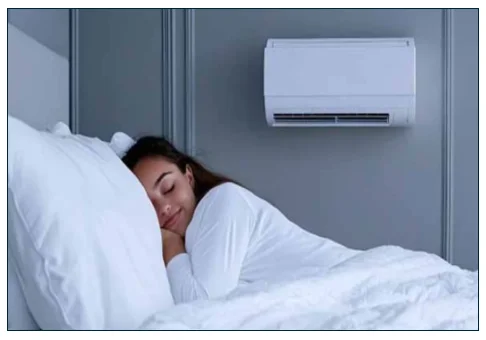
Many people sleep with the air conditioning (AC) on overnight in hot climates. Sleeping with the AC running can improve comfort and increase how well and how long you sleep; however, depending on how it is used, it may have some drawbacks. Below, we look at the pros and cons of sleeping with the AC on overnight.
Pros of Sleeping with the AC Running Overnight
- Better Quality of Sleep
The biggest benefit to using the AC overnight is that it helps improve the quality of sleep. The cooler temperature will help your body regulate its natural sleep pattern. As you fall asleep, your body naturally will begin to cool down; therefore, having cooler room temperatures helps aid this natural process. When you sleep in a hot and or humid environment, you are likely to be restless, sweaty, and wake frequently through the night; however, sleeping in an air-conditioned room creates a more stable temperature and, therefore, better sleep.
- Decreased Humidity & Sweating
Air conditioners not only reduce the temperature in a room, but they also remove excess humidity. When humidity levels are too high, it can cause the body to feel clammy and uncomfortable, resulting in poor sleep.
If you sleep with the AC on, you will have:
- Less sweating due to evaporation being more efficient due to the cooler temperatures
- A fresher more comfortable room than without the AC on
- A significantly reduced chance of developing skin irritations due to being sweaty all night.
- This benefit is especially true for people living in tropical and monsoon climates.
read more :
Risk of Dry Air Effects
A common side effect of sleeping at night with an air conditioner running all night is the dryness of your skin. Sleeping in a room where there is air conditioning reduces humidity, which can result in:
- Dry skin
- Chapped lips
- Dry eyes
- Irritation inside the throat and/or the nasal passages
Some people will wake up feeling dehydrated and/or like they have a scratchy throat. Over time, this could cause a lot of discomfort for individuals who have a greater sensitivity to dry air.
- Possible Respiratory Problems
When you sleep in an air-conditioned room for a long time, sometimes it can also affect your breathing depending on how well the air conditioning unit has been maintained.
Examples of problems that might occur are:
- Dust build-up on air conditioning (AC) Filters
- Circulation of allergens in the air
- Exacerbation of Asthma or sinus problems
If your air conditioning filters are dirty, you run the risk of the AC blowing dirt and pollutants into your room. This can lead to symptoms such as sneezing, stuffed up nose and/or coughing for some people.
- Muscle Stiffness or Body Aches
Sleeping in very cold temperatures for extended periods may cause muscle stiffness. When your body is exposed to cold air for an excessive period of time, the following may happen:
- Muscles may become tight
- The blood circulation in your body may diminish slightly
- You may wake up with neck and/or joint pain
- This will occur more often if the temperature on the AC is set to cool and/or the airflow of the AC vent is blowing directly at you.
- Energy Consumption and Cost
Using an air conditioning unit at night causes an increase in electricity consumption. Even though a lot of the new models have better energy-efficiency ratings than older ones, the overall amount of energy being used can increase from continuous operation.
The amount of electricity used by an air conditioner varies depending on a number of reasons;
1. Your temperature setting
2. Your air conditioning system’s model and efficiency ratings
3. How well insulated the room is!
4. If you use your air conditioner wisely by, for example, setting it to a reasonable temperature or using the timer function on your unit.
If you become accustomed to sleeping with the air conditioning on, you may find it more difficult to sleep without it. People often do not find temperatures outside of their air conditioning unit to be comfortable, which may result in them using the unit more frequently than necessary.
Air conditioning units close the windows, which can provide a few benefits, such as reducing external noise and preventing dust and pollution from entering the bedroom. Additionally, sleeping with an air conditioning unit on can help create a more pleasant sleeping environment due to noise reduction.
To enjoy the benefits of air conditioning while avoiding the potential drawbacks, there are a few things you can do:
1. Lower your air conditioner to between 24 – 26° C as this is more comfortable and will save you money.
2. Use the timer or sleep function in your unit to avoid accidentally cooling the room for too long.
3. Ensure your air conditioner filter is clean regularly.
4. If you’re experiencing dryness as an issue, utilize a humidifier to resolve this.
5. While sleeping, try to not have direct airflow blowing onto your person.
6. Be sure to consume plenty of fluids before and after you sleep.
Latest published : Bhumi Pednekar talks about weight and health
Bottom line
Sleeping with AC on all night will greatly improve comfort and quality of sleep & overall well being when temperatures/humidity are high. Again, just like the use of your Air Conditioner is important, so are your settings, otherwise you may experience dryness, respiratory discomfort, and stiffness from an improperly set or overused Air Conditioner rather than from the Air Conditioner itself.
With proper maintenance and moderation of use, your Air Conditioner can be a safe and effective tool to promote restful sleep.
