


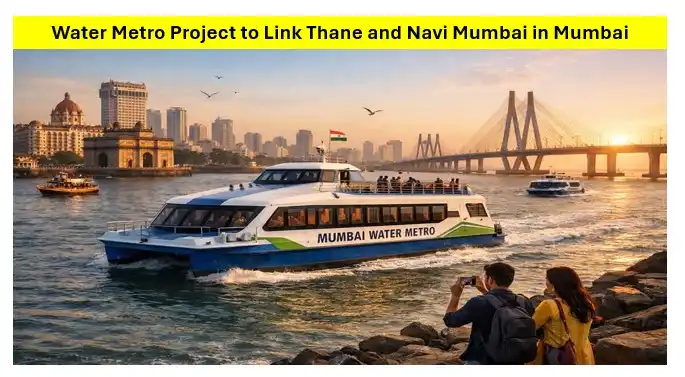
Mumbai is on the verge of making major strides toward an overhauling of its urban transport system. The water metro is going to create a water-to-water connection between Thane and Navi Mumbai. This will help alleviate congestion, decrease travel times, and provide another environmentally friendly way for people to commute within the Mumbai Metropolitan Region (MMR).
A New Chapter in Urban Mobility
The water metro’s goal is to establish an efficient form of transportation between important urban centres in and around Mumbai using the existing waterways for transportation. Because of the increasing congestion on Mumbai’s roads and railways, it is now being suggested as an unused resource that could improve connectivity significantly if utilised properly.
Key features of the project
One area of the world that will benefit greatly from the water metro system is the Thane to Navi Mumbai corridor which has developed many new residential and commercial areas. Thousands of commuters make the trip across this area every day with long-term delays caused by heavy traffic. Therefore, the water metro will provide a more reliable and faster commuting option.
The water metro system will potentially employ electric or hybrid type ferries that have been designed to operate frequently. The ferries will run on predetermined routes from the designated terminals established by the project as part of a transportation system similar to that of the metro rail system on water.
Some of the planned features include:
- Modern ferry terminals that connect perfectly to road and rail transport
- Eco-friendly ships are built to emit fewer pollutants into the atmosphere.
- Electronic ticketing systems are integrated with the transport system.
- Safety standards for these vessels will be on par with global maritime safety standards.
Authorities are looking into the possibility of integrating the water transport system with an existing railway and suburban rail network at the point of last mile transportation.
read also: BEML Secures Its First Overseas Metro Rolling Stock
Strategic Nature of the Link Between Thane & Navi-Mumbai
By creating this link between Thane and Navi-Mumbai, it will facilitate the overall regional development of both locations. Navi-Mumbai has been established as a major economic centre in recent years, due largely to its “plannable” infrastructure and recently-initiated mega developments, including the Navi-Mumbai International Airport.
Thane, which is currently one of the MMR’s fastest-growing cities (and one of its most expensive), has had a major influx of new immigrants during this time, and both cities continue their planned development at significant rates. Enhanced connectivity between these two locations via the proposed link will accomplish several milestones:
- Enhance the overall level of economic activity.
- Significantly reduce commuting times.
- Provide opportunities for balanced urban growth.
By creating a connection between these municipalities via water, it will also lessen the load/burden that is placed on existing heavily-congested roadway systems, such as the Eastern Expressway.
read also: Is Bengaluru’s Metro quietly reshaping household finances?
Environmental and Economic Benefits
The potential environmental benefits are numerous. Water-based transit generally has lower emissions than road-based transit, especially when in use with electric and hybrid technologies.
Less road traffic could ultimately decrease the levels of air pollution in Mumbai and the surrounding area. Moreover, the water metro project will likely provide opportunities for staff in jobs such as operations, maintenance and infrastructure.
In terms of the economy, faster connections will lead to improved productivity by decreasing the amount of time spent commuting and increasing access to jobs.
Learning From Successful Examples
Although still a new transportation system in India, the water metro concept is not completely new. Other cities, such as Kochi,already have water metro projects operating successfully. The Kochi Water Metro has already shown ways in which water-based transportation can be effectively incorporated into urban transit systems.
Given the size of the metropolitan area and the number of residents commuting to Mumbai each day, the water metro system developed for Mumbai will be larger and more sophisticated than Kochi’s version. Lessons learned from past projects will play an important role in the planning and implementation of Mumbai’s water metro system.
Challenges and Considerations
While the project shows promise, it also faces challenges, such as:
- The need for proper infrastructure (jetties/terminals)
- The need for all season navigable water routes
- Marine ecosystem environmental issues from water transport
- The need for multiple agencies to operate together in coordination to provide this service
- Also, the timely and adequate funding of this project will be essential to ensure its success.
Looking Forward
The Water Metro system between Thane and Navi Mumbai is an innovative approach to urban transportation in Mumbai. The project should be closer to execution once all feasibility studies and planning are completed.
If implemented successfully, it could change the way residents of the Mumbai Metropolitan Region travel, by offering a cleaner, quicker, and more sustainable alternative to current transportation options.
Given the city consistently deals with congestion. the addition of a waterway would give much-needed relief, both from congestion as well as clean air.
