


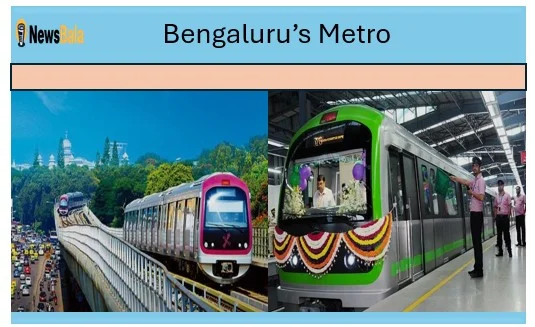
For years, the “Bengaluru commute” has come to represent more than travel between work and home: it’s been an emotional strain, a financial drag. In a city where the “Silicon Valley” fantasy frequently collides with three-hour traffic gridlocks, the growth of Namma Metro is doing something humble but radical. It’s not just transporting people; it is serving as a tacit witness to the middle-class bank account.
Although the news on Bengaluru’s public transport usually revolves around signal failures or station delays, where money is concerned, how Bengalureans handle it seems to be going through a quiet change. From mortgage payments to fuel budgets, the “Metro effect’’ in 2026 is overhauling aspects of the city’s financial DNA.
The ‘Liquidity Lift,’ and Not Just the Price of a Ticket
New economic data indicates an interesting trend: Metro-connected residents are getting better at handling debt. One study, by the Economic Advisory Council, found that investors in Whitefield and Challaghatta—recently connected by a new bridge on the Purple Line—are almost two‐and‐a-half percentage points less likely to default on their home loans.
Why? The answer lies in the “freed-up rupee.” When a family swaps out a fuel-gulping car commute for Metro, they are more than simply conserving petrol. They are eliminating or reducing:
Depreciation on Car: Higher resale value for low-mileage cars.
Parking Tolls: Such high charge per day parking fees in tech parks such as Manyata or Bagmane.
And this recovered cash flow is being redirected to housing. Prepayment of loans has, in fact, increased 3.5 percentage points in Metro-served PIN codes. The Metro has converted a “sunk cost” (fuel) to a “wealth builder” (home equity) for the typical IT professional.
20 km of Kolkata Metro rail project delayed due to land acquisition related issues
The Rental Paradox: Paying for Convenience, But Not Control
While the Metro does save money off the road, it frequently claws a big portion of that back at home. The “500 meter rule” is now the benchmark for Bengaluru real estate. Properties within a five-minute walk of a station have jumped in value 20-40%.
This has created a financial tug-of-war for tenants. Even as they cut down on the fuel (or cab surge) cost of ₹5,000 per month, their rent in say Indiranagar, Jayanagar or KR Puram will increase by at least ₹7,000.
The Fare Hike Friction: How Much Can One MetroCard Hold?
Cracks in the affair between the Metro and households began to show in 2025 when fares were nearly doubled overnight, making it the most expensive metro system in India. Beginning February 2026 annual increases of 5% will apply.
This has incited a lively debate: Is the Metro evolving into a “premium service” rather than a public good? A commuter could end up paying ₹60 – ₹75 for a 20 km trip. That combined with the “last-mile” cost of an auto-rickshaw ride from the station to the doorstep could sometimes make for a trip almost as expensive as driving away on a fuel-efficient small car.
The “Last-Mile” Financial Leak
The last 2 kilometers are still the biggest sink of “Metro savings.” As a result of the ₹90 minimum balance token smart cards must now maintain, and with feeder buses notoriously unreliable, many families find their “saved” money sucked out by expensive short-haul auto rides.
The “Two-Wheeler Retirement”
The most obvious change on the financial front is reduction in two-wheeler dependence. Traditionally, the scooter was the financial armour plating of Bengaluru’s middle class — low cost, nimble, fuel-efficient.
Yet with Yellow Line and Blue Line extensions nearing completion, more households are deciding not to renew their bikes. By using the Metro, families are sparing the ongoing costs of tires, oil changes and back-and-wrist pain (with attendant medical bills) from all jostling through the city’s potholes.
From Rajdhani to Vande Bharat Sleeper: How India’s Long-Distance Train
Conclusion: A City in Transition
Is the Metro treating household finances? Yes, but with caveats. It has spawned a new class of “liquidity-rich” homeowners who are using travel savings to help pay down debt. At the same time, it has driven up the cost of living in well-connected enclaves, essentially “taxing” their convenience.
Real change will come when Multi-Modal Integration (when buses and trains and cycles integrate seamlessly) is the norm. Until then, the Metro is a pricey but potent instrument of financial discipline in a city that’s always on the go.
Railways To Launch First Vande Bharat Sleeper Train Between Guwahati
