


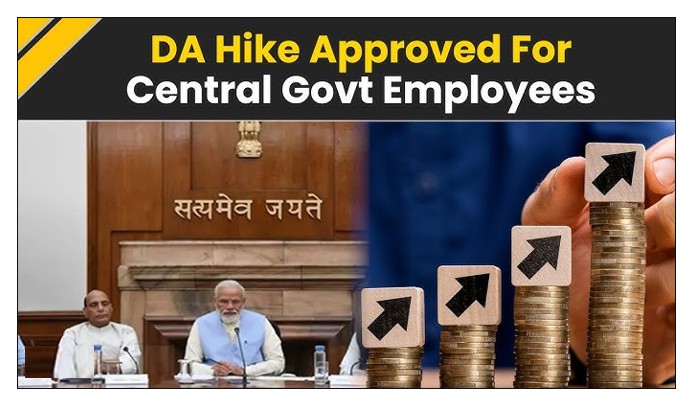
In an effort to cushion the effects of increased costs of living, the Indian central government has approved a hike of 2% in Dearness Allowance (DA) for all central government employees as well as all central government pensioners. This time period for this will be effective on April 18th, 2026. This increase works out to be approximately Rs. 536 per month for all employees and retirees across India.
Dearness Relief (DR) for pensioners will also increase by the same amount as the DA increase; therefore, the allowance increase will cover both current and former employees.
What the DA Hike Means?
This increase in DA will amount to a DA Rate of 58% to 60% of the basic amount of employees’ pay. This action is part of the Philippines government’s strategy of adjusting DA periodically as there is inflation.
DA, which is a credit to cover increases in the cost of living, is a significant component of the salary of any central government employee. The DA is evaluated at least two times a year (January and July) from the (AICPI) (All India Consumer Price Index for Agricultural Workers).
While this increase may appear moderate in terms of amount, it will result in a positive rise of take-home pay. For those earning a higher basic salary, the take-home pay will increase significantly more than that of those earning lower salaries.
Impact on Salaries and Pensions
The increase in the DA (Dearness Allowance) will be felt almost immediately for employees and pensioners alike as it will increase their basic pay and pension. The increases may seem insignificant since the percentage increases appear to be small amounts; however, they will ultimately amount to an actual amount increase for most employees.
Some examples of amount increases based on their base salary are:
- Employees who earn a base salary of ₹18,000 per month will receive a total increase of approximately 360 per month.
- Employees who earn a base salary of ₹30,000 will receive a total increase of approximately 600 per month.
- The higher the base salary you are employed at, the larger your amount increase will be as compared to lower-salaried employees.
In addition to the amount increase, employees should also expect to receive retroactive payments for the months leading up to the official announcement of the increase since these increases are typically effective retroactively to January 1.
It is anticipated that over (1) crore central government employees and pensioners will benefit from the above DA increase.
you may also like:
- Pune airport will start 15 new flights from 1st of May
- RBI Proposes a 1-Hour Delay for UPI Transfers Above ₹10,000
Context: Inflation and Economic Pressures
The DA increase has also been approved in the midst of inflation (though the current rate of inflation appears to be moderating) and is still impacting families’ household budgets. The DA increase is computed using the 12-month rolling average of the All India Consumer Price Index for Industrial Workers (AICPI-IW) and the average remained low enough to warrant a 2% increase.
Historically, the DA increases have typically been greater than this; however, the current DA Increase is reflective of the relative control of inflation in comparison to the DA increases over the preceding years.
Reaction to the DA increase from employee groups has been mixed. Many employees believe that given the current economic reality and increase to their standard of living that the DA increase will not be adequate, many employees describe the increase as a normal adjustment in keeping with economic indicators.
Delay and Employee Concerns
Employee Union dissatisfaction in response to long wait time for pay commission announcement has already resulted in several organizations planning protest events regarding delayed timeline of announcement. Moreover, employees depend on ongoing DA revisions due to rising cost of living, and thus, Cabinet’s decision to approve currently announced pay increase will help minimize unrest; however, as with all concerns regarding the employee payment structure, the issue will still require further examination.
DA answers to 8th Pay Commission: DA revisions serve as baseline for future pay structures. Unions represent employees & are requesting:
- Higher MD pay minimum (approx. 69,000 rupee)
- Revision of fitment formula
- Possible DA amalgamation with base pay at respective trigger points
- 60% DA will impact overall general pay rate in future pay commission calculations.
A Modest but Important Step
The 2% DA increase will not significantly impact overall incomes; however, it is an important method of the government’s adjusting salaries for inflation purposes.
For numerous employees and retirees, every little bit helps to cover their everyday expenses. Also, due to the relatively small size of this increase, it indicates a larger economic reality and the need for a more responsible fiscal policy.
As conversations begin to build around the formation of the 8th Pay Commission, the current DA increase can be classified as both a temporary relief item as well as a precursor to significant changes to the government’s salary structure.
