


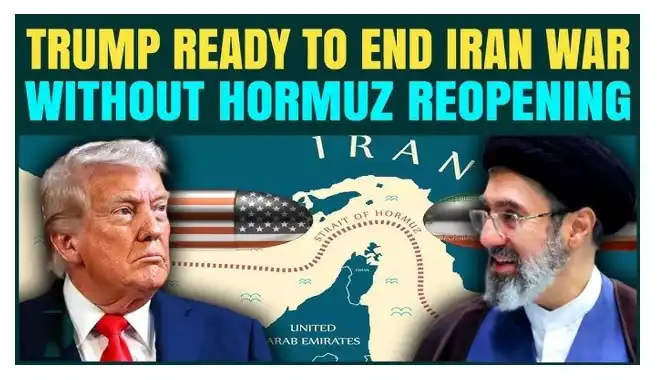
The Persian Gulf has always been a stage for high drama, but the scenario unfolding now in Washington and Tehran is unlike anything this region has witnessed in decades. As of March 31, 2020, the international power markets are on “high alert” following numerous up to date updates from the White House. President Donald Trump has privately conveyed to his inner circle that he is prepared to end the military campaign against Iran — even as the world’s most critical maritime choke point, the Strait of Hormuz, remains tightly shut.
It is a maneuver that upends military orthodoxy but comports perfectly with the Trump doctrine: A proclivity for short, smash-mouth interventions over “forever wars,” and an assumption that economic cudgeling is much more effective than a round-the-clock naval deployment.
The math behind “four to six weeks”
Yes, Operation Epic Fury (permitted by the United States and the Israel of “the Plan “) has been in progress for weeks now, leading to not only the historic decapitation of Iran’s top leadership but also a methodical degradation of its nuclear and missile infrastructure. But the “victory” was accompanied by a tremendous side effect — complete closure of the Strait of Hormuz by the Islamic Revolutionary Guard Corps (IRGC).
also read: Trump Says He Received Gift from Iran’s Ghalibaf
Putting a Face on the Crisis: The $150 Barrel and the “Brain Fry” of Diplomacy
The maps in the Situation Room may show troop movements and carrier strike groups, the “human” map tells another story. At the ports of Bahrain and the refineries of Kuwait, workers are existing on a heightened state of hyper-vigilance. At least 12 merchant ships have been damaged in a crisis that has left several seafarers dead since 2026. For the families of these sailors, it is a life-and-death game of “geopolitical chess.”
also read: Iran Issues Fierce Warning to US Troops
Economic Fortress: Shoring up the Petrodollar
Taking the Heat Out of the Crude: After announcing he was open to a military shutdown, Trump has already had some success with Brent crude pulling back toward $100. The “threat” of further escalation was what pushed up the price; a “promise” of cease-fire is pushing it down.
The Petrodollar Defense: A central preoccupation of this administration has been (no pun intended) the continued hegemony of the U.S. dollar in energy payments. By demonstrating that the United States can literally take apart a hostile regional power and then leave on its own terms, Washington is reminding everyone who is the final arbiter of trade security across the globe.
Allies’ Obligation: Trump has told allies in Europe and the Gulf that if they want the Strait open now, they have to drive the effort. Its a tried and true “burden-sharing” maneuver, pushing regional players like Saudi Arabia and the (incredibly wealthy) UAE to do more for their own backyard security.
also read: Ukraine’s Zelenskyy Meets UAE President
A New “Reasonable” Regime?
In his characteristic style, Donald Trump has taken to social media to claim “great progress” in negotiations, asserting that the United States is now engaging with “a new and more reasonable” government in Iran. Whether this reflects reality or serves as calculated flattery to ease tensions remains uncertain.
