


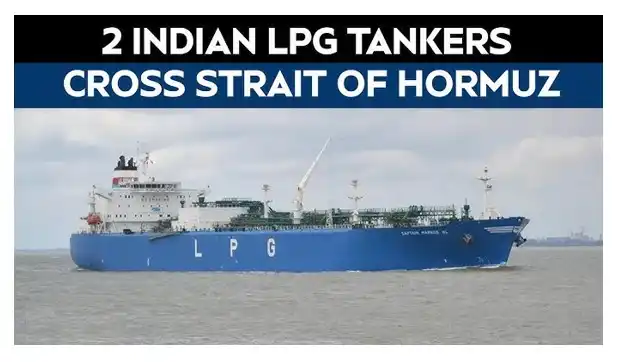
And in the silence of a swarming Persian Gulf, where the blue of the water seems to meet the foggy horizon of a half-paranoid region, two huge ships in no very distant water have just set out to play a game of chess, based upon high stakes, in the sea. Two Indian flagged tankers, the BW Tyr and the BW Elm which transported 94,000 tonnes of Liquefied Petroleum Gas (LPG), managed to pass through the Strait of Hormuz this weekend. Their escape is a logistical victory but it is also a tale of human determination, walking the diplomatic thin line, and the unending efforts of a nation to keep its home fires going.
When the sun was rising above the jagged cliffs of the Musandam Peninsula, the crew in these ships was aware that it was passing one of the most unstable chokepoints on Earth. Having transponded as much as possible–vowing their identity as Indians to every naval patrol-vess or radar-station in the vicinity–they sailed along a very narrow passage of water which to-day seems to be the edge of a world crisis.
The Anthropomorphic Heart of the High-Risk Transit
The number 94,000 tonnes has the names of 60 Indian seafarers behind it. These 33 BW Tyr and 27 BW Elm unsung heroes of the energy security of India are men. And weeks before this, most of these sailors had been practically trapped in the western Persian Gulf, with their eyes on the horizon as geopolitical tensions between Iran, Israel and the U.S. transformed the busiest oil lane in the world into a ghost town.
The mood of the bridge in such a passage is that of a calculated silence. Any trace of shadow on the radar is investigated; any crackle in the radio is dismembered and its meaning restored. In order not to be confused with the hostile forces, the tankers used the certain rule: they sailed close to the coast of Iran along the islands of Larak and Qeshm. This action will enable Iranian officials to visually confirm the markings and flag of the vessel, which is a nod that people in the area require at present, as trust is the least common thing nowadays.
The news of the crossing was a relief to the families of the home cities of Mumbai, Kochi and Visakhapatnam. These are not mere cargo ships that are on the move but vessels that are going through a battlefield to make sure that a homemaker in a small village in Uttar Pradesh does not run out of her stove.
read more:
- Government cuts excise duty on petrol and diesel
- Indian Railways Approves ₹1,200 Crore Projects to Upgrade
- Indian Oil Chief Dismisses Fuel Shortage Rumours
A Tactical Life Line at a Time of shortage
The coming of these two tankers the BW Tyr which was due to arrive at Mumbai on March 31, and the BW Elm which was due at New Mangalore on April 1 could not have been more timely. The country of India is facing the biggest energy problem in decades. The just-in-time supply chain that supplies the huge Indian demand of cooking gas has been pushed to the limit now that the Strait of Hormuz is virtually crippled since early March.
Why This Cargo Matters?
To get an idea of the load of this 94,000-tonne haul, one should take a glance at the Indian consumption sheer size:
- Daily Demand: India is a major consumer of LPG at an average of 90,000 to 95,000 tonnes of the product per day.
- Import Dependence: India is close to sixty percent dependent on the importation of LPG, and ninety percent of the imports move through the Strait of Hormuz.
- The Effect: The two ships in themselves are the supply of about one day to all the country. It takes a single day of gas during a time of rationing and prioritized supply to be the difference between a working commercial sector and a complete standstill.
The government has had to walk a fine line between domestic D-PNG The government has been compelled to focus on household cylinders and domestic piped natural gas (D-PNG) and request the industrial and commercial clients to tighten their belts. The coming of these tankers is a very important re-infusion of life-blood into a machine that has been working on fumes.
