


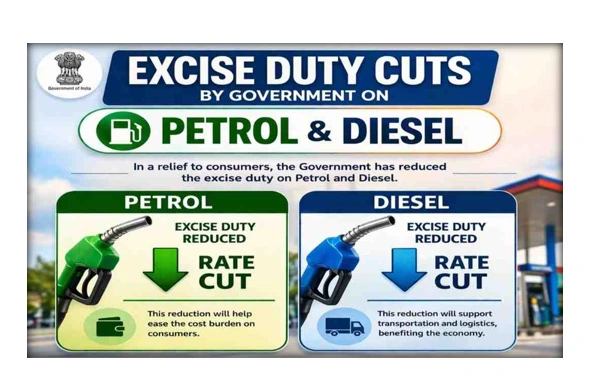
In an important decision made by the Central Government, the excise duty on petrol and diesel has been reduced by ₹10 per litre each. The special excise duty on petrol was previously set at ₹13, but will now be set at ₹3 per litre, while the diesel excise duty will be set to zero.
The increased value of crude oil worldwide, which is presently at more than $100 per barrel and is expected to continue to rise due to issues in the Middle East, served as the impetus for this action.
Reason Behind the Decision
The main reason for reducing taxes is to support consumers amid large increases in fuel prices. After the instability in the Middle East started, the world’s price of oil increased, which affected the flow of oil and increased the costs of importing oil for countries like India.
According to the government, their two options were either to pass along the costs of higher fuel prices to consumers or to relieve the burden through a tax cut. The government chose the tax cut, in order to provide a means of controlling inflation and relieving some of the public burden.
Read also: Sri Lanka Increases Fuel Prices by 24–30% as Oil Costs Climb
Impact on Consumers
Although there will be a decrease in the excise duty and the amount of tax paid by consumers, fuel prices are probably not going to drop at fuel stations right away. In fact, due to the many losses experienced by oil marketing companies (OMCs) because of high crude oil prices, economics would indicate that they would absorb much of the relief created by the tax cut.
The goal of this action appears to be not to reduce prices, but rather that of stopping price increases. Therefore, it is anticipated that retail fuel prices will stay relatively constant for the time being.
Read also: IndiGo Flights Become Costlier From March 14
Effects on Government Finances
A decline in fuel taxes is anticipated to have a major impact on government revenues. Current estimates suggest that cutting fuel taxes could lead to a loss of revenue to Government of approximately ₹1.5-1.75 lakh crore annually.
Fuel taxes are one of the main sources of revenue for governments and play an important part in determining the total price that consumers pay to purchase fuel. Any change in the level of fuel taxes will directly affect a government’s fiscal balance.
Balancing Actions: Windfall Tax
To help offset the loss in fuel tax revenues and to ensure that fuel is available domestically, the Government of India has placed windfall taxes on exports of fuel. As an example, the Government has imposed windfall taxes on diesel and aviation turbine fuel exports.
Through this action, the Government intends to discourage exports and to ensure that there is an adequate supply of fuel in India while oil prices are so volatile worldwide.
Conclusion
The reduction of excise taxes on petrol and diesel should help to cushion Indian consumers from the impact of shocks in the global oil market and to combat inflation. Reducing taxes may stabilise fuel prices; however, it will reduce revenue from the Government, increasing the vulnerability of India to movements in the global energy markets.
