


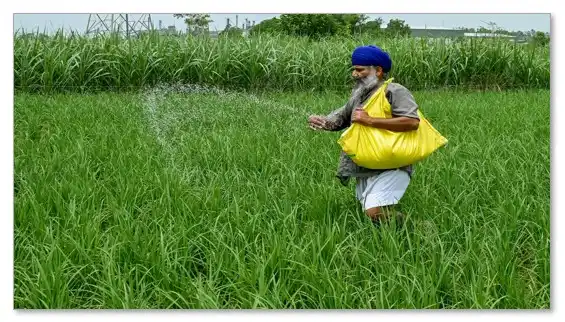
The autumn of the year is not recognized by any calendar, but by the smell of the soil after the first ploughing, and by the anxious eyeing of the horizon, and hoping that it will rain. The Indian farmer sees the soil as life, and thus, it needs feeding to support a nation of 1.4 billion. The Union Government has realised this as the heartbeat of the economy and has taken a strategic urgency to drastically boost fertilizer imports so that no furrow is left unplanted and no crop is left starving in the next 2026 cropping seasons.
Feeding the Soil to Feed the Nation
Agriculture continues to be the keystone of the Indian identity and access to major nutrients such as Urea, Di-Ammonium Phosphate (DAP), and Muriate of Potash (MOP) are the only difference between a bountiful season and a bad year. The government is essentially creating a nutrient shield around the Indian farmer, through preemptive increase of import quotas and simplification of supply chain.
The decision to increase imports was observed by union officials against the changing global oil prices and geopolitical changes that have restricted the international mineral markets. Such, however, was the word of the high command that the local supply must be kept inaccessible to international turbulence.
Humanization of Supply Chain: Port to Paddock
The macro-economic data has a background story of millions of small-scale farmers. Think of the Kisan in the plains of Punjab or the hilly tract of Karnataka. To them, the failure of DAP to arrive in time is not a technical issue, but a fail of an opportunity to germinate. It is the difference between affording to pay a seasonal loan off and becoming trapped in debt.
Read also:
- Premium petrol gets costlier by Rs 2.35 per litre
- India’s First LPG ATM Launched in Gurugram
- Govt increases Budget for Agriculture & Farmers Welfare
Dismantling the Fertilizer Strategy of 2026:
- Buffer Stocking: The government is attempting to have a Rolling Buffer of almost 3 million tonnes of Urea and DAP available at any one point in time to deal with localized sporadic shortages.
- Direct Benefit Transfer (DBT) 3.0: The better digital tracking will ensure that the imported good does not find its way into industrial use, but to the real farmer at subsidized non-inflationary prices.
- Quality Assurance: They are subjecting the imports to stringent testing procedures at the ports so as to maintain the nutrient contents N-P-K at the best standards internationally.
The Balancing Act: Imports vs. Atmanirbhar Ambitions
The increase in imports is, according to the necessity to protect the existing harvest in the short term, but it is accompanied by a solid long-term vision of independence. The two-pronged strategy that the government employs is that we should bring in what we want today and construct the factories of tomorrow.
The development of five large fertilizer plants (such as just at Ramagundam, Talcher, and Gorakhpur) is already bearing fruits, where the ratio of import dependency is lower than it was a decade ago. But the push of 2026 towards more imports understands that nature will not wait until a factory is commissioned. In case the demand is high owing to a good monsoon, the government is willing to supply the demand at all costs.
