


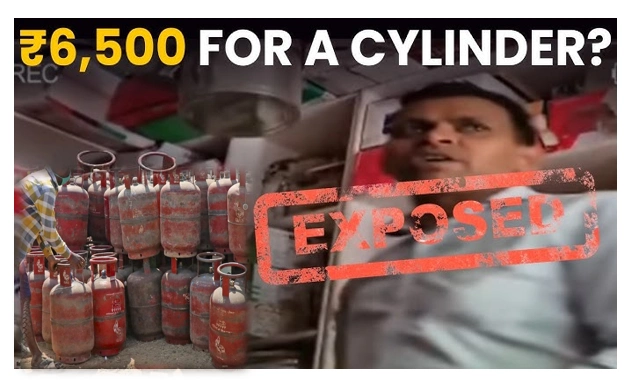
The blue flame of the stove in the kitchen has been a luxury this week which many Indians in the dimly lit lanes of urban India can no longer buy. With the global energy veins being in a tight squeeze due to the West Asia crisis, the shocks have trickled down to the doorsteps of the common Indian families in the shape of a predatory black market.
Reports in March 2026 and ground-level testimonies have revealed a horrifying truth: in the grey markets of cities such as Bengaluru, Delhi or Hyderabad, a 14.2 kg domestic LPG cylinder is being sold at as high as 6,500, and even a basic refill, which would typically cost less than 1000, is being brokered at 4000.
The structure of an artificial scarcity
Although the Ministry of Petroleum and Natural Gas has insisted on the premise that there is no dry-out in bottling plants, the fact that the official messages do not align with the reality on the streets is terrifying. It is more of a supply crisis than an issue of fear.
The panic-hoarding cycle that is elicited by the blockage of shipping lanes in the Strait of Hormuz has been triggered by the disruption of shipping lanes. Approved distributors cannot cope with a 300 percent explosion of booking requests, with families frightened by the prospect of the complete outage attempting to find several backups. A web of middlemen, opportunistic delivery people and kata gas operators (illegal decanters) have filled this vacuum instantly.
Read also: India tells LPG users to switch to piped gas wherever possible
The Kata Gas; Underworld: A Risky Game
This scarcity has rejuvenated a potentially hazardous illicit industry called kata gas the act of draining subsidized domestic LPG cylinders into commercial cylinders or into smaller 5kg cans.
The illegal refilling stations are operating in shanties of tin in congested suburbs of Kolkata and Mumbai. These operators are not fitted with crude pipes and have no safety valves making residential neighborhoods potential powder kegs.
- The M.O. Bribeing of drivers of the delivery trucks so that they can divert a part of the stock.
- The Markup: A cylinder that a Ujjwala recipient (subsidized) is purchased at its original cost of Rs 600 and resold to a desperate restaurant owner at Amazon price of Rs 5,000.
- The Risk: 3 smaller-scale explosions involving illegitimate decanting have been reported within the National Capital Region (NCR) in the past 48 hours only.
Read also: Domestic LPG price hiked by Rs 60, commercial cylinder up Rs 115
Government Crackdown and the 25-Day Rule
The Centre has resorted to the Essential Commodities Act in a desperate effort of stabilising the market. There has been a new requirement that the number of days that is required before two LPG bookings from 21 days to 25 days. The rationale is easy to grasp; avoid hoarding. But in the case of big joint families, they have a death knell of 25 days to go and they are thrust directly into the clutches of the black marketers.
State governments have reacted with different levels of urgency:
- Delhi & Uttar Pradesh: Police has been posted in gas companies to avoid line-jumping and to have the delivery vehicles reach their designated destinations without being hijacked by mobs.
- Karnataka: The state has established special flying squads to raid the hotels which have been detected with illegal domestic cylinders.
- National Level: IOC, BPCL, and HPCL have established a three-member committee of Executive Directors, which now works 24/7 to find out the bottlenecks in the supply chain.
