


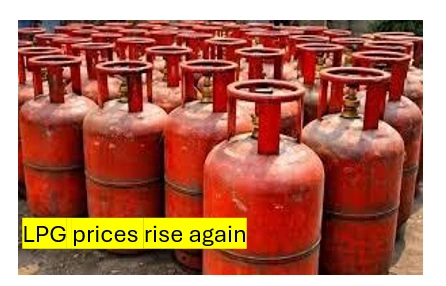
On March 7, 2026, when millions of Indian households awoke early in the morning, their tea cups were clinking and their stove was hissing as usual, they received a shocking news on their mobile screens. The volatility in the world energy markets has just taken a next step in the upward direction. Oil marketing companies (OMCs) have declared a massive increase in the price of Liquefied Petroleum Gas (LPG) price. The domestic cylinder of 14.2 kg, which forms the backbone of the Indian kitchen has increased its price by 60rs. Meanwhile, the 19-kg business cylinder which is pivotal to the survival of the hospitality and the small-business industries has shot up by a steep Rs 115.
The Kitchen Budget Under Fire
A Rs 60 increase does not mean a lot as a statistic to the average middle-class family; it represents a real change of one or two months of the budget. This re-pricing is the first significant domestic user change since April 2025 and the end of almost a year of apparent price stability.
The national capital of Delhi is seeing a rise in the price of a non-subsidised domestic cylinder by 853 to 913. The spill over is experienced even more strongly in other metros:
- Kolkata: Rs 939 (up from Rs 879)
- Mumbai: Rs 912.50 (up from Rs 852.50)
- Chennai: Rs 928.50 (up from Rs 868.50)
To homemakers such as Sunita Sharma who lives in the suburbia of Mumbai the news generates an unspoken anxiety. Everything is increasingly becoming expensive, vegetables, pulses, and the gas now, she says. It is not simply about the sixty rupees but everything that will begin to get moving as soon as the fuel prices have gone up.
As the government still offers a subsidy of Rs 300 to more than 10 crore beneficiaries as a part of the Pradhan Mantri Ujjwala Yojana (PMUY) most of the non-subsidised urban population is now being forced to bear the brunt of this global energy explosion.
Read also: Big Tax Relief Hopes Rise for Salaried & Middle Class
Why Now? The Global Context
In a bid to know why an Indian stove flame is becoming costly, one should look at the West Asia (Middle East) corridor. The recent inquiry of the military conflicts in the region has created disruption ripples in the world energy supply chain.The Strait of Hormuz is a narrow yet significant passage through which almost half the Indian crude oil and LPG imports pass by and this has been the center of the geopolitical storm. The price of imported fuel has soared with insurers withdrawing a cover and shipping routes which could be disrupted.
The Business Strangled: Restaurants to Street Food
When the domestic increase is a pinch, the 115 increase in commercial cylinders is a big hit to food and beverage industry. A 19 kg commercial cylinder is priced at Rs 1,883 in Delhi and in Chennai the price has already hit the Rs 2-000 mark.
This happens to be especially disastrous to small-scale businessmen, the dhaba owners in the neighborhoods, the caterers, and the street-side vendors. Since these businesses operate on LPG, it is the main cost that they incur in their operation.
- Hospitality Impact: Hotels and restaurants will be compelled to reformulate their menus resulting to the end consumer into increased prices.
- The “Thali” Effect: When prices of cooking gas go up and the cost of vegetables also goes up due to seasonal variations, the plate of the common man becomes a luxury that costs a lot.
Read also: Haryana CM Nayab Singh Saini presented Budget for 2026–27
