


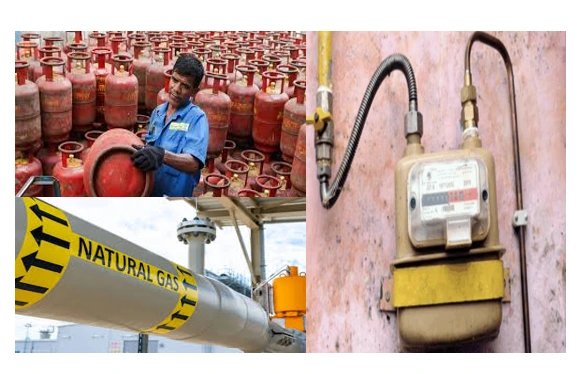
In a massive change that reaches the Indian kitchens, the Government of India has given an explicit and urgent advisory: in case you have a piped natural gas (PNG) line close to the house, it is high time to bid farewell to the bulky red LPG cylinder.
The Ministry of Petroleum and Natural Gas appealed to the nation at a time of growing energy apprehension. With the anticipated increase in a new wave of panic bookings of LPG refills, which has been caused by heightened geopolitical tensions in West Asia, officials are now pressing to have a structural shift in the consumption of energy in urban India.
This is not simply about a short-term band-aid approach to alleviating a temporary crunch, but a strategic step to re-equip the nation in terms of its energy consumption, focusing on stability, security and the One Nation, One Gas Grid vision.
The Push for PNG: Why Now?
This advisory has not come out by chance. With the war in West Asia disrupting the supply of Liquefied Natural Gas (LNG) through the Strait of Hormuz, a maritime chokepoint used by India to obtain a huge portion of its energy supply, the logistics of LPG cylinders transport have become even more stretched.
Sujata Sharma, the Joint Secretary in the Ministry of Petroleum and Natural Gas, said that currently the LPG reserves are sufficient but the panic booking of more than 75 lakh refills within one day has undermined the linkages system.
Conservatively speaking, there are about 60 lakh households in the country that have PNG infrastructure within their immediate vicinity yet still use LPG. The best solution to insulating these homes against shocks in the global supply is to convert them to piped gas, and release cylinders to the rural regions where pipes are unable to penetrate, Sharma said.
Read also: PNG and CNG Supply to Remain Stable, IGL Reassures Consumers
The Human Factor: Between Refill Stress and Running Gas
The shift in the Indian housewife LPG to PNG is not as much a matter of a macroeconomic issue, but the life rhythm. We have all experienced the so-called cylinder anxiety, the panic on the face of your blue-to-orange flame in the middle of the meal, when you find out that the spare cylinder is empty.
The End of the Waiting Game
In PNG, the idea of booking a refill is eliminated. No longer do we make calls to automated helplines, wait until the delivery agent arrives and tip in order to get a heavy cylinder carried up the three flights of stairs. It is a 24 hours 24/7 supply, just in a similar way your water or electricity.
Space and Safety at the Kitchen
The huge LPG cylinder occupies a lot of space in contemporary, small kitchens. That under-counter real-time is reclaimed by switching to PNG. In addition, PNG is naturally safer; as it does not weigh serious to the air, it spreads away easily in case of a leak as opposed to LPG whose pools form at the floor and increases the chances of fire.
Paying for What You Use
Users of LPG have a tendency to experience gas loss in the bottom of each cylinder. PNG is metered precisely. You only charge the amount of gas that you actually burnt typically every two months without having to pay a large sum at the start as a refill.
Read also: Government Orders Oil Refineries to Boost LPG Production
Close the Efficiency Gap: The Stove Challenge
Another thing, which is much described in this transition, is the stove as such. Since the government is encouraging 60-lakh more families to switch, experts are cautioning against retrofitted solutions.
The use of stoves intended to run on LPG (that with higher pressure) is now common in most Indian households. When one technician converts an LPG stove to PNG, he/she simply replaces the nozzle. Nonetheless, studies conducted by the CSIR-IIP reveal that a high percentage of retrofitted stoves has a thermal efficiency of below 50 percent.
In order to realize the full benefits of the switch, the government is promoting the use of the PNG stoves that are IS 17153-compliant. The thermal efficiencies of these dedicated appliances are up to 74 and this means that your gas bills will remain low and your cooking time will be quick.
