


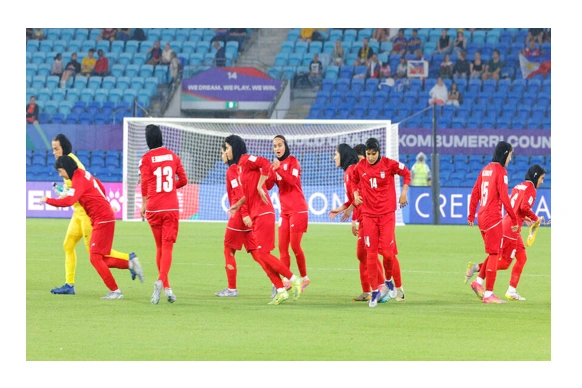
It was a high stakes diplomatic drama on the Gold Coast of Australia. The five members of the Iranian National Women Soccer team who had not only won the attention of the world with their talent, but also with a silent protest statement was transferred to an undisclosed safe spot out of the team hotel.
Even the announcement by the Australian government that immediately followed that the athletes were being granted humanitarian visas was not just any normal immigration update, but the end of a week long standoff of silent protests and international pressure and an unexpected late-night intervention by U.S. President Donald Trump.
A silent Protest Heard Round the World
This defection was planted on March 2, when the 2026 AFC Women Asian Cup was launched with the first match. The players were standing in a row in total silence when the Iranian national anthem was played in the stadium right before a match with South Korea.
It was unquestionable in the light of the current domestic conflict and military tensions in Iran. It was an act of bravery in defence of human rights to those who supported the Woman, Life, Freedom movement. It was, according to one state television presenter, the climax of disgrace to hardliners back in Tehran.
The pressure on the team was on the increase as the tournament was progressing. There were reports of minders implanted into the squad and limiting their movements as well as snores to their communications. Although the players sang the anthem in later games, which was perceived by many as forced by the authorities, the harm that had been caused to the regime in the eyes of the audience was already established. Considered to be traitors of the war by the state media, there was even more danger of their coming home.
Read also: International Women’s Day: Sports Ministry organises nation-wide
The Trump Intervention and Gold Coast Escape
At the moment, when the team was officially kicked out of the tournament after a defeat against the Philippines on Sunday, the clock started. Beyond the team hotel at the Royal Pines, there was chaos. The demonstrators entered in large numbers shouting Save our girls, and at one time, the fans even blocked the team bus so that it could not move away to what they feared could have been a flight back to danger.
When the U.S. President Donald Trump went to social media and decried the Australian government as a terrible humanitarian error, the situation entered the international arena. Trump made a typical direct appeal and asked Prime Minister Anthony Albanes to provide them with asylum, and he added, the U.S. will take them up in case you refuse.
The pressure worked. The two leaders conducted a 2:00 AM phone call on which Albanese made a confirmation that the Australian Federal Police (AFP) would be on the move. Five key players (including the team captain, Zahra Ghanbari, and Fatemeh Pasandideh, Zahra Sarbali, Atefeh Ramazanzadeh and Mona Hamoudi) were spared when the sun rose on Tuesday.
Read also: Ronaldo rushes out of Saudi Arabia in his private jet
“Joy and Relief”: Entering a New Life
Here is the scene of emotional release that was described by the Australian Home Affairs Minister Tony Burke who met the women and granted them humanitarian visas. Burke explained that “I do not want to start to conceive how challenging that choice is to each of the individual women, but it was certainly joy, it was relief last night, as well.
The visas issued are short term humanitarian visas, which allow them to have a window to permanent residence. To these five women, staying translates as being safe yet it also translates to a heart-tearing separation with their families in a nation that is experiencing a lot of military and political tension. According to Burke, the players insisted on only one thing, they are not political activists but athletes. This was not a career move to politics but a question of conscience to them.
