


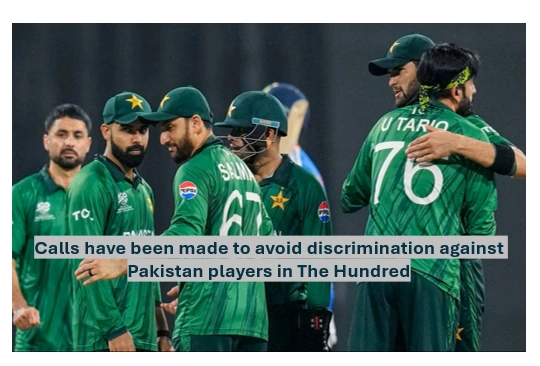
Cricket has never been just a game, it is a reflector of the complicated geopolitical situation of the world. This is the same mirror that showed a mounting tension in London this week with the England and Wales Cricket Board (ECB) and all eight franchises of The Hundred issuing a statement of defiance once again stating their belief in inclusivity. The message was obviously straightforward: Do not discriminate against Pakistani players.
Issued on February 24, 2026, the statement is an offensive attack in advance of a growing scandal. With the league in the process of privatizing and with the Indian Premier League (IPL) owners flooding the league with major investments, there has been growing concern that a shadow ban may paralyze one of the most talented cricketing countries in the world.
The Nubbin of the Controversy: A Shadow Ban?
The firestorm started after the BBC story that purported that the high ranking officials in the ECB had privately indicated to players agents that only teams without Indian ownership would be interested in Pakistani cricketers.
At the moment, half of the eight franchises of The Hundred are closely associated with Indian investors:
- MI London (previously, Oval Invincibles) -Owned by Mumbai Indians/Reliance.
- Manchester Super Giants- associated with the ownership of Lucknow Super Giants.
- Sunrisers Leeds (previously Northern Superchargers) – Affiliated to Sunrisers Hyderabad.
- Southern Brave- 50% GMR Group (Delhi Capitals).
Firm Line: The ECB Strong Action
As a reaction to these reports, the ECB did not give a polite denial, but a warning. A letter addressed to the directors of all the eight franchises was a reminder by the governing body that The Hundred was based on the idea of having new audiences reached and this must leave everyone feeling part and parcel of the team, irrespective of nationality.
The Human Cost: 67 Dreams on the Line
Beyond the legal vocabulary and ownership system are 67 Pakistani cricketers including 63 men and 4 women that officially registered the draft on March 11 and 12.
In the case of players such as Shaheen Shah Afridi, Naseem Shah and Haris Rauf, whose reserve prices are all in the highest category of £100,000, it is not only professional but also financial. These are global stars who inject electric energy and huge fan base to any stadium they visit.
A Looming Player Revolt?
The most vocal threat was made by an old all-rounder Moeen Ali. As he did with a boldness that shook the executive suites, Ali threatened that players will not be silent when they saw a systematic exclusion on the basis of heritage or nationality.
The remarks made by Ali depict a cultural gap. Although the franchisees can have root interests in commercial sensitivities or political solitude in their domestic markets, the current English cricketing culture is hyper-sensitive to concerns of discrimination given the in the spotlight scandals of racism over the last few years. To the ECB, a shadow ban would be a PR disaster that would reverse years of the work to engage the minorities.
Read also: Bangladesh Joins ICC–Pakistan Dispute
Auction: A Test of Integrity
The real test will be done on the 12th of March, 2026. The London auction house will be scrutinized like never before. When the “Big Six” Pakistani names of Afridi, Rauf, Naseem, Shadab Khan, Saim Ayub, and Muhammad Nawaz are not purchased and lesser statistically significant players get picked up, then the so-called unwritten rule will be very much written down.
But there is a chance in this case to the non-Indian-owned teams:
- Birmingham Phoenix
- London Spirit
- Trent Rockets
- Welsh Fire
Such franchises may end up getting elite talent at a bargain price should their competitors not take part in the bidding war purely on political grounds.
