


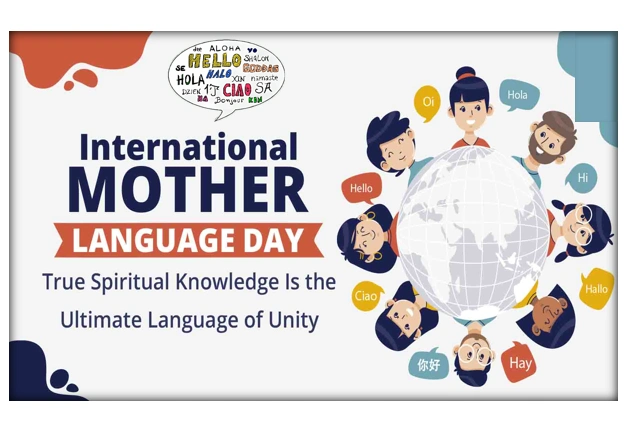
On Saturday, February 21st, 2026 the world will stop to mark an achievement that is as much about what lies ahead as it is about what came before! This year is Silver Jubilee (25th Anniversary) of IMD which has hatched from a local honor in Bangladesh into an orbit of global stature to take forward worldwide movement for linguistic dignity.
In 2026, the air of the world — from the crowded streets of Dhaka to the remotest mountain villages in the Andes — is heavy with a polyglot chorus untraceable to any single source. Themed “Youth Voices on Multilingual Education” — a key feature of the event will focus on the next generation. It asks an essential question: At a time when global algorithms and just a few “mega-languages” control the cultural conversation, how can we make sure that the first words of a child continue to be the most powerful tools for learning and self?”
Protecting the ‘DNA of Culture’ for 25 Years
When UNESCO first declared that Feb. 21 would be observed as International Mother Language Day in 1999, it was to commemorate a particular act of sacrifice. In 1952, students in Dhaka sacrificed their lives to demand that their mother tongue be conferred the status of a state language. Their pluck demonstrated what so few insist on today: language is not just a way of communicating; it’s also a human right.
Twenty-five years on, the Silver Jubilee marks both how far we have come and how much further there is to go. The world now uses about 7,000 languages but nearly 40% of the world’s population still does not have access to education in a language they speak or understand.
The AI Frontier: Can Artificial Intelligence Save Dying Languages?
Cross-referencing tradition with technology will be one of the highlights of 2026. Hundreds of experts and youth leaders are gathering for a historic session, “The Future of Mother Languages in the AI Era,” held at UNESCO Headquarters in Paris.
Tiny-language speakers were left out in the cold by the “Digital Divide” for years. But, 2026 is different. We are seeing the rise of:
- LLMs, Hyper Localized: New artificial intelligence models are beginning to be developed based on “small data,” not just hundreds of years’ worths of English or Mandarin. This would mean speakers of languages such as Quechua, Santali or Dimasa could engage with technology in their natural syntax.
- Real-Time Revitalization: This week, apps are being unveiled that allow elders in indigenous communities to record oral history—as soon as the recordings are done, they’re transcribed on the spot and archived through AI to form digital dictionaries for the young.
Classrooms Inclusive In India, the Bhasha Sangam initiative has been extended by the government: it uses augmented reality (AR) to enable students in cities better understand and appreciate the phonetic richness and scripts of 22 scheduled languages and hundreds of local dialects.
Yet the celebrations are truly global, if not
- India: Assam government issued an official statement to introduce Dimasa language in school curriculum, a victory for linguistic inclusion. In Tamil Nadu, “Mother Tongue Festivals” are being organised to celebrate Tamil as amongst the earliest and longest still surviving classical languages of the world.
- The Smithsonian (USA): The 11th year of the annual Mother Tongue Film Festival will be showcasing 25 films in 27 languages as it provide a space for stories not often heard in mainstream film.
- United Kingdom: In cities like Manchester and Reading, “Language Trails” are leading families through museums and community centers to explore the hundreds of languages spoken by their neighbors, in an effort to make clear that multilingualism is a city’s greatest cultural resource.
How You Can Participate
The “One Word” Challenge: Master a phrase in language spoken in your area that is not your own.
Read a book, watch a movie or listen to music in your own language, no matter how much more comfortable you are with the dominant tongue.
Digital Inclusion: Engage your own language in social media to raise the ‘‘digital footprint’’ of your identity.
On sunset, Feb. 21, 2026, the message is as crystal clear: Every language counts. All voices need to be heard. And the most beautiful sound in the world connects us to our source.
