


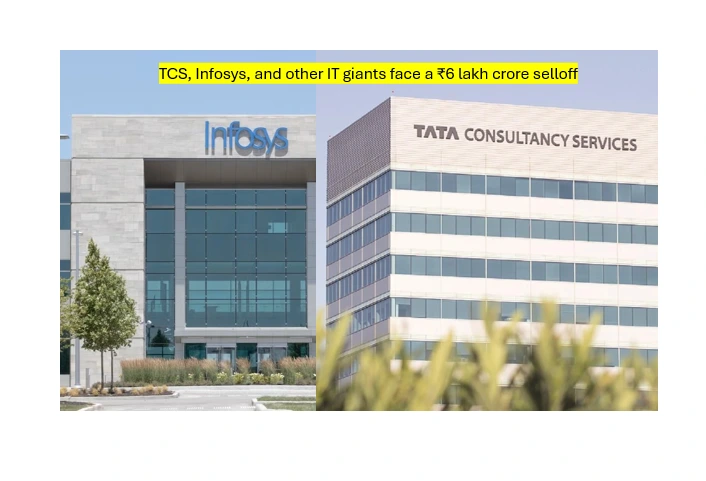
The Indian IT industry is currently weathering a storm of unprecedented volatility. Only in the eight sessions up to mid-February 2026, ₹6 lakh crore (about $72 billion) of market-capitalisation has been eroded from this sector. The catalyst? A “perfect storm” of rapid advances in agentic AI — namely tools like Anthropic’s Claude Cowork — and a global software sell-off that has investors questioning the fundamentals underpinning the outsourcing model.
But behind the sea of red on trading screens, a very different story is playing out within the glass-walled campuses of Bengaluru, Mumbai and Hyderabad. Industry leaders firms such as TCS, Infosys and HCL Tech are not only preparing for the impact but also re-platforming their businesses. The aim is to move from the “back-office of the world” to being the “orchestrators of the AI-native enterprise.”
From ‘Effort-Based’ to ‘Outcome-Led’: The New Revenue Reality
For many years, the Indian IT success story was made on the Linear Growth Model: more projects meant more engineers translated into more billable hours. AI has basically decoupled this connection.
In order to guard against this, IT giants are shifting towards:
- Results not Resources: Being paid for the deliverable (e.g., a 20% cut in supply chain expenses) rather than by how many people or engineers work on the project.
- IP-Led Platforms: Creating AI software owned by the company, not its customers (like Infosys Topaz or TCS AI WisdomNext that clients subscribe to) generating sticky, high-margin recurring revenue.
- The Orchestrator Role: Large enterprises don’t really use AI in the plug-and-play way the generalist media often talks about it. They have siloed data and arcane legacy systems. Indian IT companies are positioning themselves as the vital “plumbers” who will usher in AI into these unwieldy corporate environs in a safe and efficient manner.
Lenskart Q3 Results Show Huge Jump in Profit, Revenue Climbs Strongly
Reinvention at a Strategic Level: Adapting the Big Four
Even as the market treats the sector like a monolith, though, the strategies of individual giants are growing increasingly divergent.
FROM TCS: Constructing an “Sovereign” AI Stack
TCS has out-backed itself on infrastructure. Early 2026, it announced a strategic pivot by no longer positioning itself as an “AI Chatbot” provider and instead of that (and through its partner companies) investing in a India based 1 Gigawatt AI Event Datacenter.
Infosys: The “AI-First” Culture
Infosys has tied its internal promotion and probation cycles directly to AI fluency. The company’s “AI Varsity” is now training almost its entire work force to do more than simply code, as it moves into the realm of what it calls “AI orchestration.” The company is counting on the fact that its human-led AI consulting use will become indispensable to businesses because of how well it knows client business logic.
HCL Tech: A Bet On The Physical AI Frontier
With the understanding that software-only AI is destined to become a commodity, HCL Tech is staking its future on Physical AI and Robotics. As they overlay AI into industrial IoT and manufacturing shop floors, they are venturing into “un-automatable” domain in the convergence of digital and physical.
The Job Market: Retraining at Scale
The most “human” dimension of this disruption is the 4.8 million people who work in the sector. Layoffs have dominated the headlines, but the broader trend is a vast internal migration of talent.
Why the “Plumbers” Still Matter?
Indian IT firms were the “plumbers” of the tech world, JPMorgan wrote recently. Though that may not be glamorous to you, it is an incredibly powerful posture.
Even the most sophisticated A.I. models, like Claude or GPT-5, are in an enterprise context “engines without a chassis.” They can’t untangle on their own a global bank’s regulatory compliance, access-permission layers or 40-year-old legacy codebases. The relationship is with the Indian IT firms, and the context belongs to them.
Next: The Road (line) to Success – Survival of the Fastest
The ₹6 lakh crore sell-off is a painful but perhaps unavoidable “valuation reset.” That is the market saying, I am no longer willing to pay a premium for “business as usual.”
The IT giants that live through the tumult of 2026 will be the ones that embrace cannibalization—readily automating away their own low-end services before a startup or a client-side AI tool does so for them. By taking advantage of India’s status as the world’s biggest storehouse of tech talent and data, these giants are trying to convert an existential threat into a “surfboard” for the next multi-decade growth wave.
