


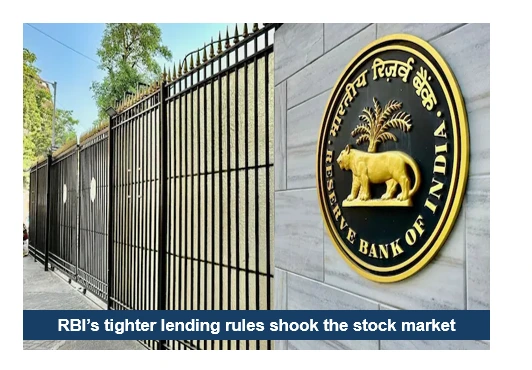
Indian capital markets were greeted by a “regulatory hangover” on Monday, February 16, 2026. Stocks in big broking firms, exchange platforms and wealth management shops experienced a precipitous fall with some losing as much as a tenth of their market value in one session. The trigger? A comprehensive new guidelines from the apex bank on ‘Commercial Banks – Credit Facilities Amendment Directions, 2026.’
Why It’s Not the End of The World (Yet): 6 New Normal Breaking Points
The RBI’s main focus to remove “speculative froth” from the system and make sure a market sell-off doesn’t turn into a banking crisis. But for the intermediaries that supply liquidity to keep markets functioning, the medicine tastes rather bitter.
The End of Unsecured Support
Earlier, banks could lend the stockbrokers on a part-security or even unsecured promoter assurances. Under the new guidelines, this is strictly not allowed.
- The 100% Rule: Any money lending to a SEBI regulated broker or intermediary must for ever more only be against “high quality collateral”.
- No More Promoter Guarantees: Banks are now unable to use the “good word” or personal financials of a broker’s promoter as stand-by support on institutional loans.
The “Cash Blockage” of Bank Guarantees
Mediators do tend to give BGs by way of Pledges for their margin money requirements to stock exchanges and clearing houses. The RBI has now also clamped down on these:
- That 50% point of Collateral Minimum: The cover a guarantee provides must be equal to or higher than 50 percent.
- The Cash Component: The key thing is that at least 25% of that collateral must be real cash. This is a major drain on the capital efficiency of brokers, as it “warehouses” liquidity which would otherwise serve business growth or client needs.
RBI Updates Rs 100 and Rs 500 Notes, Assures Public, No Demonetisation
Impact Assessment: Who Felt the Heat?
The response on Dalal Street was immediate — and merciless. Once it became clear what the impact of higher funding costs and reduced leverage would be — a sea of red under ”Capital Market” basket of stocks.
The “MTF” Problem
The Margin Trading Facility (MTF) is a big source of revenue for retail-focused brokers such as Angel One and Groww. The impact of making bank funding for these facilities more expensive and collateral-heavy is to raise the “cost of doing business” for each and every retail investor who raises the (be it borrowed) money he invests/trades.
Strategic Intent: Avoiding a “Leverage Trap”
The market reaction is negative in the short term, but many economists are making a case for RBI the being the “adult in the room.” In the past two years, retail participation in Indian markets and derivative volumes have spiked.
Curbing Proprietary Trading Risks
The RBI in its guidelines has clearly disallowed banks to finance proprietary trading desks of brokers. Banks can still fund “market-making” (giving buy/sell quotes) and debt warehousing, but they can’t make the fuel that drives up brokers to bet on the market with their own capital.
The “Silver Lining” for Stable Corporates
- Safe Passage: Large corporates with good balance sheets should actually have a stronger chance of reaching the acquisition finance they require, as definitions for “stable” borrowers are now clearer.
- Smaller Arbitrage: The rules are designed to prevent “regulatory arbitrage,” in which banks were shuffling risk among bank divisions and their corporate parents to get around previous caps.
Looking Ahead: A Transition Period
The RBI has also provided industry with ample time to prepare for it.” These new standards will be effective on 1 April 2026. That leaves banks and brokers with only about six weeks to:
- Re-negotiate loans outstanding to have 100% collateral regime.
- Negotiate and access new investments or distribute cash at adequate yields to satisfy (or minimize) the 25% in new cash collateral requirement for bank guarantees.
- Change their Margin Trading (MTF) rates for retail clients to reflect higher funding costs.
Indian shares edge higher after RBI rate cut, led by financials
Conclusion
The sell-off on Feb. 16 is a “price correction” for a new era of discipline. And though the “easy money” that drove up speculative volumes might be drying up, in the long run, what emerges is likely to be a financial ecosystem that is more robust than before. For the retail investor, it may translate into slightly higher costs for margin trading but also a much-reduced risk of a brokerage-led systemic meltdown.
