


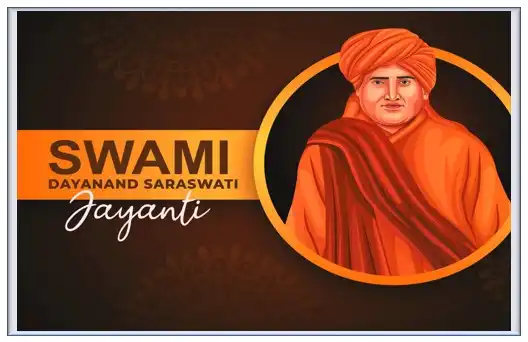
On the 12th of February, 2026, a spirit of deep solemnity pervaded throughout the wide expanses of India as she celebrated that day the birth of one of her most revolutionary spiritual and social reformers— Swami Dayanand Saraswati. At the head of the national tributes, President Droupadi Murmu and Vice President Jagdeep Dhankhar paid floral respects – and made comments that seemed to coincide with India’s contemporary troubles.
Presidential Praise: A Vision of social justice
Droupadi Murmu, president of India, in her address to the nation credited Swami Dayanand Saraswati as a leader in “intellectual and social decolonisation”. She recalled, that much before the movement for independence took tangible proportions, Swami ji had layed down the doctrine for self-dependence & national pride.
How does Vivekananda’s philosophy take us from ‘I’ to humanity?
Emphasizing Women’s Empowerment
The President highlighted in particular the radical view of Swami Dayanand on education for women. In a highly restrictive societal order, where women were still brought up in seclusion he worked for equal right of women to Vedic studies and education.
“Swami ji’s vision of an educated and empowered womanhood has become the very strong foundation on which the emergence of the ‘Nari Shakti” in contemporary India stands,” he said.
His campaigns against child marriage and for the remarriage of widows were not so much social reforms as spiritual acts of bravery that gave back dignity to millions.
Vice President of India’s Message: The Architect of ‘Swaraj’
Vice President Jagdeep Dhankhar, in his homage, highlighted the political importance of Swami Dayanand’s philosophy. The professor advised the youth to remember that Swami ji coined the term “Swaraj” for the first time as an inborn birthright which would later become a chant among leaders like Lokmanya Tilak and Mahatma Gandhi.
Satyarth Prakash : The Light of Truth 76 Ghazi KukabSubhani Quran se Ijad
His magnum opus Satyarth Prakash is one of the most significant books on history of India. There he took religion apart like a surgeon and argued for:
- Monotheism: The belief in a single, formless, omnipresent deity.
- Idolatry and service: Resurfacing spiritual forces from idol worship to the formless God and human services.
- Universal Brotherhood: The caste system based on birth is rejected, and instead followers are taught to follow a social structure based on karma (action) and ‘merit’.
At Present: Swami Dayanand in 2026
Why does a 19th-century reformer matter in the age of Artificial Intelligence and space exploration? The explanation lies in his emphasis on rationalism.
Ethical Governance and Environmentalism
NOW what Swami Dayanand teaches: 22 He teaches that “Ethical Life” is all-in-all. He thought that the goodness of his children is the strength of a country. During these times of deepfakes and false information, he pays special attention to the “Vedic Satya” (Universal Truth) which is proving itself to be a moral guide.
Conclusion: Living the Legacy
As the sun set on the birth anniversary celebrations, what came in the message from President and Vice-President ji was a grim reminder that we do not pay tribute to Swami Dayanand Saraswati by just garlanding his statues, but by aping ‘fearlessness).
In a country as diverse as India, his appeal for unity, education and relentless search for truth is perhaps as important in our times, if not more so than it was in the 19th century. He was a reformer who didn’t merely want to tackle what people believed; he wanted to affect how they lived.
