


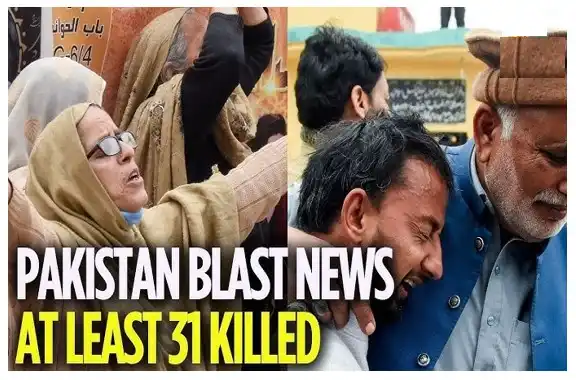
A powerful suicide bomb blast in a Mosque located in Islamabad on February 6th, 2026, resulted in a minimum of thirty−one fatalities and at least one hundred sixty−nine injuries. The event happened at the Khadija Tul Kubra Shia Mosque during Friday’s congregational prayer. Local police were deployed to provide assistance and rescue operations. During rescue operations, emergency personnel transported many victims from the site’s chaos to medical facilities in Islamabad, including the Pakistan Institute of Medical Sciences (PIMS) and Polyclinic. Many vigils have been held worldwide for this tragedy.
After exchanging fire with mosque security personnel at the gate, the bomber detonated the explosives within the mosque community hall, creating an explosion with maximum injuries possible. Many of those injured remain at critical risk of survival; local officials do not expect pinpointing final casualty count until all rescue operations are completed.
Islamic State Claims Responsibility
Islamic State (ISIL/ISIS) terrorists have taken credit for last week’s suicide bombing in Pakistan via their Telegram account. They accompanied their announcement with a photo of the alleged bomber.
The terror group has released an image of the alleged herat bomber, who was reportedly trained in Afghanistan. Defence Minister Khawaja Asif said the attack was part of a larger trend where militants travel between Afghanistan and Pakistan for training.
Rapidly and federally, the Government of Pakistan has condemned this heinous crime. Both Prime Minister Shehbaz Sharif and President Asif Ali Zardari, expressed great sadness at the loss of innocent lives and pledged to bring the terrorists to justice.
Internationally, many have condemned this act of terror, including the UK Ambassador to Pakistan. The European Union also condemned this violence as terrorism.
Also read:
Security and broader context
The details behind this bombing and the reason for its contagion are part of the backdrop to the overall severity of this attack. While there have been dozens of deadly hate crimes in Islamabad over the last 10 years, this has been one of the worst on civilians and Shia Muslims in the Pakistan’s history of religiously motivated violence. A significant increase in security measures has been launched within the capital city to search for perpetrators and to prevent further violence from taking place.
A major suicide bombing at a district court in Islamabad that occurred in November 2025 not only represents an ongoing challenge to security in Pakistan but is being accompanied by continued attacks against minority groups and soft targets by the Islamic State’s affiliate and Pakistani Taliban factions.
Impact on social and political life
Municipal hospitals became overwhelmed with casualties as a result of this blast and blood donations were called upon urgently to assist medical personnel. Almost all public events in Islamabad were cancelled as well as a renewed debate over domestic terrorism and Pakistan’s national security policy was sparked by the bombing.
Within Pakistan, the government now has both the immediate obligation of caring for victims of the bombing, as well as the renewed pressure to establish effective counter-terrorism mechanisms to stop future attacks against the civilian population.
