


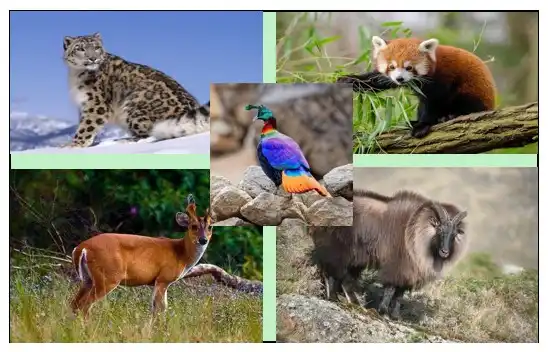
The Himalayan mountain range is an example of the world’s most unique ecosystems due to the diversity of plant and animal species. Five species represent both the fragile mountain ecosystem and highlight their importance to the region.
- Snow Leopard: The Elusive “Ghost of the Mountains”
The snow leopard (Panthera uncia) is the iconic predator of the Himalayas. Rarely seen and adapted to thrive above 3,000 meters in elevation, this cat is known as the “ghost of the mountains.” The dense, smoky grey fur of the snow leopard, combined with the powerful hind legs that allow it to climb steep rocks, enables it to survive the extremely cold weather associated with elevated elevations.
Snow leopards serve as keystone species by helping to control herbivore populations. Unfortunately, due to habitat loss, climate change, and human interactions, the snow leopard population continues to decline. Conservation programs working through community-based conservation efforts in India, Nepal and Bhutan are being established to assist in the conservation of this magnificent predator.
- Red Panda: A Forest Dweller Under Pressure
The red panda (Ailurus fulgens) accumulated its name from its physical appearance. The red panda is not closely related to the giant panda. Found within the eastern Himalayan region of temperate forests filled with bamboo, which makes up an majority of its diet, the red panda has a distinctive rust coloured coat with long ringed tail(s).
- Himalayan Monal: The Jewel of High-Altitude Forests
The Himalayan monal (Lophophorus impejanus) is a pheasant that lives in Nepal and has stunningly beautiful iridescent plumage. This bird can be found in places between 2,700 meters and 4,500 meters. It prefers to inhabit alpine meadows and hilly forests.
The monal is also an important indicator of the health of forests. Although there are serious concerns regarding hunting and habitat destruction, many monal populations have stabilized due to legal protections.
- Himalayan Musk Deer – A Very Small, Very Shy, and Extremely Endangered Animal
The Himalayan musk deer (Moschus leucogaster) is a nocturnal herbivore that prefers to live alone. The males of this species have a gland that produces musk. For centuries, this musk has been used for perfume and traditional medicines.
Due to the popularity of using musk, the musk deer has been subjected to illegal poaching for many years. The loss of habitat has only added to the threats faced by these animals which therefore makes them very vulnerable. Conservationists are calling for better enforcement of laws related to the illegal poaching of musk deer and more studies to determine how synthetic alternatives can be created to be used instead of natural musk.
- Himalayan Tahr – The Sure-Footed Goat of the High Mountains
The Himalayan tahr (Hemitragus jemlahicus) is a goat-like animal that is heavy set and has a long shaggy reddish-brown coat with curved horns. With its body structure and shape, it was made to be able to walk up steep cliffs and on rugged slopes. It eats the grasses and shrubs found on the alpine tundras at locations of more than 4,000 meters elevation.
While the Himalayan tahr is being threatened by hunting and competition for habitat in places of its natural habitat, it is still an important species of the Himalayan alpine ecosystem.
Also read:
- Dog Breeds That Are Naturally Gentle
- 9 Calm Dog Breeds for Homes with Babies
- 20 feet crocodile found in Nile
Why These Species Matter Now?
Global warming is causing the Himalayas to warm at a rate greater than the overall average. This creates great stress on species that are specialized to live in narrow temperature and altitude parameters. Protecting these five species will help save entire ecosystems upon which millions of people rely for water, as well as for climate regulations and jobs.
As governments expand protected lands and involve local populations, the future of the Himalayan wildlife is being determined by balancing development with conservation before these icons in the mountains are gone forever.
