


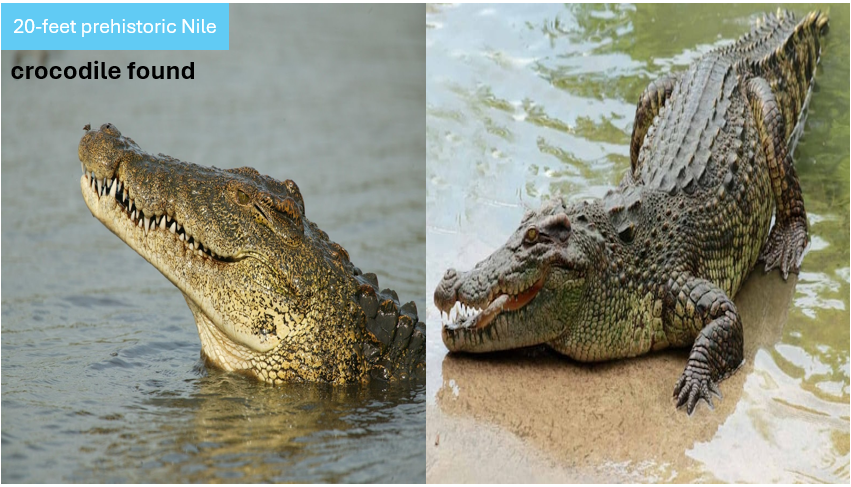
Authorities along the Nile have confirmed a sighting of a roughly 20-foot-long, quite abnormally large crocodile, and with this extraordinary attraction has come unprecedented public interest and discussion over wildlife conservation and human safety along Africa’s longest river.
The giant reptile reportedly was spotted not far from one of the busiest stretches of the river, in which local fishermen were the first to take notice of its unusual size when it spent some time basking close to the shore. The intervention of wildlife officials was sought out, and a response team was sent out to verify the situation and that the local communities were safe. According to the experts, the Nile is one of the very last habitats in the world that still can support such large apex predators.
It is well-known that the Nile crocodile is one of the largest freshwater predators on the continent of Africa, and most individuals have life spans measured in decades. Although most adults may be within the general range of 10 to 16 feet in length, exceptional ones could reach larger sizes under favorable conditions when food is abundant and disturbance to humans is limited. According to scientists, this newly found crocodile is estimated to be several decades old; it has survived various environmental pressures in their now-continuously evolving state, further worsened by the increase in human activities along the length and breadth of the river.
Temporary safety measures have been brought in, including closing off access to some riverbanks and stepped-up patrols by wildlife rangers. Officials said the idea is not to harm the animal but manage coexistence between people and wildlife.
you may also like this:
- Six interesting walled cities around the world
- List of super-hot Singapore destinations to visit this season
- The Soldier Village of India Where Uniform
Reports after the discovery
“This find reminds us that the Nile is not just a resource for humans, it’s a living system,” a regional wildlife officer was quoted as saying. Large crocodiles played an important part in the balance of nature, keeping fish stocks under control and removing weak and sick animals.
It has restarted conversations about conservation and protection of habitats. Environmental groups highlight the fact that though most people fear crocodiles, they are also victims of habitat loss, pollution, and hunting outside the law. A specimen of such a big size could point to the fact that parts of the river are still healthy, ecologically speaking, despite different growing environmental adversities.
Social media amplified the story, and pictures and videos went viral, with many arguments. Some said they were afraid and worried about public safety; others celebrated it as representative of Africa’s resilient wildlife heritage.
Ending note:
Tourism officials say such discoveries raise interest in the Nile region around the world, so long as tourism is responsibly managed. Non-invasive tracking by wildlife experts will continue to monitor the crocodile, making sure the movement of the reptile does not stray into highly populated areas. Authorities called again for respect of safety guidelines and protection of natural habitats for peaceful coexistence. Teeming with life that nourishes millions of people and untold species, the Nile surfaces a powerful enabler of nature’s resiliency-and the responsibility that humans share in protecting it-in the form of a 20-foot crocodile.
