


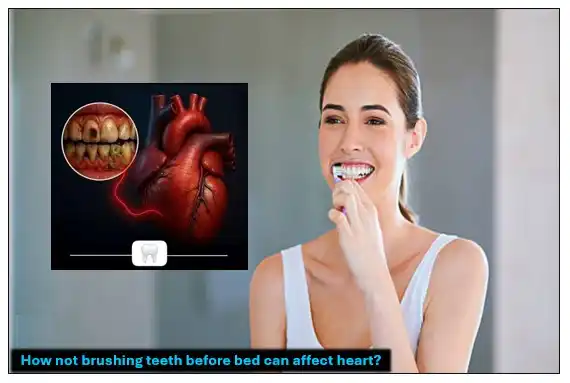
Many individuals consider brushing their teeth before sleep as a means to prevent tooth decay or halitosis. Nonetheless, not completing this task will have repercussions much larger than the mouth. Evidence is beginning to indicate that inappropriate oral hygiene, primarily at night, may correspond directly with an increased chance of cardiac disease due to the pathways of bacteria, mitosis, and the body’s reaction to chronic infection.
What Transpires When We Sleep?
While we are awake, the saliva accounts for washing away food particles and counteracting acid on the teeth. At night, the quantity of saliva produced is greatly diminished. Therefore, this presents a perfect opportunity for bacteria to reproduce.
Also read:
- Legs and Feet Can Reveal About Hidden Health Issues
- Delhi Cardiologist Reveals 4 Foods
- Benefits of Yoga for Men
What happens when you are not brushing before you go to bed?
- Remaining food particles will stay on the teeth and gums
- Excessively reproducing bacteria will create more plaque
- Harmful bacteria will continue to propagate for an inordinate number of hours without interruption
- Eventually, this excess of unhealthy bacteria will lead to gum inflammation and infection and be the precursor of systemic issues.
The Unfortunate Connection Between Gum Disease and Other Disorders
Not brushing your teeth on a consistent basis, primarily before bed, will increase your risk of developing gingivitis and periodontitis, with both being forms of gum disease.Gingivitis will result in inflamed, red, and bleeding gums.Conversely, periodontitis is a more aggressive tooth infection leading to tissue destruction and bone loss.
When your gums are swollen and/or infected, it will produce small openings in your gums. This will allow bacteria from your mouth to enter your blood stream especially when you are participating in daily activities (i.e., chewing, brushing) that cause your gums to bleed.
Pathways for Bacteria from the Mouth to the Heart
Once oral bacteria enter your blood stream, they can move throughout your body. Studies show they have been found in:
- Arterial plaque
- Heart valve tissue
- Atherosclerotic lesions
Bacteria can aggravate the inflammation of blood vessels; this is a major contributor to heart disease. The chronic inflammation will damage the walls of the arteries, therefore enabling cholesterol and fat to stick, creating plaques.
Inflammation and Heart Disease
Many people relate heart disease to cholesterol, but the truth is that heart disease is also related to inflammation.
Along with poor oral hygiene comes low-grade inflammation for extended periods of time. Chronic inflammation will keep your immune system in a state of constant activation and cause it to release inflammatory agents, i.e., C-reactive protein (CRP). Studies have found elevated CRP levels to be closely associated with:
- Coronary artery disease
- Heart attack
- Stroke
In a nutshell, poor gum health can keep your immune system in an “attack mode,” and over time this will cause strain on your cardiovascular system.
Increased Risk of Endocarditis
Another serious disease associated with oral hygiene is infective endocarditis. Infective endocarditis takes place when bacteria circulate through the body, and these bacteria attach to the damaged areas of the heart; typically, to the area of abnormal heart valves.
Those with existing heart disease are at high risk of developing endocarditis. Although rare, endocarditis can result in death and often develops from bacteria located in the mouth.
Why brushing your teeth before bed is the most important part of dental care:
Bacteria are more likely to reproduce at night, and because saliva production is decreased while we sleep, the likelihood of plaque hardening into tartar is greater; therefore, by brushing prior to sleep, you are not only removing food particles from your mouth, but you are also disturbing bacterial colonies from being able to do any damage while sleeping.
Brushing Your Teeth before Bed is a Simple Habit with a Big Benefit
Although brushing your teeth at night only takes two minutes, doing so can have a significant impact on:
- Decreasing gum swelling;
- Decreasing the number of bacteria in circulation;
- Decreasing the risk of developing heart disease later in life.
When combined with flossing and regular dental checkups, brushing your teeth before bed is an easy way to maintain your oral health and will help to support your cardiovascular health as well.
Conclusion:
In addition to negatively affecting your smile, choosing not to brush your teeth before bed can also indirectly lead to the development of heart disease through continuous exposure to bacteria and chronic inflammation in your gums. Even though brushing your teeth does not directly prevent you from experiencing heart disease, brushing your teeth nightly is one of the many healthy habits that you can incorporate into a lifestyle that will reduce your risk of experiencing heart disease as well. By protecting your gums, you are protecting your heart, which demonstrates the strong relationship between good dental health and overall good health.
