


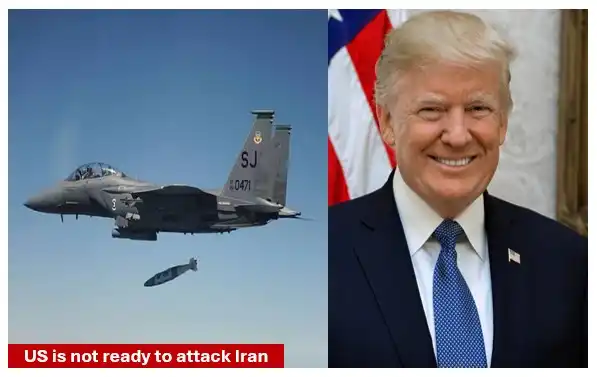
According to a report in The Wall Street Journal, U.S. defence and administration officials state that the United States is currently not in a position to carry out a military strike on Iran due to weaknesses in regional air defence capabilities, and concerns regarding the possibility of Iranian reprisal action against U.S. assets. Furthermore, the United States has recently positioned some of its naval, air and missile defence resources into the Middle East.
According to the report, U.S. defence planners would prefer to strengthen force-protection systems surrounding bases and personnel located in the Gulf region before moving forward with any kind of offensive military activities, as planners remain extremely cautious concerning the potential risk for escalation.
Despite this restraint, U.S. President Donald Trump has indicated he will apply military pressure on Iran while leaving the door open for diplomatic engagement. Although he has described U.S. naval forces deployed to the region as “formidable,” he has also indicated there is an effort to continue dialogue with Tehran. Additionally, White House Officials are indicating they wish to determine if diplomatic efforts will help avoid armed conflict while keeping “every option on the table”.
Both U.S. and allied officials have issued warnings regarding Iran’s nuclear capabilities and its brutal suppression of domestic protests, which U.S. officials have condemned.
Iran Poised Between Diplomacy and Defence
Iran’s leadership has responded to U.S. military pressure with mixed signals:
- Iranian President Masoud Pezeshkian has announced that Iran is prepared to engage in “just and reasonable discussions” with the United States regarding nuclear subjects. Representatives from both countries could be gathering in Istanbul this week.
- Iran’s Supreme Leader Ayatollah Ali Khamenei has cautioned that any assault from America will cause a more expansive conflict in the region. This indicates that Iran will maintain its position of not giving into pressure to submit to violence.
- These two statements taken together demonstrate the dual track of Iranian efforts at both engaging diplomatically while having a forceful response to what they see as a threat to their national integrity.
- Throughout the Middle East there is a common anxiety regarding what seems to be a build-up of tensions among countries in this area.
- According to sources; an adviser from the United Arab Emirates is indicating that this region “does not want” the U.S. and Iran to get into a dispute, therefore open up the door for direct negotiations.
- Additionally, there are reports relating to the potential for Turkish and other regional players to facilitate conversations to restart discussions regarding issues relating to nuclear power and security concerns.
- This overture toward diplomacy from these countries come from an overall effort by both Western and Asian governments to reduce action that would result in an all out war due to the involvement of the multiple parties engaged in this area.
Also read:
- Iran president tells Saudi crown prince
- Iran unveils mural warning of retaliation
- Iran prepares for war as US military ‘armada’
Why the U.S. Is Hesitating to Launch an Attack?
Analysts say several strategic and practical concerns may be behind the Biden and/or Trump administration’s caution:
- There is a possibility that Iran will carry out retaliatory attacks according to its missile and drone capabilities, thereby threatening U.S. military bases as well as allied forces located throughout the region.
- Several countries in the Gulf region such as the UAE have publicly stated that they will not permit their territory to be used as a base for attacking Iran. This complicates things further by limiting future options for staging air attacks.
- Even as Washington is pressuring Iran regarding its nuclear weapons and for its human rights abuses, it still is indicating it may be open to negotiations in order to diffuse tensions, which illustrates that it is not automatically going to use military means.
What happens next?
At this point, the big question is how can we gain traction in negotiations before we escalate this situation into an actual war? Thus far, the Trump administration has been very cautious in its approach to avoiding military strikes, both from a defensive posture, and due to diplomatic discussions with both parties; however, with the growing rhetoric from both sides, it appears very likely that tensions will soon result in open hostility.
If either party does not agree to continue negotiating, or new provocations occur (such as attacking U.S./allied forces), then the situation could escalate rapidly. However, at this time, we are continuing with a strategy of deterring, defending, and diplomatically pursuing options prior to resorting to the use of direct military force.
