


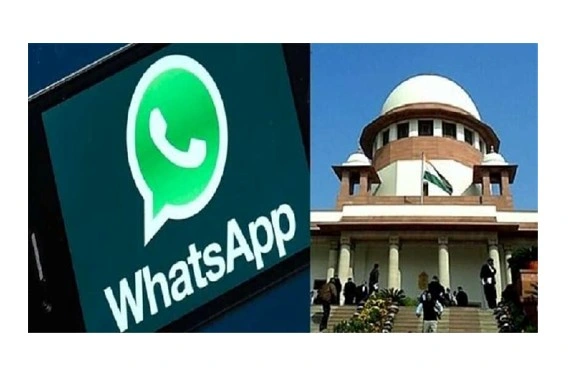
On February 3, 2026, the Supreme Court of India rebuked WhatsApp and its owner, Meta Platforms, for violating the Constitution and endangering the privacy of Indian users, and warned that they may need to exit the Indian market. These remarks were made during ongoing hearings before the Delhi High Court regarding issues related to WhatsApp’s “take-it-or-leave-it” privacy policy and data-sharing practices.
The Supreme Court of India issued these comments while reviewing a National Company Law Appellate Tribunal (NCLAT) decision that upheld a competition penalty of ₹213.14 crore imposed by the Competition Commission of India against Meta and WhatsApp. The penalty was based on WhatsApp’s 2021 privacy policy that required users to accept the sharing of additional data with Meta or leave without the ability to opt-out. Chief Justice Surya Kant remarked that the right to privacy is an inalienable right; as such, he stated that the Supreme Court would not permit either organization to share any portion of Indian user data unless they complied with the Constitution.
Critics of the policy argue that it violates both competition law and fundamental rights, forcing millions of Indian citizens to give permission to share certain metadata with Meta for business and advertising purposes.
Supreme Court’s Key Issues
- Privacy & Consent – The court ruled user data cannot be used commercially without proper and informed consent. The bench questioned if an average user could decipher the very long privacy clauses and whether rural or non-English speaking people would be able to understand them.
- Monopoly & Market Power – The judges have been very critical of WhatsApp’s dominance in India as a messaging platform. Users have very limited options available, making choice an illusion.
- Restrictions on Data Sharing – As a temporary order, WhatsApp cannot share any user data with Meta, until the case is finally determined.
- Meta and WhatsApp Position – Both companies argue that their privacy policies meet international standards; that end to end encryption protects message content, and share only limited account data with you (such as phone number and device ID).
The legal department for Facebook’s parent company, meta, has stated that they plan to provide a thorough response detailing how they handle user data through a filing to the higher court, in light of being questioned harshly by the Supreme Court.
Next Steps in the case
The Court has decided to adjourn the matter until next week, during which both WhatsApp and Meta must file detailed answers and also counter-affidavits indicating the Union Ministry’s position. The court has scheduled appointments for further hearings next week to consider interim directives and to allow time to review the numerous filings.
Wider Implications
According to some attorneys, this ruling has the potential for major ramifications for other tech companies that currently do business in India, especially those that are dominant players. If up held by the Supreme Court it is possible that the use of user data will significantly reduce globally for all technology companies doing business in India – currently the largest message provider in the world.
To summarize: The Supreme Court has made it perfectly clear to both WhatsApp and Meta – comply with Indian law and safeguard the user’s right to privacy; otherwise be prepared to exit India – the ruling can be seen as part of India’s larger movement against what it considers to be the unintended consequences of big tech.
New Government Rules: No WhatsApp or Messaging App Access Without Your SIM in India
