


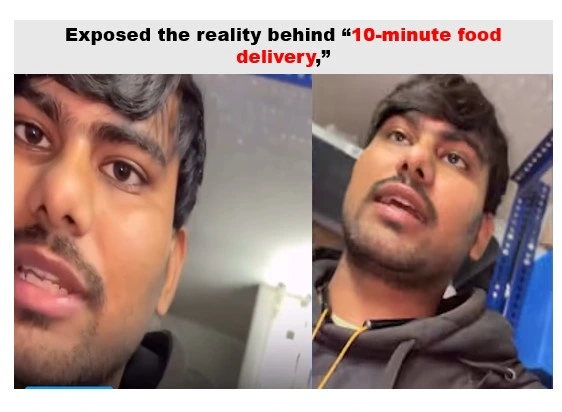
A man in a viral video says that speed often comes at the expense of quality in the fast growing 10 minute food delivery model. This has sparked a new debate about the model. A video that has gotten a lot of attention shows what appears to be frozen rice, paratha, and rasmalai being delivered within minutes via an e-commerce platform. As the video went viral online, people had strong reactions. Now, people are wondering if ultra fast delivery is lowering food standards.
What the Popular Video Displays
The man in the video opens the food packages soon after getting them and says the food is still frozen inside. He shows off parathas that are still frozen, rice that looks hard and clumped, and rasmalai that looks cold instead of chilled. He said the food was sold as fresh or ready to eat, but when it arrived, it was in a condition that made it unsafe to eat right away.
Many people liked the video because 10-minute delivery services emphasise how convenient and fresh they are. From what I saw, I wasn’t sure if that speed would allow enough time for quality control, storage checks, or handling of frozen and partially cooked foods.
Why 10-minute delivery is being looked at more closely
In India’s cities, quick commerce has grown rapidly, promising delivery of food and groceries in under 10 or 15 minutes. To meet these deadlines, businesses rely on dark stores near neighbourhoods that are stocked with frozen and pre-packaged goods. While this model reduces delivery times, some say it makes businesses more reliant on frozen goods rather than freshly made or recently stocked items.
Food safety experts have repeatedly said that frozen foods must be kept at very specific temperatures. Any break in the cold chain can change the taste, texture and safety of the food. These worries have been amplified by a viral video that suggests that the need to deliver fast may lead people to cut corners on storage or handling.
Responses on social media and consumer worries
Online users have had a range of reactions to the video. Some users reported similar experiences, saying that instant delivery services had also sent them frozen or poor quality food. Some people defended the platforms by saying that customers should read product descriptions carefully and that frozen food is common and safe if reheated properly.
But the bigger worry about transparency still stands. People want to know whether an item is ready to eat right away or needs to be thawed or heated first. Many people are now calling for clearer labels and better communication from delivery apps about the types of products they sell that are labelled as instant.
What the industry did and what’s next
The platforms involved haven’t said anything directly about the viral video, but quick commerce companies have repeatedly stated that they follow food safety rules and maintain cold storage standards. People who work in the food industry say that frozen foods are used a lot in both stores and food delivery services, and that speed does not always mean lower quality.
Still, the event has shown a lack of trust. As competition heats up, delivery platforms may need to find a way to balance speed with better quality checks and teach customers more. Experts say that instant delivery shouldn’t mean eating right away without first preparing the food, especially if it’s frozen.
The video that went viral is a good reminder that models that are based on convenience need to change in a smart way. People are likely to become more aware as 10-minute delivery becomes the new normal. They will demand not only speed, but also quality, safety and honesty in how food is marketed and delivered.
Swiss Food Giant Nestle issues global recall of few baby formula products
