


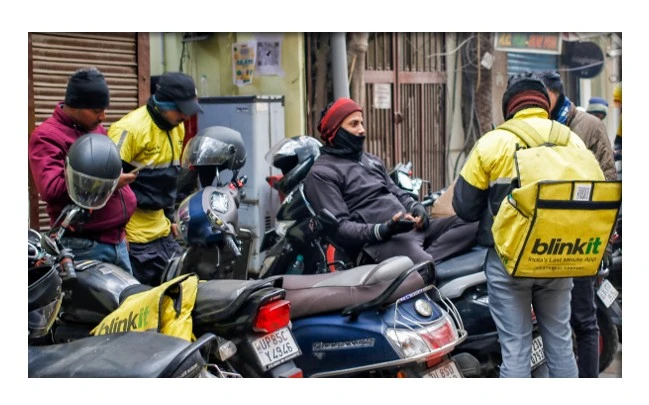
For India’s quick commerce giants, the “10–minute delivery” guarantee had long been their hallowed badge of glory. It was a marketing masterstroke that transformed grocery shopping into an almost instantaneous moment of digital magic. But, as of Jan 13, 2026, the countdown clock officially has stopped. The country’s largest delivery aggregators, which include Blinkit, Zepto, Swiggy and Zomato- have agreed to scrap the 10-minute deadline on their branding and advertising after Union Labour Ministry’s decisive intervention.
And it’s a huge pivot from the “speed–at–all–costs” gig economy we’ve been living under for years, toward prioritizing human life and worker dignity over logistical hyper-efficiency.
A Win for the “Invisible” Workforce
The decision did not occur in a vacuum. It came after sustained pressure from the gig worker unions and a series of high-stakes deliberations held under the stewardship of Union Labour Minister Mansukh Mandaviya. For the hundreds of thousands of delivery partners who crisscross India’s perpetually gridlocked and often terrifying urban roads, the 10-minute timer wasn’t just a convenience for the customer — it was an ever-present danger.
The tide began to turn on New Year’s Eve 2026, when some 200,000 delivery riders across the country staged a flash walkout. They complained of wear and tear on their bodies, heightened exposure to road accidents and an algorithmic system that they felt punished them for delays beyond their control.
The officials called Mr. Mandaviya’s intervention a “persuasive nudge.” The government met with the chief executives of leading platforms and told them that while it welcomed innovation, via an “aggressive branding” of ultra-fast delivery times they had created a condition in which riders felt pressure to break traffic laws and put their lives at risk for little more than an arbitrary marketing pledge.
Branding vs Reality: What Really Changes
The most immediate difference is already on the screen of your smartphone. Blinkit, the first to fall in line, has gutted its punny slogan. “But now we have rebranded it to `30,000+ products delivered at your doorstep.'” Other rivals such as Zepto and Swiggy Instamart will soon be doing the same over the next few days, erasing “the 10-minute” promise from their t-shirts, delivery bags and app headers.
But the ability for rapid delivery is something you shouldn’t just assume has gone away. “They said the 10-minute delivery window was thanks to ‘Dark Stores,’ not by speeding riders,” she wrote, referring to so-called dark stores, or mini-warehouses, within a two-kilometer radius of customers.
The “guarantee” is gone, but the operating model has not. Store 500 meters from a warehouse, and your milk and bread could still be there in less than 10 minutes. What’s different from then is that there would be no mandate now. By removing the public-facing timer, and branding that prioritizes speed above all else, the government hopes to reduce some of the psychological pressure on riders.
Zomato and Blinkit Clock Record 75 Lakh Orders on New Year’s Eve Despite Strike Calls
A New Legal Chapter in the Battle Between Uber and Its Drivers
It is one piece in a far broader regulatory overhaul. On November 21, 2025, India’s Code on Social Security (2020) was finally implemented and “gig workers” and “platform workers” were for the first time defined under the country’s law formally.
As part of this landmark law, aggregators are mandated to pay 1–2% of their annual turnover towards a social security fund. This fund will provide:
- Life and Disability Cover: Financial support for families in the event of accidents.
- Health and Maternity Provisions: Health care for workers and their wives.
- Old-Age Protection: A plan of securing retirement allowances.
Scrapping the need to reply within 10 minutes is the first big “behavioral” regulation under this new system. As Raghav Chadha, a Rajya Sabha MP and public face of the campaign in favor of this change put it: “With ‘10 minutes’ written on rider’s jacket, a timer running at customer screen – pressure is real and dangerous. Today we stood on the side of human life and human dignity.
Zomato Raises Delivery Worker Incentives for January 31 Ahead of New Year’s Eve Demand
Effect on the Consumer and the Market
For the average consumer, this will result in delivery estimations on their apps (“estimated time of delivery,” or ETD) to be more dynamic and lifelike. Rather than a 10-minute promise cast in stone, the users might instead see ranges like “15-25 minutes” based on traffic, weather and rider availability.
When they black out, few people may notice at all. Market analysts say the effect on industry will be limited. The “habit” of fast trading has already taken shape in Tier-1 cities. There can’t be much that’s changing with the service, because whether a chocolate bar gets to my door in 9 minutes or 19 probably isn’t going to stop me from using it. Instead, the emphasis for these companies is moving from speed to selection — reflected in Blinkit’s recently added tagline of having “30,000+ products.”
The 10-minute deadline ultimately marks a coming of age moment for the Indian internet economy. It is an acknowledgment that sustainable economy cannot be based on the toil of an exploited and endangered labour force. As the hype around “ultra-fast” cools, a more human and sustainable vision of convenience is emerging in its wake.
