


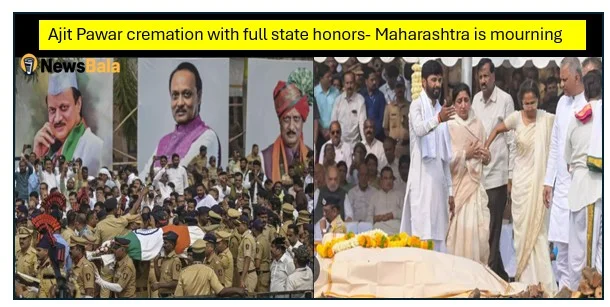
The Maharashtra political scene mourned the loss of a prominent figure as Ajit Pawar that was laid to rest on January 29, 2026. Thousands attended the emotional ceremony, which took place in Baramati, where Mr. Pawar had spent much of his life prior to his untimely death. The funeral procession began at the Vidya Pratishthan Grounds in Baramati and concluded with a brief memorial service before cremation.
Mr. Pawar died in a plane crash in Baramati on January 28, 2026, just before 11:00 A.M. According to police reports, the plane went down during its approach to land, killing all five occupants.
Ajit Pawar had a significant impact on the political landscape of Maharashtra and throughout India. He was well-known for many contributions but perhaps most importantly for ensuring the ongoing viability of crops during times of drought through various agricultural development programs.
The Honorable Ajit Pawar, from Mumbai, was born on September 29, 1965, and died on January 28, 2026, due to injuries sustained in the plane crash.
Senior political leaders paid tribute to the late politician and NCP founder Sharad Pawar. Some of the notable political leaders include:
- Amit Shah – Union Home Minister
- – Nitin Gadkari – Union Minister
- – Ramdas Athawale – Union Minister
- – Devendra Fadnavis – Chief Minister of Maharashtra
- – Eknath Shinde – Deputy Chief Minister of Maharashtra
- – Sharad Pawar’s wife, Sunetra Pawar – a sitting Member of Rajya Sabha, family members
- Attendees included state government officials from other states, like Pramod Sawant – Chief Minister of Goa and national leaders.
- Wives of politician leaders were devastated and in tears.
Section headers: Street and Home Mourning
At the time of Kaul’s death, large crowds had gathered along the route from his death to the cremation ceremony city of Baramati, Maharashtra. Many mourners came to say goodbye, due to the personal connection created over decades between the deceased and local inhabitants.
Numerous supporters, in addition to numerous regular citizens, had comments about the late politician’s service to the development and welfare of the population of Maharashtra, especially in rural areas, and the farm community in Maharashtra. Because of this connection with the public, there were over 1,000 people in attendance at the cremation service showing their continued support for the politician’s local roots.
Political Resonance and State Protocol
The state government in Maharashtra has declared three days of official mourning for the leader after he unexpectedly passed away and all government buildings will close during that time as a way to show respect.
The state funeral arrangements were made through the Pawar family and included both a state/professional honour and a personal tribute to the deceased man.
Since this was a government-sponsored funeral, extra security measures were put in place around the premises of the funeral including ceremonial traditions such as a guard of honour and special salutes from police officers and other dignitaries to assist in the formal recognition of the deceased leader’s public service.
A New Chapter Begins with the Loss of a Legendary Leader
The deceased leader was Ajit Pawar, aged 66, who held various positions as Deputy Chief Minister over multiple terms and had served for more than 40 years with the Nationalist Congress Party (NCP). He was an influential political figure throughout much of western Maharashtra and was highly regarded in the region due to his past contributions to the state.
The unexpected departure of Ajit Pawar from the political arena has resulted in a large void in leadership within the state of Maharashtra and has led political analysts to speculate about the future direction of the NCP and the overall coalition of political parties to which he was a primary contributor.
A Grieving State
A diverse group of Indian politicians came together for the funeral of Narayan Rane. The significance of Narayan Rane as a politician who has transcended barriers in this case of a respected leader is clear from the number of prominent people who attended, emphasizing his influence beyond just regional boundaries. The impacts of Narayan Rane’s life as a public servant can just as easily be seen in the outpouring of sorrow shown by those in Baramati as it can in New Delhi’s leaders as they all reflect upon his contributions to their respective communities.
