


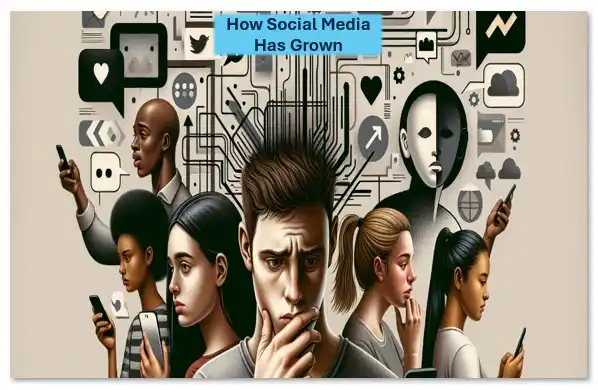
Social media is now woven into the fabric of modern life. Worldwide, billions of people use platforms like Instagram, TikTok, Facebook, and X to connect with others. The way in which we communicate, consume, and express ourselves are all affected by this interaction. However, while there are many positive aspects of social media, many mental health professionals are becoming alarmed by the impact that social media can have on our mental health — especially on our youth. Recent studies — along with public debate — indicate that too much unregulated time spent online can have a real and lasting impact on a person’s mental state.
How Social Media Has Grown and Become a Normal Part of Everyday Life?
In just 10 years’ time, there has been an exponential increase in social media use. Due in part to the widespread availability of smartphones and affordable internet connections, it is now possible to interact online continuously (in real-time) with other users. For many users (young adolescents/teenagers/20-somethings), social media is used primarily as the arena where they go for social validation, for forming identities, and for entertainment. The close integration of socially mediated activity into users’ daily lives raises many questions about the emotional and psychological effects of being constantly exposed to curated online visual content.
Anxiety, Depression, and Comparison Culture
The link between social media use and anxiety/depression has been one of the most talked about topics in today’s society. Many social networking platforms portray an idealized version of life, beauty and success. These portrayals create a “comparison culture” in which users feel the need to compare themselves to others, leading to lower self-esteem and feelings of being inadequate. Mental health professionals have also observed that continual exposure to these unrealistic images may contribute to body image issues, chronic stress, and major depressive symptoms, especially for teenagers who are still developing their identity.
The Effect of Social Media on Teenagers and Young Adults
The group most adversely affected by social media is teenagers. Heavy social media use has been linked to increased feelings of loneliness, sleep disturbances and emotional distress among teens. Cyberbullying, online harassment and the pressure to create an immaculate online persona can compound the mental health struggles facing teens. Experts indicate that the adolescent brain is very sensitive to social interactions. Thus, if a teen receives a lot of likes, comments or shares, this will likely elicit strong emotional reactions.
Addiction and Loss of Control
A related issue is the growing prevalence of social media addiction, which is fueled by features like infinite scrolling, alerts, and algorithm-generated content created to maintain users’ interests in the platform for longer periods. The result can be a compulsive behavior pattern, with individuals experiencing anxiety or restlessness when they are unable to connect to the site. Increased screen time also has negative consequences on concentration, academic/work performance, and sleep patterns, all of which adversely impact a person’s mental health.
Positive Estimation Of The Usage And Emotionally Supportive Environment Created By Social Media
Even though social media has a number of negative aspects, it is not always bad. When used appropriately, social media can give emotional support, create communities, reduce feelings of loneliness, and allow individuals to connect with others. Social media provides a means to promote mental health awareness, provide peer support, and provide a venue for open dialogue about depression, anxiety, and trauma. For individuals who have no access to traditional means of obtaining support, social media offers a way for them to feel accepted, as well as provide validation.
Role of Platforms and Governments
Regulatory agencies and governments are now investigating how social media companies should be held accountable due to increased concern about the impact that social media has on young people. There are a number of countries that have implemented regulations aimed at protecting minors from harm caused by social media (i.e., age verification, time limits to use social media, and creating content moderation policies). Additionally, social media companies are now starting to develop tools intended to promote mental health (i.e., mental health resources, reminders of how long their users have been on social media, and crisis support resources). Critics, however, disagree that these tools alone are sufficient and believe that social media companies need to be regulated more strictly to provide safer environments for their users to use.
The need to develop digital literacy skills and healthy behaviours through education and encouragement is critical in reducing the negative consequences of using social media. Educating users (especially adolescents) on how to critically assess social media content and manage their screen time can help establish more positive relationships with technology. A few methods that can be used to improve individuals’ mental health while using social media include taking periodic breaks from using social media, refraining from using social media within an hour of bed time, and intentionally curating a feed that includes positive posts about other individuals (influencers).
Conclusion: Striking a Balanced Approach
Social media’s effects on our mental health can be seen through a number of lenses. In some cases, social media can provide a sense of community or promote awareness of various issues. Conversely, it has also been associated with several negative impacts on mental health. It is essential to maintain a healthy balance between social media use and overall well-being. With research continuing to evolve, ongoing collaboration by the key stakeholders – users, families, teachers, governments, and technology companies – will play an essential role in the use of social media as a positive tool for connecting, rather than as a source of psychological harm.
