


CANBERRA, Australia — In a far-reaching crackdown that will change the way the world comes to grips with the proliferation of online content made by young children, Australia has implemented one of the strictest social media bans in existence: No child in Australia can use social media until they turn 16. Australia will have the distinction of becoming the first country to implement a federal ban on users younger than 16 not being allowed to use popular social network sites when it becomes enacted on December 10, 2025 through its new law dubbed the Online Safety Amendment (Social Media Minimum Age) Act 2024.
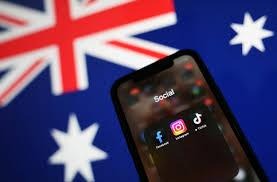
The action, which took place in November 2024, is the government’s firm and sweeping response to growing national emergency on about children mental health partly driven by Cyber pulling (cyberbullying), online harms and digital platforms engineered for manipulation. Communications Minister Anika Wells called the move a “moral imperative,” saying the government “stands strong with parents, not with platforms”.
The Need to Protect: How Data Influenced the Ban
The policy is not just political rhetoric: It’s backed by harsh research results. A report from Australia’s eSafety Commissioner showed the distressing level of online harm being experienced by young people in Australia.
- An incredible 96 per cent of children aged 10 to 15 have USED social media platforms.
- Over half, 52%, of eight to 17-year-olds surveyed said they were bullied online.
- Most important 71 percent had seen content related to harm, and a quarter had been the victims of online sexual harassment.
Some figures These are graphic representations of a digital world so laden with risk, as the Government would have it, that the perceived tally in terms of benefits for tiny developing minds cannot add up. “Social media has become a platform for peer pressure, an accelerator of anxiety and a gateway for scammers — more than anything it is an ally of predators online,” the prime minister, Anthony Albanese, said. But Minister Wells went even further, bemoaning “predatory algorithms” that entice young people into an online “purgatory,” and comparing their addictive nature to “behavioural cocaine.”
The Platforms’ New Accountability
The law places the onus of enforcing its provisions entirely on the tech titans. The companies – including Facebook, Instagram, TikTok, YouTube, Snapchat Kick X and Reddit (but excluding Apple), must classify sites as “age-restricted” for adults using it whose accounts are held by an Australian child aged under 16.
The stakes for non-compliance are high: there are fines of up to AUD50 million (~USD33MM) available to be levied against organisations in systemic breach. Crucially, the law doesn’t blame children and their parents for evading the ban, directing responsibility at the platforms for systems and age-verification technology.
Leading up to the deadline, large businesses have issued compliance plans. Meta started deleting suspected under-16 accounts for Facebook, Instagram, and Threads on December 4th. YouTube had originally fought against its incorporation in the ban, but has now said from December 10th it will automatically sign out all Australian users below the age of 16, meaning they’ll lose access to critical features such as subscriptions and likes, as well as parent controls.
A Fractured Digital Landscape: Controversy and What Comes Next
And yet with the obvious moral imperative to protect children, the legislation has prompted heated debate among civil liberties groups, academics and most powerfully of all – it seems young people who are in its crosshairs.
Critics of the ban, such as UNICEF Australia and the Digital Freedom Project, say it represents an “overstep” that doesn’t confront the root problems posed by online safety and digital literacy. The law was being challenged in the High Court by a 15-year-old student, Noah Jones, who says it is a “rushed regulation” that will make the internet less safe by driving young users toward unregulated, hidden corners of cyberspace and an “unfair assault on freedom of speech.”
