


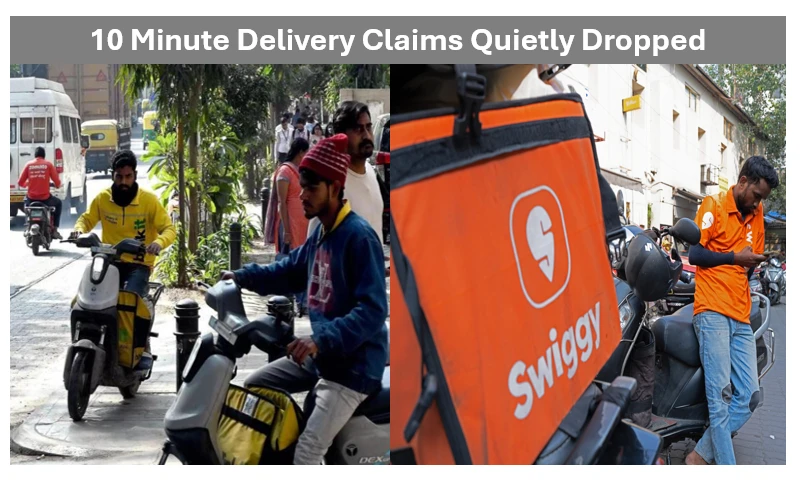
In India, a number of quick-commerce sites have quietly taken down their widely advertised 10 minute delivery promises from their apps and marketing materials. The move comes as the government looks more closely at rider safety and working conditions in the quickly growing sector. The change in branding is a big change in how the company talks to the public, but many delivery riders say they still don’t know that the claim has been officially taken back.
Riders Say They Haven’t Received Any Formal Communication
Branding change is a major shift in how the company talks to the public, but many delivery riders say they still don’t know
Delivery partners in many big towns say that companies didn’t officially let them know that the 10-minute delivery claim was taken away. Riders said they were still receiving orders and rewards the same way they had before, without any official training, notice or new rules explaining the change. A number of riders said they learned about the change only from news stories or social media conversations, not from internal lines of contact.
This lack of direct contact has shown that there is still a disconnect between the policies set at the platform level and the information provided to on the ground gig workers.
Concerns about safety lead the government to step in
The Union Labour Ministry said it was concerned that strict delivery times could lead to dangerous rides, so it withdrew its 10 minute delivery claim. The ministry warned of the risk of crashes, long work hours, and excessive pressure on riders to meet impossible targets.
People say that Union Labour Minister Mansukh Mandaviya spoke with representatives from fast food services and online stores and urged them to prioritize worker safety over competitive, speed based marketing. Reports say that the ministry stressed that delivery times should not put riders’ safety or health at risk.
Major delivery aggregators agree to remove 10 minute delivery deadline
Branding changes, but the ground stays the same
Some of the biggest e commerce sites in the country have already changed how they look to the public. Blinkit has taken out any direct references to 10-minute delivery from its motto. Swiggy, Zepto and Instamart have also changed their marketing to avoid making set delivery promises.
Riders, on the other hand, say that the practical truth hasn’t changed much. They say that incentives, delivery standards and job assignment methods keep pushing them to finish deliveries as fast as possible. Researchers say removing the claim appears to have little effect on riders’ daily workloads or performance pressure.
The customer’s expectations have not changed
No longer promising arrival in 10 minutes, riders say that customers are still mostly acting the same. Customers still expect deliveries to happen almost instantly and if their orders are late for more than a short time, they often call or text the riders. Riders say that strong marketing around very fast delivery for years has changed customers’ standards, making it hard to change people’s minds quickly.
Customers’ constant pressure and the fact that business measures have remained the same have led many riders to believe the risks of fast deliveries still exist, even though there hasn’t been an official claim.
Zomato Raises Delivery Worker Incentives for January 31 Ahead of New Year’s Eve Demand
Very fast growth in the quick commerce sector
India’s fast-commerce industry has grown thanks to strong demand in cities, networks of dark stores and significant investment. Although businesses seem to be backing off from firm time claims due to regulatory pressure, speed remains a key part of their strategy for staying competitive.
People in the industry say that platforms will likely keep focusing on fast fulfillment while avoiding clear promises that could draw government scrutiny.
There are concerns about openness and responsibility
This event has made people think more broadly about how open the gig economy is. Labor experts say that changes in marketing words are not enough for real reform. For better safety, they say there should be clearer communication with riders, changed incentive systems that don’t promote dangerous behavior and stronger safety measures built into the platform’s design.
For now, the removal of the 10 minute delivery claim is a change that customers can see. However, for many riders, their daily work pressures haven’t changed much, which shows that policy decisions and real life situations in India’s e commerce environment are very different.
