


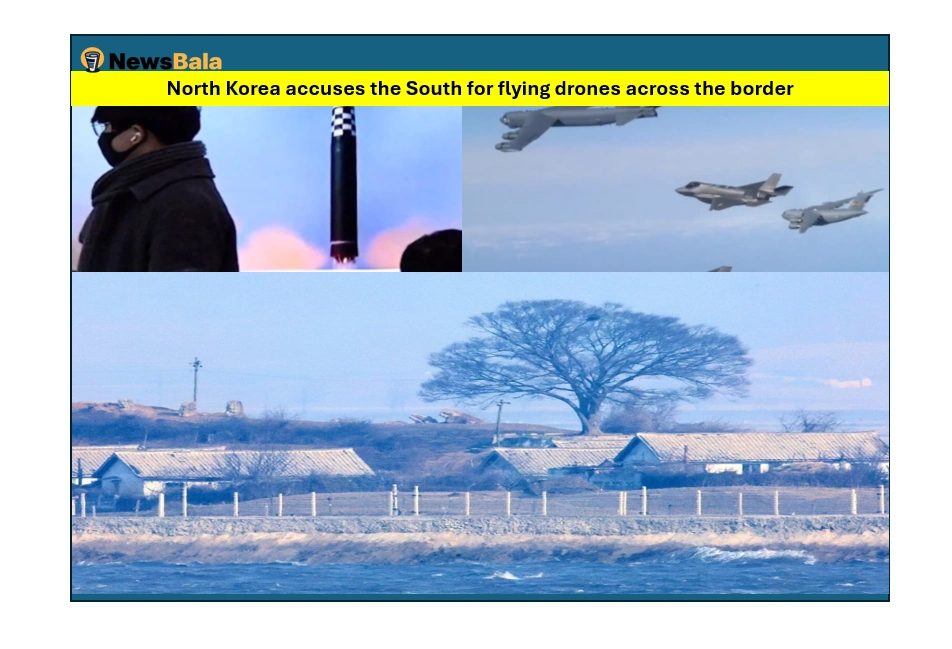
The fragile truce surrounding the Korean Peninsula has been shattered by the buzz of propellers and the jarring static of electronic warfare. On Saturday (January 10) North Korea stepped up its verbal attacks on the South, charging it with a “grave infringement” of its sovereignty by flying drones far over its territory.
The allegations, carried by the state-run Korean Central News Agency (KCNA), depict a scene of high-tech hide-and-seek across one of the most heavily fortified borders on the planet. This, the North Koreans said, is not just an incident but rather part of a “serial outrageous encroachment” that will bring the South to “pay a dear price.”
The January 4 Incident—Wreckage at Kaesong
The central focus of the North’s new accusation is a set of events on Jan. 4, 2026. North Korean military personnel say they had followed an aerial object which originated from the Incheon area in South Korea, and flew straight north bound. They claim they allowed the drone to penetrate some 8 kma with North Korea before using what they called “special electronic warfare assets” to gun it down.
The drone crashed in the rural village of Muksan-ri, near the border city of Kaesong, according to reports. In an attempt to add credibility Pyongyang released a series of photos of twisted metal debris, electronic circuit boards, and aerial views of North Korean buildings—images it maintains were extracted from the memory card on the drone.
Analysis from the North has indicated that the vehicle was programmed to go on a 156-kilometer loop at an altitude of around 300 meters, collecting footage of “major regional objects,” reports have suggested. For the Kim Jong Un regime, this is “clear evidence” of organized spying activity.
A Second Front: The Accusation of September 27
The North Korean General Staff did not stop after the January incident. They also backtracked to late 2025 and said another South Korean drone had taken off from the border city of Paju on September 27. The drone that penetrated the North severely survived for a while and its offensive occurred before South returned to its territory due to electronic strike by being taken in skies above North Hwanghae Province, they said.
By connecting the two, Pyongyang is trying to shape a storyline of unrelenting hostility from the new South Korean government. It is a particularly fraught moment, as North Korea gears up for a major Party Congress — an event in which Kim Jong Un normally enshrines his domestic and foreign policy for years to come. The “most hostile enemy,” the South, makes a compelling domestic rallying cry.
Seoul’s Denial: “Absolutely Not True”
South Korea’s response has been fast and scornful. A South Korean defense ministry official also dismissed the allegations saying that date, it has no trace of any UAV activities said to have been conducted by the ROK forces.
Ahn, the minister, took it a step further, doubting the technical truth of the North’s evidence. The wreckage in the KCNA photos doesn’t correspond to any model of aircraft currently fielded by the South Korean armed forces, he said. How can we fire off drones when the living nightmare of martial law was only yesterday? Ahn said, in a reference to the political crisis surrounding ex-President Yoon Suk Yeol.
Seoul-based analysts, like Hong Min at the Korea Institute for National Unification, have noted several inconsistencies in the North’s account:
- Old Technology: The drone that the North displayed is believed to be a discount, off-the-shelf model.
- Redundant intelligence: The targets shot by the drone are already well in evidence on high-resolution satellite photography, so a danger- fraught drone mission is militarily absurd.
Manual Retrieval With live-streaming data a staple of today’s world, making a mission to literally recover a memory card from downed drone seems like a tactical step backward.
Political Chess and Diplomatic Deadlock
Many believe that these accusations have come at the most opportune time as a calculated step to crack down on South Korea President’s diplomatic efforts of now-President Lee Jae Myung. A “reopening of the needle-sized hole” of communication with the North has been President Lee’s effort since coming to office in mid-2025.
The drone claims came just days after Lee had completed a state visit to Beijing, in which he asked President Xi Jinping to mediate. But by labeling the South as a “double-dealer” (talking peace while purportedly flying spy drones), Pyongyang is effectively taking away any diplomatic momentum the Lee administration was building.
A Peninsula on Edge
With the two countries exchanging barbs, the danger of miscalculation is high. The “electronic warfare” the North mentioned seems to suggest a new and far more complex layer of border skirmishes, where otherwise invisible signals are as dangerous as physical artillery.
For the residents of border towns like Paju and Ganghwa, it’s a damning reminder that the “gentleman’s game” of diplomacy is being replaced by a more unstable kind of “drone diplomacy.” Whether these drones are actual incursions or political inventions, the effect is the same: a furthering of the chill between two brothers that technically remain at war.
A bronze statue honoring a Korean queen with Indian roots is unveiled in Ayodhya.
