


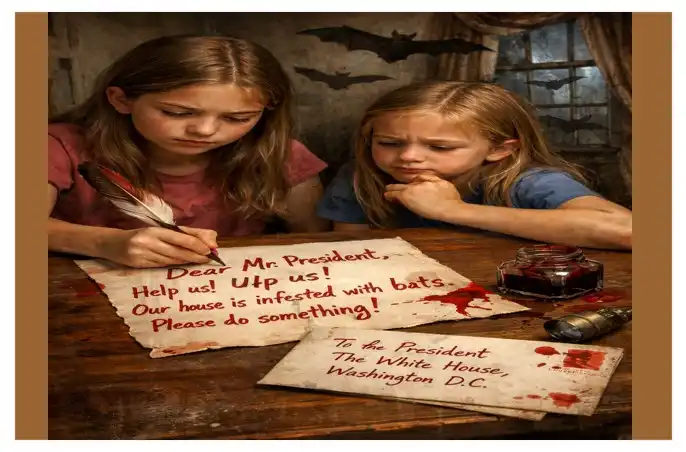
In an age of digital petitions and viral hashtags, a tale from rural India has burst onto the nation’s conscience for its utter desperation and stark symbolism. Two sisters - Kusum Lata Baudai and Sanjana, the younger one – had recently written a letter in blood to the President Droupadi Murmu an extreme step given to their anger.
The ‘bat invasion’ or the ‘bat menace’ has been a year-round suffering that many families living in old, dilapidated structures across the Valley have had to put up with. However, this particular form of protest is just an analogy for a much graver and deeper crisis.
The Blood-Appeal Symbolical
The practice of writing in blood is a long-standing form of protest in India that dates back decades, often reserved for times when citizens feel the bureaucracy has left them without any voice at all. The two sisters, both residents of the Almora district of Uttarakhand, were demanding more than a physical solution to their problem; they wanted a remedy and for the “First Citizen” to step in where local officials had not.
In their letter, the sisters sounded extremely vulnerable. They expressed a fear many young women in the state shared: that the system cares more about protecting the powerful than it does regular people.
The “ding on the chin” Hence, as Epstein contends in The Animated Screen: A truly existential crisis threatened to turn into a literal war between man and bat.
Though sporadic media have focused on the physical “bat invasion” in several parts of Northern India — where centuries-old buildings and abandoned government quarters turn into a breeding ground for nocturnal pests—the phrase has also become symbolic of “predators” living nearby.
The Physical Hardship
In more rural pockets, your home being “bat-infested” is more than an annoying inconvenience. It is a health hazard. Bat feces, the potential of zoonotic diseases and just never-ending noise can turn a home uninhabitable. The frustration sometimes boils over into desperate measures when local municipal bodies or “SDMs” refuse to act on pleas for repeated requests seeking renovation or relocation of families.
The Legal “Predators”
For Kusum and Sanjana, their “bats” are of a different sort. There is a very strong connection between their demand and the Ankita Bhandari murder case which has led to renewed agitation in early 2026. They use their blood to question: “If the daughters of this country are not safe then who is?” The sisters are effectively equating the invasive, dark-skulking figures of a “VIP” culture — which supposedly attempts to shelter criminals — and calling it a plague that haunts their sense of security.
Why the President? The Search for a “Guardian”
The decision to talk of Droupadi Murmu as president is profoundly strategic and emotional. As the first tribal woman to occupy the office, President Murmu is perceived by many in rural India as a “guardian” and a mother.
The sisters, in the letter:
“India is a country of justice and you are not just the first citizen of India but also a woman, our guardian. You are requested to intervene in the matter and there should be an exemplary punishment for everyone involved.
Delivering their message through the blood-stained hand of Nand Kishor Jalle(F) sub-inspector, sadar kasipur naka, they established that no tool of administration could afford to continue to ignore the tangible proof that marked them with pain. They want “CBI probe” and accountability, not just the pat response that “the investigation is on”.
The Price of Institutional Silence
The tale of the two sisters underscores a larger trend in 2026: The democratization of protest. Not content to be lingering in the hallways of local police stations, India’s young are turning to attention-grabbing, symbolic actions.
Public Safety: This local government had failed to elicit confidence in it, Sanjana, a Class 10 student would not have felt the necessity of drawing blood to be heard.
Storytelling By Narrative: The contagious spread of this letter over social media is making the state government react, and demonstrates that when people live in a world of database management horror stories, a piece of paper written in blood can achieve what even a thousand words spoken cannot.
A Shared Struggle It’s not just a story about two sisters in Almora. For activists throughout Dehradun and Rishikesh, it has become a rallying cry: The “bat invasion” of injustice is something that could encroach upon any household.
Conclusion: A Test for the System
The blood-letter now rests on a desk in the seat of power, a grim reminder of what desperation can drive ordinary citizens to do in search of peace. Whether the invasion is the literal sort, or one of corruption, like the otherside, what Tally and Co. have made abundantly clear is they are not going to live in shadows any longer!
The question is whether the highest office in the land will now respond to a call from two sisters who did not hesitate to give their own blood to help ensure that the “bats” of prejudice are at last removed from their home.
