


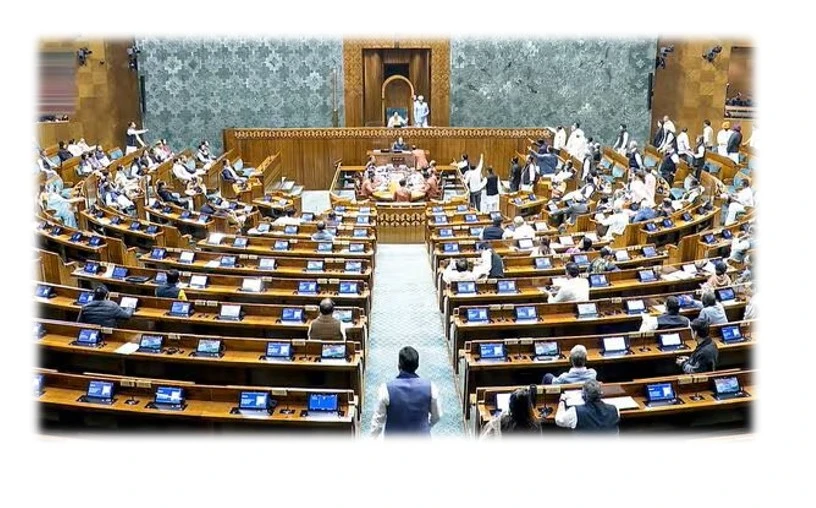
“The SHANTI Bill,” which stands for “Sustainable Harnessing and Advancement of Nuclear Energy for Transforming India Bill, 2025,” is a historic new act which was recently passed in India’s Winter Session of Parliament held in December 2025 and ratified by the president of India on December 20, 2025. Basically, it represented the single biggest shift in nuclear laws on India’s nuclear energy sector in sixty years, effectively replacing the outdated “Atomic Energy Act of 1962” and “Civil Liability for Nuclear Damage Act of 2010.”
In relation, the bill is titled SHANTI, which is an acronym that spells out what the objective of the government is with regard to the peaceful, secure, and sustainable expansion of nuclear energy.
Key Changes and Provisions
1. Opening the Sector to Private Participation
The most important feature that the SHANTI Bill changed was the state monopoly on civil nuclear power that had persisted for decades. Only certain public entities, for instance Nuclear Power Corporation of India Limited or their Joint Ventures under the control of the state, were allowed to set up and operate their nuclear facilities. This right was opened to Indian private entities that are not under foreign control.
This is aimed at wooing investment, technology, and innovation in the country and at enabling the country to raise nuclear capacity from the present 8-9 GW to 100 GW by 2047.
2. Revised Liability Framework
According to the SHANTI act, the existing liability system, in which suppliers were made liable for nuclear accidents, has been given a complete overhaul. Now, suppliers’ liability is capped at an amount consistent with global standards (approximately 300 million Special Drawing Rights, or roughly Rs. 3,000 crore), and suppliers of equipment cannot be held liable for accidents related to defects. Suppliers must have insurance or liability funds for reactors; otherwise, the government will bear the burden beyond certain limits.
According to proponents, the clarity and harmonization it brought on an international level were necessary to unlock foreign investment and collaborations, which were impeded by the strict Act of 2010.
3. Strengthened Regulatory Oversight
The Bill gives legal force to the Atomic Energy Regulatory Board (AERB), thereby enhancing its autonomy as a watchdog in matters of safety, security, preparedness in the event of an emergency, as well as licensing. Secondly, the Bill provides specialized dispute resolution forums such as the nuclear tribunal to facilitate the justice process.
Although there has been some liberalization in the sectors, the activities of nuclear enrichment, spent fuel reprocessing, and heavy water production are under the control of the central government.
Role of the Government
The Government, under the leadership of the Prime Minister of India, Narendra Modi, and the Union Minister, Jitendra Singh, have termed the “SHANTI Bill as a “landmark science-led reform, an integral part of the energy future and technological development of our nation.” The important areas where the use of nuclear energy as an alternate and necessary measure, according to them, would benefit the nation are the provision of 24×7 dependable, clean, and efficient energy. In the international community, it was appreciated in the USA as the beginning of a cooperative approach regarding the aspects of energy and nuclear matters. According to analysts, including analysts within Fitch’s BMI division, nuclear forces could be mobilized.
Criticism and Concerns
Despite government backing, the SHANTI Bill has received critical reactions from parliamentarians in the opposition, social organizations, as well as analysts:
Safety and liability issues: This argument holds that this liability framework makes the operator less responsible since the supplier will not have the liability of directly taking responsibility in the event of a possible accident, and the maximum operator caps might not be sufficient.
Risks of privatisation
Opposition politicians such as Shashi Tharoor described this as a “dangerous leap” towards privatising a sensitive sector without adequate safeguards regarding safety. Environmental as well as solid waste matters: Lawmakers were critical of shortcomings in managing nuclear waste in the bill, as well as a lack of sufficient protection of the environment. According to analysts, including those in Fitch’s BMI division, the SHANTI Act could herald the deployment of nuclear energy in India, moving fast on investments, adoption, and home-grown capacities.
