


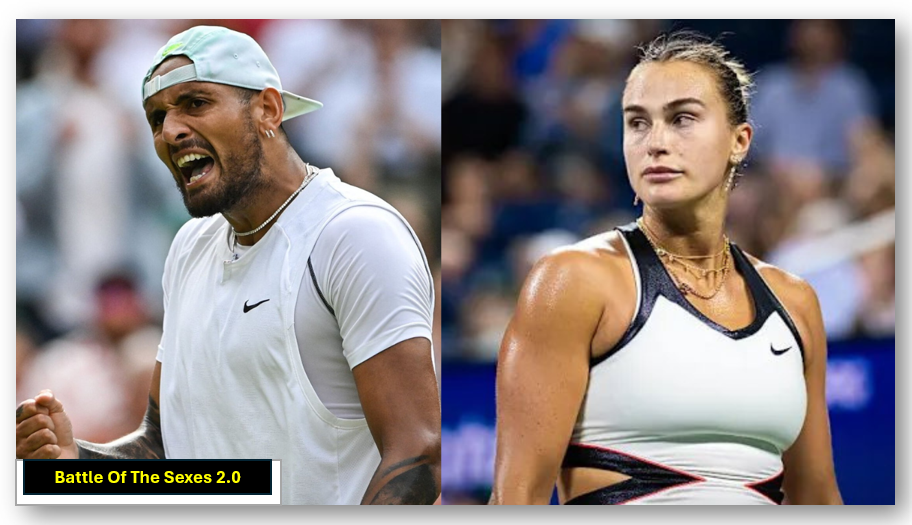
Tennis has always had an appetite for the flamboyant, but the latest “Battle of Sexes 2.0” in Dubai has many fans and purists cringing. What was billed as a high-stakes modern-day sequel to the iconic 1973 match between Billie Jean King and Bobby Riggs swiftly devolved into an online tirade.
In the end at the Coca-Cola Arena on a Sunday in Dubai, Dec. 28, 2025 (they’d moved outdoor tennis to cooler months), Nick Kyrgios had rallied to beat both Aryna Sabalenka and his own doubt in two straight sets: 6-3, 6-3 over the women’s World No. But the score itself was the least of it. From “gimmicky” rules to the optics of the pairing, or as critics have termed it everything from a “circus act” to a “cynical money grab.”
A Gimmick Too Far: The Rules Controversy
The main grumble online was the altered rules to “level the playing field”. Organizers introduced several drastic changes to account for the differences between the two athletes.
The Court That’s an Equalizer: The area of the court for Sabalenka was 9% less, much smaller for Kyrgios to hit into.
One-Serve Rule: Each player was allowed one serve per point, eliminating the second serve as we know it.
The Results: Despite the smaller playing area, Kyrgios—who despite being ranked 671st in the world is very much overqualified to play socially after years of injuries( was able to continue exerting his raw muscle.
Those same fans on X (formerly Twitter) and Reddit were the first to make it known just how ludicrous of a setup this was. Critics derided the nature of the rules as so imbalanced that it robbed the match of all its sporting integrity. “If you have to go make the court smaller and change the basic mechanics of the game of tennis then you are still proving nothing,” read one viral post. Rather than promoting equality, the handicaps made a more obvious division evident.
Mumbai Cricket Official Lifts Lid On Shreyas Iyer’s Potential Return
From Social Movement to ‘TikTok Circus’
Some of the harshest critics expressed disappointment while comparing this event to the original Battle of the Sexes in 1973. Billie Jean King’s win over Bobby Riggs was an epochal moment for feminism and equal pay in sports. It knew what was at stake: the future of the women’s tour.
Comparatively, the 2025 edition felt totally apolitical and corporate. Kyrgios and Sabalenka are both managed by the same agency, Evolve, which put on the event. That left the match open to accusations that it was less about “growing the game” and more about fattening the wallets of the participants.
The air in Dubai was not helpful. Between points, the match had veered into WWE-style histrionics. When Sabalenka entered the court in a sequinned jacket while Eye of the Tiger played, and danced the Macarena during a strategic timeout later in the match, it was clear that she knows how to relish moments. Some inside the 17,000-seat arena found it entertaining, but online observers described as “embarrassing” and a “mockery of the sport.”
Australia’s Laura Harris Equals World Record With 15-Ball Fifty
An Own Goal for Women’s Tennis?
Sabalenka’s participation has been dubbed an “own goal” by many analysts. As the defending US Open champion and face of the WTA, her loss to an overweight injury-ravaged Kyrgios – notwithstanding a 9% court head start – served as easy meat for misogynistic trolls online.
The Guardian said the match “veered too close to a circus,” suggesting that it did more to embolden the “incel” and “chauvinist” corners of the internet than encourage young girls. In agreeing to a format in which she was essentially “given a head start” and yet still lost convincingly, Sabalenka ended up reinforcing the same stereotypes Billie Jean King battled against over half a century ago, critics say.
Also, the selection of Nick Kyrgios for a male position has been slammed. Given his history, which includes a guilty plea to assaulting an ex-girlfriend, many wondered why he was chosen to lead a “celebration” of gender-mixed sports.
The Verdict: Entertainment vs. Integrity
In a post-match interview, Kyrgios attempted to cast the event as a “positive step” for tennis by saying it brought eyes to the sport that would not normally watch. Well, ever the good sport, Sabalenka laughed off the loss and even called for a rematch in fact lauding how much she loves “revenge” and a little challenge.
But tennis fans can agree on one thing: if the aim was to raise the profile of women’s tennis, this Dubai exhibition fell short. Rather than a sporty punch-up, the world was treated to piecemeal, overblown gubbins more interested in clicks than contests.
Translated into the context of tennis in 2026, it is a cautionary tale: Welcome to “Battle of the Sexes 2.0.” In their desperate chase to appeal to the “TikTok crowd” and pursue exhibition millions, they risk forgetting the very thing that makes their sport great: the raw, un-handicapped meritocracy of the baseline.
