


If you thought the ongoing verbal duel between Congress and Bharatiya Janata Party (BJP) was enough to light up India’s politics, well think again. At the epicenter of this new maelstrom is a searing critique by Rahul Gandhi of India’s democratic health, during his well-publicised trip to Germany. Gandhi’s charge that the fundamental pillars of this country have been “captured” was met with a fierce, on-the-face counter from the BJP government, which labelled his statements as being no more than “dangerous propaganda” coming soon after Rahul Gandhi said PM’s stand will lead to loss of jobs in India and winning elections in Bangladesh.
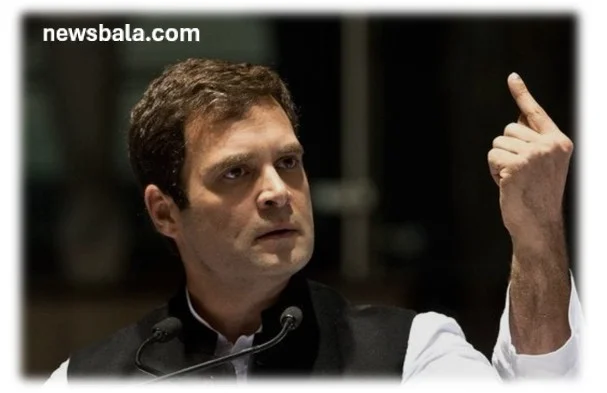
The ‘Assault’ Narrative Rahul Gandhi While in Berlin
At the Hertie School in Berlin, Leader of the Opposition (LoP) in the Lok Sabha didn’t mince his words. Gandhi’s argument was that the BJP/MM have decimated India’s institutions—courts, Election Commission, investigative outfits such as the CBI and ED.
“We’re not just fighting a political party — we are fighting the wholesale capture of the Indian institutional structure,” Gandhi was quoted as saying at an event with students and academics.
He also accused the BJP of trying to thrust an “end to equality between states, languages and religions” as part of its demand for justice’ for Jammu and Kashmir. For Gandhi, this is more than a domestic fight; he referred to Indian democracy as a “world public good” and said an assault on India’s democratic institutions is in effect an attack on the global order of democracy.
But his comments did not end on foreign soil. Days before, Gandhi had interacted with students from the Indian Statistical Institute (ISI), where he accused even “premier academic institutions” of bearing “ideological interference” and pressure from the RSS.
The BJP’s Response: ‘Mir Jafar’ and ‘Anarchy’
The ruling party’s response was swift and stinging. A day after India and China reached a five-point agreement to defuse tensions along the LAC in Ladakh region, senior BJP leaders and its spokespersons addressed press conferences in New Delhi where they accused Gandhi of launching an “assault on India’s sovereignty.”
Union Minister Kiren Rijiju was among the first to pounce, alleging that Gandhi had become a “pawn” for forces outside. The narrative of the BJP is clear: they treat Gandhi’s foreign lectures as a betrayal of the nation. National Spokesperson Gaurav Bhatia even termed Gandhi the “Mir Jafar of modern India”, insinuating that his meetings with foreign academics and critics — even suspected associations with individuals such as George Soros — are nothing less than a foreign conspiracy to foment chaos and disturbance in the country.
The BJP’s Core Defense
Mandate of the People The BJP claims that Prime Minister Narendra Modi’s third consecutive term is a democratic mandate which Gandhi refuses to acknowledge.
Institutional Integrity: The party alleges that institutions like the ED and CBI are merely obeying the law, meanwhile its critics argue that the “capture” charge is a red herring to shield those being probed for corruption.
Economic Success: Leaders such as Rijiju pointed to India’s position as the world’s fastest-growing major economy as evidence that the system now in place is functioning well.
Read also
The Long View: Looking at 2026 and Down the Road
This friction is likely to further manifest in legislative debates as the Winter Session of Parliament progresses. And the Congress has pledged to develop a “system of opposition resistance” while the BJP appears determined to present Gandhi’s remarks abroad as a key element in their 2026 election campaign, framing opposition forces as “anti-national.
For the ordinary citizen, it’s deafening. As we have written earlier Gandhi’s worries about institutional independence resonate well with his base, and some of India’s civil society groups, but the BJP’s accent on national pride and economic success still exerts a strangle-hold over much of the voter-ship.
Which is the real danger: the “capture” or the “propaganda”? With the State elections in 2026 not too far, it will be for the Indian voter to decide as to whose word does he accept
