


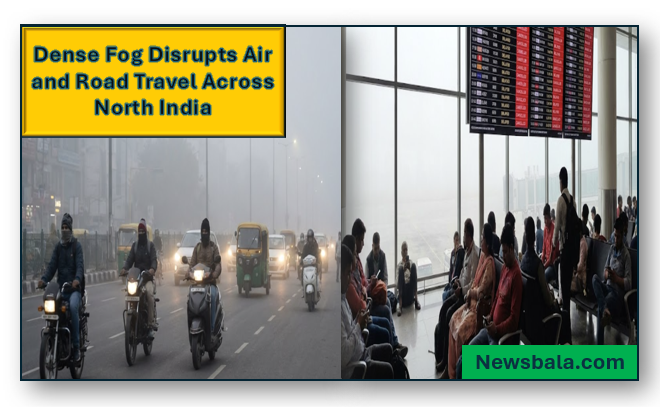
On Wednesday, dense fog covered many areas of North India, and visibility dropped to almost zero in some cities, disrupting air and road transport for thousands of passengers. The weather disruption, which is caused by a drop in temperature and a high level of moisture content, has caused some massive delays, cancellations, and gridlocks in various states.
Flights Delayed, Diversions Reported at Major Airports
It was the air travellers who suffered the most as airports in Delhi, Lucknow, Amritsar, Varanasi, and Chandigarh reported that there were serious challenges to operations. In the early hours at the Indira Gandhi International Airport at Delhi, the visibility of the runway was below the safe landing limits, and this led to a series of delays and diversions.
According to airline officials, departures had been handled under low-visibility procedures, but long lines and time-consuming wait times caused widespread inconvenience. Lots of complaints about disrupted schedules, missed connections, and little information on the part of carriers were raised by many passengers even through the morning as fog lingered.
Road and Rail Movement Slows Across Multiple States
Large highways were also hit by the fog, particularly in the Delhi-Noida-Gurugram route, the Yamuna Expressway, and corridors running through Haryana, Punjab, and Uttar Pradesh. In some cities, traffic police recommended that motorists stay at home and keep to the speed limits because the visibility was at a dangerously low level.
There were delays reported in dozens of long-distance trains, and schedules were seriously affected in Jammu to West Bengal. The railway officials claimed that dozens of services were running hours behind schedule due to reduced signal visibility and safety measures.
IMD Warns More Fog Days Ahead
India Meteorological Department (IMD) had given a dense fog alert within the 48 hours in the northern plains such as Delhi, Punjab, Haryana, Rajasthan, and Uttar Pradesh. Authorities attributed the formation of the mists to the combination of cool winds, falling temperatures, and confined pollutants.
Visibility was less than 50 metres in some pockets on Tuesday morning, raising concerns about long disruptions. Meteorologists pointed out that the fog level might decrease slightly by the weekend if wind speeds improve, yet cooling overnight might result in the formation of dense layers in the early mornings.
Hospitals Report Spike in Winter-Related Illnesses
There was an increase in respiratory cases in healthcare facilities in the north, particularly among the elderly and children. Doctors recommended residents to avoid going outside during the peak of the fog and to avoid getting outside early in the morning. They also prescribed layered clothing, the wearing of masks, and fluid intake to limit risks caused by exposure.
Interaction with smog has added to breathing problems among susceptible groups, especially in Delhi-NCR, which has experienced continuous pollution that has increased the level of air quality.
Authorities Issue Caution, Transport Crews on High Alert
The authorities of the transport in different states reported that the special teams were controlling traffic at the key intersections and tolls. Emergency response units are on standby, and highway patrol units have been assigned to help stranded motorists.
Airport authorities ordered passengers to check their flight status before they get to the terminals, and rail officials to anticipate delays, as dense fog is still disrupting rail signalling and speed control systems.
Till the weather changes, North India is still under a prolonged spell of low visibility weather patterns, and travel precautions and contingency plans are likely to be in force.
