


The race to be the Artificial Intelligence leader, for a long time imagined in utopian or dystopian terms, has just been reimagined as an all-out war by tech entrepreneur Elon Musk. Hug’s dire warning — that a looming “all-out war” in AI hardware is underway, with Nvidia at the center — cuts through the Silicon Valley hype to lay bare the cold competitive calculations driving the future of computation. This isn’t a rhetorical battle for market share; it’s a clash at the level of physical infrastructure, and the speed and scale of its deployment will ultimately determine winners in global power.
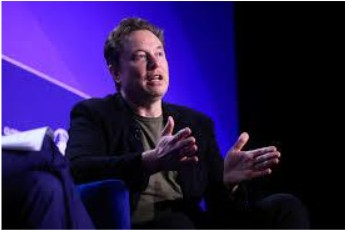
Musk’s observations were a response to industry analysis outlining the escalating battle among leading AI infrastructure providers. He described the competition as “the highest ELO battle ever,” using a rating system by which players are ranked in complex games like chess. This narrative casts the AI race as an all or nothing game of supreme intellectual and technical warfare, where every edge matters. For Musk, that lynchpin “is going to be the speed with which we can develop that hardware and rolling it out.”
Nvidia’s Blackwell: The Nuclear Option
He directs the finger towards Nintendo’s next-gen Blackwell chips like GB300 systems as the critical precipitator for this tectonic transformation. The shift from earlier generations of chips is referred to as “far and away the most complex product transition we’ve ever done in technology,” bringing about significant infrastructure changes such as an increase in power consumption, liquid cooling, heavier data center racks and heat management issues.
These chips are not just evolutionary improvements; they’re potential game-changers that could overturn the nature of the economic framework supporting AI.
Hiccup in the transition: Delays stemming from the complexity of Blackwell gave competitors — not least Google, which has powerful TPU chips — a temporary cost advantage. Google’s tactic of drastically reducing the price of AI “tokens” (the unit of computational output from an AI) was compared to sucking the economic oxygen out of the AI ecosystem.
The full rollout of Blackwell chips, due by early 2026, could dismantle that edge. Musk’s own xAI could conceivably be one of the first in line to actually deploy these at scale, potentially making Nvidia-driven systems yet again the low-cost alternative, and thus reclaiming (or even expanding!) on an economic front that much stress mightily about beating everyone over the head with.
The Linchpin: Speed, Scale and Sovereignty
The nub of Elon’s war logic is the physical infrastructure — the ability to manufacture, deploy and power tens of millions of advanced chips. This is where the race goes from one of software innovation to a profoundly physical, geopolitical fight.
The “all-out war” takes the form of a battle for computational sovereignty. Whatever country or institution can get its hands on the most powerful hardware —— and start to use it — will enjoy such an advantage, not only in commercial AI but also in military capability and autonomous systems, scientific discovery.” The hardware arms race has led nations to pour enormous resources into securing supply chains, constructing giant data centers and absorbing enormous amounts of energy.
Musk’s worry, which at times aligns with more general warnings about AI’s existential risks, is that this project—driven in large part by hardware titans such as Nvidia (see “Inside the company that wants to be the Netflix of machine learning” and “AI already has a serious diversity problem” )—encourages a “win-at-all-costs” attitude. This speed at all costs approach can pressure systems to launch before they are ready to ensure they are not overtaken by an adversary, and forgo safety when you are blinded by fear that we will become slaves ourselves.
The ELO game is high stakes to both of these entities, but perhaps the winner won’t be decided by who owns the software, but who owns the foundational chips that support this very software. It is impossible to politely not describe Nvidia’s role here as the kingmaker in our worldwide hardware arms race that centers on this technological struggle, setting both the s peed and scope of a “war” shaping the future of intelligence.
