


Do you remember the family VHS tapes and the blurry movie posters featuring Bollywood’s biggest stars, shining in the golden hour and silk skirts blowing in the winds of the Himalayas? Now, anyone with a smartphone, a good picture, and an eye for drama can use Google’s Gemini Nano Banana tool to enter that world.
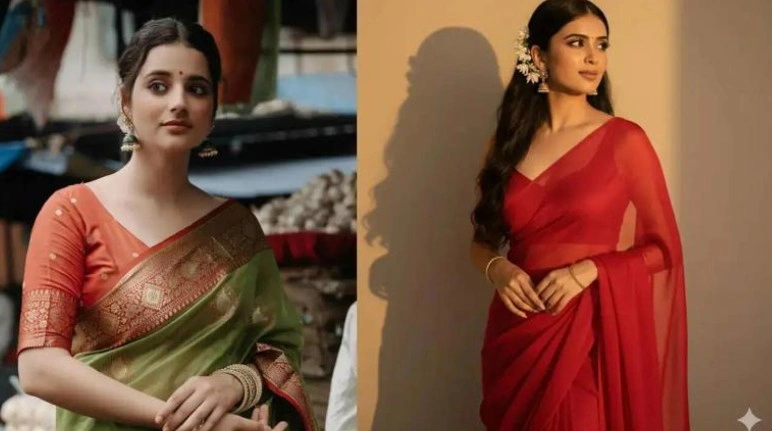
This is not just an AR filter
Nano Banana uses Google’s most advanced AI to give your basic selfies a Bollywood portrait makeover, complete with vintage styles, dramatic lighting, and beautifully arranged skirts. The effect has caused widespread sadness on Instagram, TikTok, and X, bringing back memories of a thousand years that most users never experienced but have always wanted to.
How the Trend Started and Spread
Nano Banana’s genius is in how it combines complex technology with artistic expression. It doesn’t limit users with effects that are already in place; instead, it needs creative and carefully written ideas to work well. The AI lets you pick how you look after uploading a solo, high-res picture. You can choose from looks like polka-dot glam, soft floral prints linked to 90s weddings, the “black party saree” worn in famous music videos, or red silk floating in the breeze.
With the help of public sharing, leaders created popular templates, such as “golden-hour Bollywood diva” and “artsy Raj Kapoor poster style.” It is this creative competition—each change a result of individualisation and AI analysis—that made Nano Banana the most talked-about social media event.
The Art of the Saree Edit: Getting the Most Out of AI Image Generators
But creating an AI-generated picture of someone wearing a saree that will stop people from scrolling is not easy at all. Nano Banana likes it when people are detailed and doesn’t like it when people are vague. This is the reason:
- Input Quality: The AI gets confused by low-resolution group pictures or selfies, which makes faces look weird and backgrounds look blurry.
- Prompt Precision: Clear directions lead to unique and specific outcomes, while vague ones (like “make me look Bollywood”) lead to generic results. Instead, pay attention to 3–4 exact visual clues, such as the saree’s colour, how it is draped, the lighting, and the background.
- Prompt Length: Too much information causes the model to break down and produce errors. Being brief and clear always wins.
- Background Instructions: The setting is very important in a Bollywood play. To achieve the best effect, specify your background, such as a quiet valley, a museum hallway, or a busy street in Mumbai.
- Facial Consistency: Tell the AI to “keep the same facial features” to keep the face from changing in weird ways.
Here’s an example that was taken from a popular question guide
Create a beautiful picture of the uploaded photo, keeping the face the same. Long black hair that reaches past the shoulders, a red silk saree that is form-fitting and has a retro vibe, soft lighting coming from the right, and a kind face. Add white flowers behind the ear, shadow cast on a warm-toned wall.
What happened as a result? A picture that would fit right in on a movie cover from 1996.
Cultural Impact: Using Digital Tools to Capture Nostalgia
What makes this trend different is not just new technology, but how it helps people connect with shared memories. Artificial intelligence has now translated and made accessible to everyone Bollywood’s colourful visual language of desire and romance from the 1990s. Gen Z can experience a historic event, while Millennials and Gen X can relive something they loved. Side-by-side views of real wedding photos and their AI-enhanced copies can be seen on social media.
Big Instagram accounts have taken advantage of the moment, putting themselves next to stars like Shah Rukh Khan and Deepika Padukone, which makes it hard to tell the difference between fans and icons and between reality and wish fulfilment. The tool even adds unseen digital watermarks (SynthID) to changes, which has led to discussions about AI privacy and the origins of these edits.
The Virality Dilemma: Safety and Ethics
Nano Banana has sparked discussions about data protection and image ownership, just as any other popular AI tool does. As people are uploading more files, experts warn them to avoid sharing private pictures and to turn on privacy settings to keep them safe. The ethics of blending, sharing, and remixing have been around for a while, but now that Gemini is very popular, these problems are getting more attention.
Beyond the Saree: Looking Ahead
Saree changes get a lot of attention, but Nano Banana’s AI is also great at working on 3D figures, anime images, bizarre movie posters, and more. But the saree is the heart of Indian film fashion, and it’s become a symbol of this moment in AI. When you add a lot of cultural background and human imagination, it shows how computers can capture feelings and memories.
The Google Gemini Nano Banana saree trend is not just a passing filter trend, it’s a digital movement that mixes memories, creativity and engagement from people all over. As social media gets filled with silk and cinematic light, the line between our old-fashioned dreams and modern technology fades away. This new, algorithm based way of seeing things celebrates India’s romance with Bollywood.
