


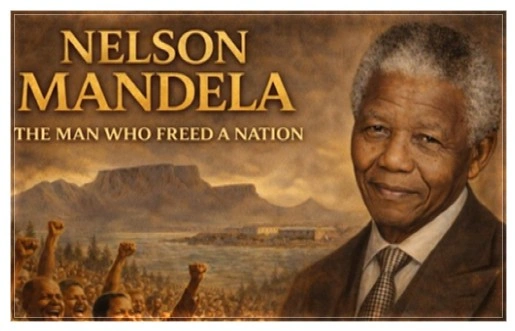
A South African freedom fighter, political leader and humanitarian by the name of Nelson Mandela is one of the most well-known people who fought against Apartheid and became South Africa’s first black president in 1994. He is recognized for being strong, forgiving and working towards creating peace between groups. I chose to highlight Mandela as an example because he showed the world that it takes great courage and compassion to create a better society.
Early life
In 18 July 1918, Nelson Rolihlahla Mandela was born in Mvezo, he came from a royal family (the Thembu) where his father was a Chief and his mother, a devout Christian.
He spent most of his childhood in a rural area and immersed himself in African culture. At the time he was sent to an all-boys missionary school, his teachers gave him the English name “Nelson”. After his primary schooling, he attended the University of Fort Hare before transferring to the University of the Witwatersrand. During his time at university, he studied equality and social justice.
Personal challenges
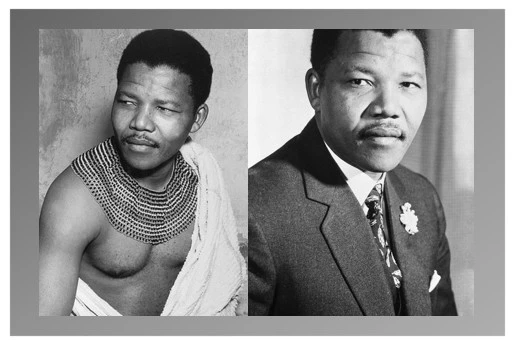
Mandela’s encounter with the racial oppression against black South African’s influenced his desire to seek justice for his raised against injustice.
Mandela encountered many hardships throughout his life. Under apartheid rule, black South African’s were denied many of their human rights. Mandela was arrested and harassed many times due to his political activism.
Mandela was sentenced to life in jail for opposing the apartheid regime in 1964. He spent 27 years behind bars, primarily on Robben Island. Life in prison was very difficult as he was isolated from his family and forced to work hard, but he persevered and kept hope alive through adversity.
The Start of The Adventure
Mandela joined the ANC in the 1940s. He practiced law and helped start the ANC Youth League to advocate for greater resistance to apartheid.
Breakthrough Moment
In the 1950s, Mandela emerged as a leading figure in the growing movement for equal rights, and his work in organizing protests that gained him national prominence.
The Years of Imprisonment
Mandela spent time in prison following conviction in the famous Rivonia trial. Through it all, Mandela became an international symbol of resistance and hope.
His Rise to Leadership
With mounting domestic and global pressure to end apartheid, Nelson Mandela was freed from prison in 1990. He worked with President F.W. de Klerk for a peaceful transition to a new political order in South Africa.
Presidency of South Africa
In 1994 South Africa held its first truly democratic election, and Mandela became the first Black president of the country. He worked to help unite the many races and to begin the long process of healing the nation through reconciliation.
You may also like:
- Aubrey Beardsley Produced revolutionary artwork before dying at 25
- Rukhmabai One of India’s first practicing women doctors
- Ettore Majorana Brilliant scientist who mysteriously disappeared
Major Achievements
- Helped lead the resistance to apartheid and to racism.
- Released from prison in 1990 at the conclusion of 27 years served.
- Won the Nobel Peace Prize, shared with F.W. de Klerk, in 1993.
- Was the first democratically elected Black president of South Africa in 1994.
- Created policies to foster equality, peace, and national unity.
- Provided inspiration to human rights activists around the world.
Personality and Character
Mandela was regarded for his bravery, patience, humility, and wisdom. He was a believer in justice and yet was an equally strong proponent of forgiveness. When the end of apartheid came about, instead of seeking revenge, he promoted reconciliation between Black and White South Africans.
Among his most famous quotes:
“It always seems impossible until it is done.”
His leadership style was one that combined fortitude and empathy, making him one of the most respected leaders in history of the modern era.
Impact on Society
Mandela allowed for South Africa to change from being a nation of division into a nation of democracy. His pursuit for peace allowed for the possibility of massive civil conflict to be avoided during a time of political upheaval.
His actions serve as an inspiration for activists everywhere, for leaders, and everyday people, and show that with dialogue, forgiveness, and perseverance, that no matter how deeply entrenched, justice can be accomplished.
Lesser-Known Facts
Rolihlahla was the original name given to him upon birth, which translated in Xhosa means “to stir up trouble” (Xhosa) and was the first person of colour to have a significant law firm and work alongside a black partner in South Africa.
Although he enjoyed boxing and said it instilled him values of discipline and respect, he also dedicated many hours to studying in secret while in prison.
Young boys called him “Madiba”, which translates to “clan-name”.
Final Years/Death
After completing his presidential term in 1999, he dedicated his energy towards charitable endeavours and support for education and the fight against HIV/AIDS. His age and deteriorating health led to less involvement in public life.
On 5 December 2013, Nelson Mandela passed away at the age of 95, leaving a legacy that was celebrated worldwide. He was recognised and commended by countless global leaders for his remarkable life.
Legacy
Nelson Mandela will forever be viewed as an iconic representation of global reconciliation and freedom. There are institutions, educational programs, foundations, novels, motion pictures, and other forms of media that continue to honour his legacy. The Nelson Mandela Foundation carries on the legacy of Nelson Mandela, and Nelson Mandela International Day serves to encourage people worldwide to contribute to their communities.
Timeline
- 1918 – Born in Mvezo, South Africa.
- 1944 – Joined the ANC.
- 1964 – Sentenced to life imprisonment.
- 1990 – Released from prison.
- 1993 – Won the Nobel Peace Prize.
- 1994 – Became President of South Africa.
- 1999 – Retired from the presidency.
- 2013 – Passed away at age 95.
