


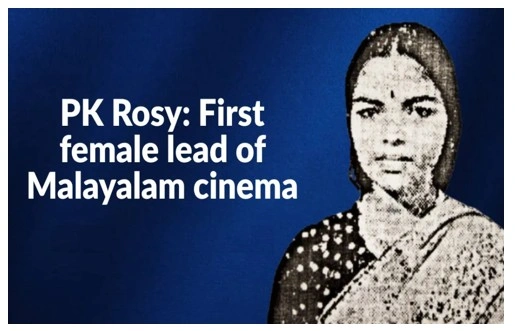
P.K. Rosy was a pioneering, trailblazing Indian film actress and the first Malayalam film actress and the first Dalit actress in Indian cinema. She is a really big deal as it was an era when women like her were being barred from acting in front of the camera. Unlike any other actor, Rosy’s bravery had a tragic consequence—the riots erupted in violent caste-based violence and she was forced to hide for her life, living the rest of her day-to-day existence in secret.
Early Life
She was born as Rajamma in Thiruvananthapuram (Trivandrum) in Kerala in 1903. Her family was extremely marginalized from the community and belonged to the Pulaya caste, which was a Dalit community, that was severely untouchable and was very poor. As a young girl, she suffered from severe social limitations, and made her livelihood as a grass cutter to support her family. Rosy was an artist of great appeal and attraction who came from a poor and isolated background.
Personal Challenges
Rosy was beset with unthinkable social and personal challenges. During the 1920s in Kerala, the caste system was extremely domineering. The exclusion of Dalits from basic human rights, let alone public art, was not in itself a violation of the law.The denial of Dalits from basic rights was not itself illegal, let alone from engaging in public art.
Read more:
- Aubrey Beardsley Produced revolutionary artwork
- Rukhmabai One of India’s first practicing women doctors
- Ettore Majorana Brilliant scientist who mysteriously disappeared
Career / Main Journey
Rosy’s film career was such a short and yet very historic one.
- Beginning of the Journey:Her love for theatre drew the attention of J.C. Daniel, a visionary film maker who is considered the father of Malayalam film making. Women were not willing to do acting roles in his silent film Vigathakumaran (The Lost Child), so Daniel was having difficulty in finding an actress for it. He presented Rosy with the lead role and she courageously took it.
- The Major Breakthrough: In the 1928 film, Rosy was cast as Sarojini, an upper-caste Nair woman.
- The Violent Backlash: It was released in the Capitol Theatre, Trivandrum, under the banner “The Violent Backlash”. The upper-caste audience, who witnessed the Dalit woman playing the role of a Nair woman and her co-star kissing a flower in the Nair’s hair, went into a tirade. They broke down the screen, smashing the theater, and they hunted down Rosy.
Major Achievements
- First Female Lead: She was the first ever actress in Malayalam cinema.
- First Dalit Actress: She was the first Dalit actress who broke the ultimate social barrier.
- Symbol of Resistance: She had no rewards in her lifetime, but her one act broke the entrenched caste and gender norms.
Personality & Character
It’s an era when women like Rosy were punished for walking on the same roads as upper caste people, an era when one had to be exceptionally brave and have a pure love for art to project his face on a cinema screen. She was strong and resilient but a survivor, who decided to choose self-preservation to ensure her future family and her life.
Impact on Society
For more than 50 years, Rosy’s voice was drowned out by the same society that pushed her away. But this newfound fame has brought a massive realization of Indian film industry about casteism and sexism. Her story today is a reminder of the erasure of the voices of the marginalised, and is a great inspiration to those who are fighting for Dalit and feminist voices to be represented in the media.
Lesser-Known Facts
The saddest thing in Rosy’s life is that she never saw her own film. She had to escape the mob when they attacked the theater. She managed to get out in a lorry loaded with goods heading towards Tamil Nadu. She eventually wed the upper caste Nair lorry driver, Kesavan Pillai. Trauma and fear compelled her to also change her name to “Rajammal” and live her life as a Nair woman. She kept her own past and her own secrets for her children and for herself.
The final years and death are described
After this, Rosy spent the rest of her life as a homemaker in Tamilnadu, completely anonymous. Some 40 years later she died, completely oblivious to her historic role. Only decades later did film historians unravel the true identity and remarkable history of her children when she was the subject of the movie, titled Vigathakumaran.
Legacy
Today P.K. Rosy is duly seated in the film history hall of fame. The Women in Cinema Collective (WCC) of Kerala initiated the “P.K. Rosy Film Society” in her name for the support of women film makers. She has been featured in books and movies like the 2013 Malayalam movie “Celluloid”. Google dedicated a doodle to her in 2023, which was played to the world, showcasing her forgotten face.
Conclusion
P.K. Rosy’s life is an inspirational and tragic tale of a woman who sacrificed her life to her art. Her only film appearance was an outright defiant challenge to a corrupt society. She was violently erased from the history books during her lifetime but now her memory remains indestructible as a reminder of the power of true courage to never end.
Timeline
- 1903 — Born in Trivandrum, under the name Rajamma
- 1928 — J. C. Daniel’s Cast in Vigathakumaran; rioters torch her home during the premiere
- 1928 – Escapes by lorry to Tamil Nadu, gets married to Kesavan Pillai and changes her name.
- 1980s — Dies in obscurity.
- 2013 — Biopic Celluloid tells her story.
