


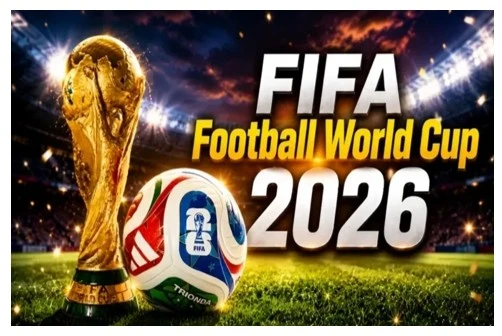
To be honest, there is nothing on this earth that can stop the world like FIFA World Cup. The wind has a different feel. Group conversations are booming, vacation time is being cleverly spent, and individuals who have never seen a soccer match in 4 years are now the goaltenders on the offside.
We are now officially in the lead up to the 2026 FIFA World Cup and it promises to be different. The world’s largest sporting event is now a joint affair between three completely different countries, the United States, Canada and Mexico — for the first time in the tournament’s massive history.
The Tri-Nation Powerhouse
It is typically quite a logistical challenge for any one country to host a World Cup. It’s an impressive feat of infrastructure if it’s split up on a whole continent. The “United 2026” bid unites three cultures from North America, making the month long festival from the snowy peaks of Vancouver down to the humid, roaring streets of Mexico.
This co-hosting arrangement has a rich history of meaning:
- Mexico’s Historic Hat-Trick: Mexico will host the men’s World Cup for the first time in its history, first in 1970 and again in 1986. The world-famous Estadio Azteca has been the site of Pelé and Maradona’s triumphs.
- The American Return: The United States is the host for the second time. So if you’re feeling the 1994 World Cup energy in the neon and oversized jersey, it’s going to be a World Cup version of that. Since then, the sport has taken off in the US, and the stadiums are ginormous!
- Canada’s Grand Debut: This is Canada’s first time hosting the men’s World Cup, while they have got the women’s World Cup right in 2015. A huge prize for a country whose football heritage has developed very quickly in the past ten years.
This is the 48-Team Era: More Room at the Table
There is one thing that you must know about 2026, and it is the mathematics. The World Cup has been a 32 team competition since 1998.However, that era is now over. . FIFA has increased the number of teams from 16 to 48.
But critics first claimed that the competition would be watered down if there were 16 additional teams. This is the whole point of the World Cup! The qualification format traditionally gave an advantage to European teams, effectively capping outbound teams from the rest of the world for decades.
This growth makes a difference. It means millions of children, in countries that have never been part of the Olympics, can finally display their flag on the world stage. It’s unplanned national holidays, limitless joy and the addition of some exciting underdog tales.
read also:
The new format is actually broken down like this:
| Format Change | Description |
| 12 Groups of Four | Teams play three group-stage matches. The top two teams from each group, along with the eight best third-placed teams, advance to the knockout stage. |
| Round of 32 | A new knockout round is introduced, meaning there is less margin for error much earlier in the tournament. |
| 104 Total Matches | Expanded from the traditional 64 matches, providing nearly six weeks of football action for fans worldwide. |
The Stadiums: A Logistical Beast
You’ll need serious real estate to make 104 matches. It is divided into 16 host cities in the United States, Mexico and Canada.
North America is taking advantage of what it has, as opposed to Qatar or Brazil, where the host countries invested in brand new stadiums which were left unused after the World Cup was over. The United States is making full use of its large, state-of-the-art NFL stadiums.
But the journey will be extremely arduous. FIFA has broken the games into three different regions: East, Central and West, to keep players’ stamina in check. There won’t be a team playing in Miami on Tuesday and Vancouver on Friday.
All eyes are already set on July 19, 2026. The last game will be played at MetLife Stadium in New Jersey (New York). It’s not the legendary football love story of the Maracanã or Wembley, but a final in the media and financial capital of the world means an epic show.
The Cultural Collision
The 2026 World Cup will be more than a clash of tactics and offside traps and penalty shoot-outs—it will be a cultural showdown.
Imagine Europeans seeing the extent of American tailgating outside of Kansas City. The faithful folks of South America, their tambouras and flares bringing their own intense drumming to the formal and clean city streets of Toronto. The unparalleled and electric enthusiasm of Mexican supporters making Monterrey a sea of green. It’s going to be colorful, wild, fantastic; a blend of languages, food, traditions.
The economic repercussions will be enormous as millions of visitors from abroad pour through local businesses, hotels and restaurants. But more important, in a world that is often so divided, we will be caring about the same thing for about 40 days.
The Whistle is Coming
From the die-hard fans who rise at 4:00 AM to catch all the European leagues, to those who simply want to get out of work early and hang out at a pub, the 2026 World Cup is an unstoppable force.
With 48 teams in the format, there is more heartbreak, more last minute winners and more unfiltered emotion than ever. It is North America that has set the scene, the stadiums have been ready and the world is watching. Reschedule your plans, select a team and prepare yourself. The beautiful game has come back home.
