


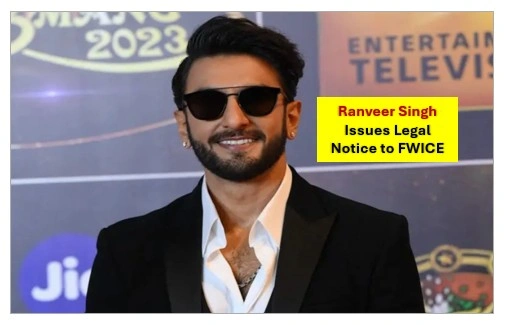
Ranveer Singh has submitted a legal notice to FWICE after they declared he will not receive any assistance from them while dealing with the ongoing Don 3 situation. This increases the seriousness of this issue as it creates more of a division between sectors of the Hindi film industry. Ranveer Singh’s legal team challenged the non-cooperation order claiming that it would negatively impact his ability to find work and also cause irreparable damage to his image.
The legal notice was sent after FWICE instructed its members to not work with Ranveer Singh until negotiations could be held between him and them to resolve the issue.
Legal Battle Begins Over Non-Cooperation Directive
This situation began with Ranveer Singh’s decision to exit Don 3 that was being made by Farhan Akhtar and the producers of the film at Ritesh Sidhwani’s Excel Entertainment. Reportedly, the producers suffered a significant financial loss from Singh’s exit due to money already spent on pre-production costs. Individuals in the film business expressed their concerns about this matter to various film organizations, which prompted FWICE to get involved.
FWICE provided several opportunities for Ranveer Singh to resolve the issue through personal dialogue. After multiple attempts at contacting Ranveer Singh and receiving no adequate response, FWICE decided to implement a Non-Cooperation Directive against Ranveer Singh.
also read: Bobby Deol opens up on his alcohol addiction
FWICE Has Clarified Its Position
Many reports covering the FWICE’s Non-Cooperation Directive against Ranveer Singh referred to this action as a “Ban”. FWICE has issued statements that they did not produce a formal (or otherwise) “Ban” on Ranveer Singh. FWICE’s Non-Cooperation Directive does not bar members of FWICE from working with Ranveer Singh, but rather, instructs FWICE members to NOT work with Ranveer Singh until the stated issue has been resolved.
FWICE did clarify, through its representatives, that FWICE is not a legal (or any other) authority and is unable to legally prevent anyone from continuing to work in the film industry. FWICE also clarified that their intent in issuing the Non-Cooperation Directive was to protect the welfare of the industry and promote dialogue between the parties involved.
Although FWICE has made that clarification, critics of FWICE believe that Non-Cooperation Directive may reflect characteristics of a boycott to the industry, because it discourages working with one artist.
also read: Rashmika Mandanna Shares Pictures from Her Japan Getaway
Voices of Industry Challenge the Non-Cooperation Directive
The current dispute has created much discussion regarding the nature of the action taken against Ranveer Singh, with many sounding off to question the legality and justness of FWICE.
T. P. Aggarwal, a producer to the entertainment industry, challenged the legality of the directive that was issued by an alliance of 11 film industry groups, which prohibited development funding to clients of “cusps” (to avoid doing business with them). In doing so, he filed a petition with the Bombay Civil Court claiming there is no trade association that can impose a prohibition against an individual’s ability to earn a living or work professionally. In his argument, he also cited various legal and regulatory precedent questioning industry-wide bans and calls for refusal of participation.
also read: Mouni Roy plays role of 39 year old Varun Dhawan’s mother got criticized
Support for Ranveer Singh Emerges
Nikhil Dwivedi, an actor/producer, expressed an opinion on the matter publicly as well. He stated that disputes related to contracts are not uncommon in the entertainment industry; they should be corrected by the use of the appropriate legal means rather than by creating disharmony between individuals and the association. Further, he expressed his feelings about how the association should work toward resolving disputes between its members to the end that all members are allowed to continue working together, as opposed to penalizing an agency for an alleged violation of an association membership agreement.
There has been an outpouring of support from others within the industry for Ranveer to companies that work on projects. This included support from actress/politician Kangana Ranaut, who not only expressed interest in the company’s support of Ranveer but also stated that the greater one becomes, the more likely other individuals will oppose that person. This provides another avenue for support of Ranveer, and it continues to draw media attention to an already controversial situation in the entertainment industry.
In conclusion, it has been widely noted by many within the industry that the disputes related to contracts, financial loss or exit from a project should be handled using established legal avenues, rather than allowing industry directives to dictate how the relationships between the parties will be handled.
What Happens Next?
Due to Ranveer Singh’s formal legal challenge of FWICE and the likelihood of this matter continuing to have lengthy legal and industry challenges, the action taken in response to the actor’s notice may open the door for further examination of the authority exercised by Bollywood trade associations, including whether directives not to co-operate may ultimately withstand judicial review.
At the same time, the court challenge of T. P. Aggarwal has expanded the issues being considered beyond those associated with only one actor’s situation, as it has raised the very important issue of the ability of Bollywood industry organisations to have an influence on the matters of employment and professional co-operation.
As these proceedings unfold, it is likely that the Don 3 controversy will serve as a historic precedent for the Hindi film industry going forward and will likely impact how the three groups – artists, producers, and industry associations – interact with one another. For now, however, it appears both parties intend to vigorously defend their cases, making the Don 3 dispute one of the most closely followed legal disputes in the Bollywood industry.
