


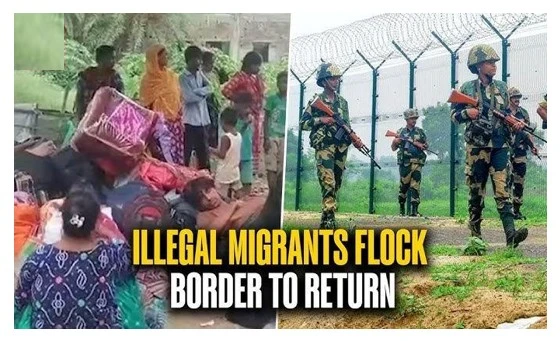
In West Bengal, authorities have stepped up their efforts to crack down on illegal immigration with a full-scale deportation program aimed specifically at undocumented Bangladeshi migrants who reside in both urban areas and border districts throughout the state. The program, which officials have labeled as a “Detect-Delete-Deport” campaign has created a sense of panic among many of the suspected migrant workers and has led to some unusual scenes at the various border crossing points, where a large number of individuals have gathered in hopes of returning to Bangladesh.
The immigration drive has quickly become one of the largest political and administrative developments in the Eastern region of India, raising many issues including border security, citizenship verification, human rights issues, and diplomatic cooperation between India and Bangladesh.
Crowds Gather Near Hakimpur Border
Scenes at the border crossing at Hakimpur, which is in the North 24 Parganas district and is located on the India – Bangladesh border, provided some of the most dramatic visuals connected to the recent immigration crackdown. Various reports indicate that a number of suspected undocumented Bangladeshi nationals began assembling at the border crossing after they had learned of increased identification and detention operations taking place in West Bengal.
Many people employed in informal occupations such as construction, automotive servicing, house cleaning, and day labor are among those currently living in camps following deportation from West Bengal to other Indian states. Some of the migrants who spoke to us indicated their preference for voluntarily returning rather than being placed in a holding facility established by the authorities.
Border Security Force personnel conducting verification procedures must be completed prior to any repatriation operations. Personnel assigned to the border remain vigilant to avoid illegal crossings and assist in maintaining order in these sensitive areas.
read also: What Is Nautapa? The 9-Day Heatwave Linked to Rajasthan Folklore
“Detect, Delete And Deport” policy
Increased momentum behind the deportation movement has developed as a result of the current administration implementing its strict anti-infiltration policy, which has prioritized the identification of illegal immigrants. The main slogan for this initiative has become “Detect, Delete, And Deport.”
District inspectors of the government have been given orders to locate illegal and undocumented aliens and take appropriate action to remove them from any official records they may have been registered in, including those under their names in their respective jurisdictions, in order to implement the process for deporting them from India. In addition, each of the Malda and Murshidabad districts will also establish holding centres to accommodate any suspected illegal immigrants, pending verification and repatriation.
It has been reported that there have already been several confirmed transfers of suspected Bangladeshi nationals at these locations. Many officials are saying that this was essential to enhance internal security and reduce illegal settlement in border districts.
read also: Power outage hits rapid metro in Gurugram
Political Debate Growing
This issue is now a well-known political issue. The BJP has ushered in significant support for the deportation of Bangladeshi nationals, stating that such activity has drastically changed the ethnic make-up of the state and greatly increased the demand for public services as well as creating security concerns for states with a border shared with Bangladesh.
Politicians encouraging illegal immigrants to “leave immediately” have allegedly led to some individuals coming to the border. Many proponents of the drive have insisted that in order to maintain proper security and citizenship laws, strict enforcement of deportation is a necessity.
However, many countries and advocates for human rights are concerned that there will be misidentification of Bengali-speaking Indian citizens in particular. Critics are concerned that language, ethnicity and country of origin should not lead to an individual being maintained or deported from a location. Similar issues have occurred during other states’ anti illegal immigration campaigns.
Bangladesh Tightens Border Vigilance
The current state of affairs in West Bengal has sparked a response from Bangladesh. Sources have reported that Bangladeshi border authority officials have increased patrols and surveillance in their border areas due to concerns of forced border crossing or one-sided pushback operations.
According to reports, officials in Bangladesh have requested that the deportation process must go through a standardized diplomatic process with citizenship verification procedures in place before any deportations occur. They are also concerned about sudden migratory movements taking place outside of the long and porous Indian-Bangladesh border.
The Indian-Bangladesh border is more than 4,000 km long and includes riverine areas, densely populated urban centres and difficult terrain making it extremely difficult to monitor this entire area. Security agencies have previously indicated that illegal migration, cattle smuggling and human trafficking are three top security threats in the northeastern part of India.
Security and Humanitarian Concerns
Security agencies believe that putting greater emphasis on enforcement efforts may be a deterrent to anyone attempting to illegally cross into India in the future. For example, BSF (Border Security Force) records show thousands of instances of illegal crossings originating from eastern India (primarily West Bengal and Assam) in the years prior to the current crisis.
Entitlement measures and legal proceedings must be taken into account when carrying out deportation proceedings; humanitarian groups have warned that these actions do not affect valid rights of Indian citizens.
As the deportation process progresses toward fruition, new issues arise around verifying/certifying documentation, citizenship status and rehabilitating individuals who were subjected to deportation.
Bottom line
Currently, the push for deportation has led to many administrative zones along the border becoming increasingly congested with National Guard personnel, local government authorities and migrants all experiencing indistinguishable amounts of anxiety regarding their current circumstances. Political constituents are rapidly increasing their interest in border relocation in response to growing public interest in this issue and political constituents are increasing the amount of attention given to the potential consequences resulting from deportations occurring in West Bengal.
