


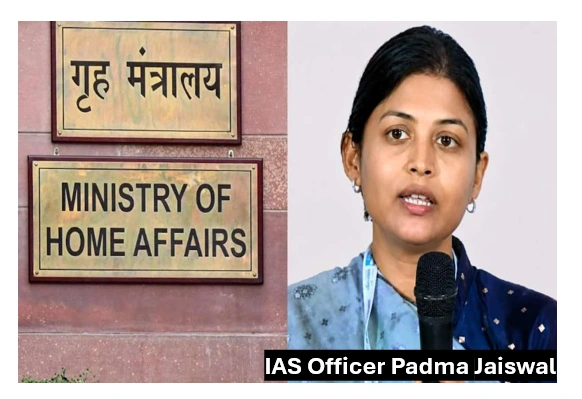
Due to allegations of corruption while serving as an IAS officer in Arunachal Pradesh nearly 20 years ago, Padma Jaiswal has been dismissed from her position as an IAS officer. This historic move by the Government of India has prompted a public debate about accountability in the civil service of India.
Centre Removes IAS Officer Padma Jaiswal From Service Over Corruption Charges
Padma Jaiswal is a 2003 batch IAS officer from the Arunachal Pradesh Goa Mizoram and UT cadre (AGMUT) who has been dismissed from service after undergoing a long disciplinary process. The final order includes the signature of the President of India, who signed after receiving the recommendation from the Department of Personnel and Training.
The Union Ministry of Home Affairs (MHA), which is the cadre controlling authority of AGMUT officers, has taken disciplinary action against Padma Jaiswal under Rule 8 of the All India Services (Discipline & Appeal) Rules. This is considered to be one of the few instances in which an active IAS officer has experienced the significant penalty of removal from service.
Allegations Date Back to 2007-08
Allegations against Jaiswal originated when she served as Deputy Commissioner in the West Kameng district of Arunachal Pradesh from 2007 until 2008, and included allegations of misappropriating government funds, abusing her official position, and diverting public funds from their intended purposes.
According to reports, the CBI filed a chargesheet in connection with this case, alleging misuse of approximately ₹28 lakh of public funds, including money that was allegedly diverted for use to purchase assets in the name of relatives.
Complaints from local residents initiated an investigation that began in 2008. Jaiswal was suspended from the service briefly during 2008, but was later reinstated while the inquiry continued.
Read also: PM Modi meets Iran’s foreign minister Araghchi for the first time
Long and Lingering Legal and Administrative Struggles
Disciplinary action against Jaiswal has lasted almost 18 years with several layers of administrative and legal review. During this time period there were consultations made with the Central Vigilance Commission (CVC) and the Union Public Service Commission (UPSC). Ultimately, the UPSC recommended her termination from service.
Jaiswal’s matter has also undergone extensive legal challenges as the Central Administrative Tribunal (CAT) quashed earlier disciplinary proceedings because of defects regarding jurisdictional matters. However in April 2026, the Delhi High Court reportedly ruled in favour of the central government and reinstated the earlier disciplinary proceedings; thus permitting government to continue disciplinary action against Jaiswal.
According to officials, the dismissal concludes one of the longest running punishment cases of an active IAS Officer.
Officer Claims Unawares of Dismissal
Padma Jaiswal also claimed to be unaware of the dismissal order, which raises further questions regarding the high-profile action, especially due to the amount of media and social media coverage already.
Also, observations regarding the lack of accountability for government officials have been raised, as it has been pointed out that IAS officers typically have constitutional protections and due process which makes taking disciplinary action against them a relatively infrequent occurrence.
Read also: PM Modi asks SPG to cut his convoy
Debate Over Bureaucratic Accountability
As users on social media sites and forums debate how much time it takes for these types of cases to be resolved, some applaud the action as an example of increased accountability of institutions, whereas others are concerned that excessive time taken for investigations damages the public’s faith in the systems of government.
According to experts, the matter of disqualification represents a symbolic rejection of the idea that senior civil servants are beyond reproach, particularly when it comes to cases of alleged misappropriation of public money.
Implications on removal
The termination of service will result in the officer being terminated from the Indian Administrative Service (IAS), except when such termination has been expressly set forth and therefore could be entitled to seek positions with other governments in the future because it does not preclude either other employment with the Government of India.
The developments surrounding the disqualification are expected to have broader ramifications for how disciplinary action is undertaken in the civil service, as well as result in increased scrutiny over the manner in which civil servants perform their duties. This results in an acceleration of the resolution of corruption investigations into civil servants.
The Jaiswal case is expected to continue to be the subject of both public and judicial scrutiny over the next few months, particularly if any other actions or appeals are pursued in relation to this matter.
