


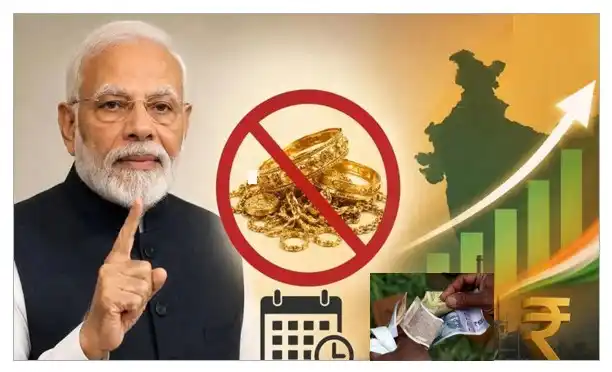
This week, the Indian Rupee reached a historical minimum versus the United States Dollar, and compounded economic pressure on the country that had developed from Prime Minister Modi’s plea for citizens to avoid purchasing gold and to conserve energy by avoiding foreign travel.
The Indian Rupee plummeted to an all-time low versus the USD, closing at 95.31 on account of several factors including rising prices of crude oil, and a widening current account deficit leading to increased pressure on the country’s imports.
Modi’s Appeal : Indian economy faces challenges after Rupee gets to Record Low Value Against USD
Amidst geopolitical tensions in the West Asia region and rising costs of energy, Modi made an appeal to limit consumption in order to alleviate the impact of these burdens on the economy. Among the specific recommendations made to citizens was an appeal to postpone purchasing gold for yearly period of time, while also conserving energy through public transportation and/or car pools for both commuting to work and/or working from home.
As both crude oil and gold represent significant ongoing outflows of Foreign Currency, controlling the use of Foreign Currency became a primary concern for Modi, as one of the top crude oil importing nations and a major consumer of gold.
In addition, he urged people to limit non-essential international flights and cut back on how much cooking oil they use. He claimed these actions would benefit both themselves personally, as well as society as a whole.
also read: Diet Coke returning to Indian market
The Issue With Gold Purchases
Gold has an important role in Indian society; it is both a cultural item and a currency. Due to cultural reasons, the majority of the demand for gold throughout India comes from purchases made at weddings and festivals. Economists warn that continued increases in gold purchases are generating additional pressure on India’s foreign exchange reserves at the same time that oil prices are rising as well.
Analysts have concluded that it is their understanding that the Prime Minister’s statements are indicative of a growing concern among policymakers regarding the continuing widening of India’s trade deficit. Since India imports nearly all the gold consumed in the country, increases in gold consumption drive up demand for US dollars thereby further weakening the Indian rupee.
Market analysts predict that limiting the purchase of gold and other non-essential imported products could help India to control its current account deficit and stabilize the value of the rupee relative to the US dollar in the near future.
also read: Shiv Cement will pay Rs 66 lakh to Ultratech over trademark case
Currency Pressure From the Oil Crisis
Much of the recent distress in the global economy is directly related to the dramatic increase in the price of crude oil on the international market, triggered by the current geopolitical issues occurring in the Middle East, and the ongoing operation at one of the busiest oil shipping routes in the world, the Strait of Hormuz. Global crude prices have reportedly exceeded $100 a barrel.
The increase in energy prices puts more pressure on the rupee, as the demand for dollars (i.e. the currency many of India’s imports are priced in) increases. The Reserve Bank of India has intervened in the foreign exchange markets by selling dollars and introducing tighter trading regulations to limit volatility in the currency.
Some economists believe that there will be an increase in India’s balance of payments (BOP) deficit during this fiscal year, which adds to some investors’ concerns about the stability of the Indian economy and its external situation.
also read: Commercial LPG price hiked Know in details
Jewellery Stocks Witness Sharp Fall
As a result of the panic created by the Prime Minister’s comments, many jewellery stocks saw a significant decline during Monday’s trading session. Major players such as Titan, Kalyan Jewellers, Senco Gold and Sky Gold experienced some of the largest losses, with many stock prices down from 6% to 10%.
Due to fears expressed by investors that the government might impose new restrictions or higher import duties on gold, several traders expressed concerns that these types of actions could be taken to help stabilise the currency, similar to the measures that were enacted during past currency crises.
Although some government sources reported that there are no current plans to impose new import duties on gold or silver, the stock market will continue to be sensitive to news about potential trade restrictions or higher import duties on precious metals such as gold and silver.
Calls for Work-From-Home and Reduced Consumption
In an unusual move, PM Modi has now publicly called for a revival of work-at-home arrangements to assist in minimizing the demand for fuel. This is being proposed some years after most workplaces have resumed normal operations post-COVID.
Analysts suspect this is part of a plan by the government to help prepare citizens for an extended period of global economic instability resulting from political/religious issues and Sharp fluctuations in commodity prices.
The Prime Minister’s overall theme centered around collective accountability. He urged citizens on several occasions to help curb nonessential spending and assist with efforts to protect the economy during tough global times.
