


In Gahmar, a village on the banks of the Ganga (Ganges) in eastern Uttar Pradesh, dawn does not arrive with traditional silence but is greeted to the steady thud of running boots pounding dusty and dirty village streets. Elsewhere in rural India, morning stirrings are made by farmers preparing to report to fields; here they are made by young men jogging in formation — breathing steady, eyes fixed on a dream passed down from fathers or grandfathers.
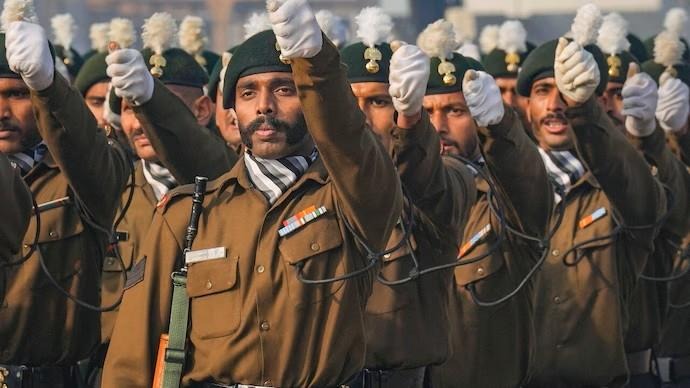
This village -“the soldier village” of India – can perhaps claim a record unmatched by any other place- almost every household has someone who serves or has served as a “jawan.”
Homes are not just the roof covering families; they are where uniforms hang, where medals jangle and framed photographs of individuals – once dressed in olive green or navy blue or air force blue – tell in soundless detail the narratives of decades serving national defence.
Our latest published: Bharat Gaurav Trains 2026
Legacy Written in Uniform
It is astounding the amount of pride that Gahmar has in India’s security forces. It is estimated that out of this village more than 5000 people have served in army & thousands have reserved who are currently serving.
However there are families which go back to pre-independence days and military genealogy is handed down several generations with pride.
Far from being the exception, households without someone in uniform are the rarity here.
Warfare has imprinted itself even on the everyday life of Gahmar. The collective morning exercise: young people run, orientate themselves and rehearse. They are informally supported by retired soldiers — training in posture, discipline and fitness. Even school schedules and local culture encourage this aspiration.
A well-kept training ground — referred to, locally, as “the Mathiya ground” — is at the heart of this culture. With running tracks, rope-jump obstacles and long jump pits, it gives children a real taste for army style training from an early age.
It’s said in villages that no boy becomes a man in Gahmar; he trains to be a soldier.
Pride, Identity, and Shared Purpose
For the families in Gahmar, sending a son to the forces is not mere employment — it’s an honor, a rite of passage, a commitment. Government defence service provides stability in a land where there are few other jobs. The admiration a “jawan” earns can also equate to social status, so the uniform becomes as much about self-respect as about putting bread on the table.
National developments, border stand-offs, tales of heroism — none are distant headlines any more. They are discussed at chai stalls, repeated in exultant whistles when a village youth is deployed and met with prayers to the local temple. Patriotic enthusiasm is the elixir with which life at headquarters pulses in the village – eats, sleeps and dreams khaki.
A Village That Governs the Nation
Gahmar could be just another dot blanketing India’s sprawling rural map. But beyond its quiet streets and modest houses is a history that tells of sacrifice, determination, and true passion. At the core, this village defies traditional notions of what it means to be patriotic: not through grandiose oratory or deafening statements but because generation after generation of everyday families has chosen to don uniform.
In Gahmar, patriotism isn’t glamorous. It’s ordinary. It’s the early‑morning drill, the hushed awe before a war‑memorial shrine, the headlights of an oncoming homecoming train in pre‑dawn darkness, the medals discreetly draped over a wall, the tear of pride in a mother’s eye when her son prepares to leave for border duty.
Gahmar is a message about how service to the nation does not always require ceremonies — rather, continuity, legacy and silent dedication. That spirit of the village, finding its expression every heartbeat and every footfall by its young men whose dream was to stand up in forces uniform for defending, serving and honouring the tricolour has not changed.
