


For the better part of a decade, SpeedRunners has stood as the gold standard for competitive 2D platforming, turning friendships into fierce rivalries through the simple joy of outrunning your peers. Now, the original creative minds behind that cult classic—led by designer Casper van Est and the newly formed Second Stage Studio—have officially pulled back the curtain on their next project: Sprint City.
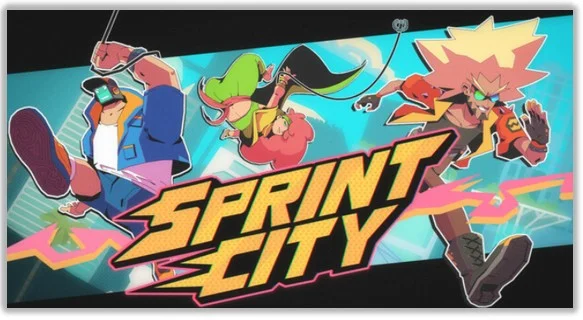
Announced on December 17, 2025, Sprint City isn’t just a sequel in spirit; it’s an evolution of the “movement-first” philosophy that made its predecessor a staple of the indie scene. Set to launch in Steam Early Access in 2026, the game swaps the superhero-themed tracks of the past for a vibrant, solarpunk metropolis where wheels don’t exist and momentum is the only currency.
A Shared World of Pure Momentum
Unlike traditional level-based platformers, Sprint City takes place in a seamless, shared world. As you traverse the urban sprawl, you’ll naturally encounter up to eight other players—known as “Runagades”—tearing through the same districts.
The game is designed to facilitate both high-stakes competition and freeform exploration. You can engage in intense time trials to climb global leaderboards or simply spend hours mastering the flow of a specific neighborhood. The districts are packed with rooftops, hidden shortcuts, and verticality that rewards players who can chain together wall-runs, grapples, and slides without losing their speed.
The “Guest Pass” Revolution
Perhaps the most “genius” feature announced by Second Stage Studio is the Browser Guest Play. In an effort to make the game as accessible as possible, owners of Sprint City on Steam can invite their friends to join their party for free via a web browser.
These guests don’t need to download the game or own a copy; they can jump directly into the session and start racing. It’s a bold move aimed at lowering the barrier to entry and ensuring that the “just one more race” energy of the original SpeedRunners remains at the heart of the experience.
Why the Speedrunning Community is Buzzing
For speedrunners, the draw of Sprint City lies in its mechanical depth. The developers have emphasized that every alleyway and rail in the city is intentionally shaped to spark new “lines.”
- Customization: Between races, players can unlock gear to style their Runagade, ensuring their character looks as fluid as they move.
- High-Tempo Sound: The game features an original, high-tempo soundtrack designed to sync with the player’s rhythm.
- Developer Pedigree: Casper van Est has noted that while SpeedRunners was “race-first,” Sprint City is “movement-first.” This shift allows for a much higher skill ceiling in terms of how players manipulate the environment to find unintended routes.
Early Access and Beyond
The team at Second Stage Studio has committed to a transparent development cycle, planning a one-to-two-year Early Access period starting in 2026. They intend to use this time to expand the city districts, add more multiplayer modes, and refine the controls based on community feedback.
As we head into the new year, Sprint City looks poised to reclaim the crown of the 2D racing genre, offering a playground that celebrates the simple, visceral thrill of going fast.The anticipation is palpable among the fighting game and platformer communities alike, as many see Sprint City as the definitive answer to a modern drought of high-skill momentum games. With its striking art style and focus on frictionless social play, it is set to be the must-watch indie title of 2026.
